Skip to content
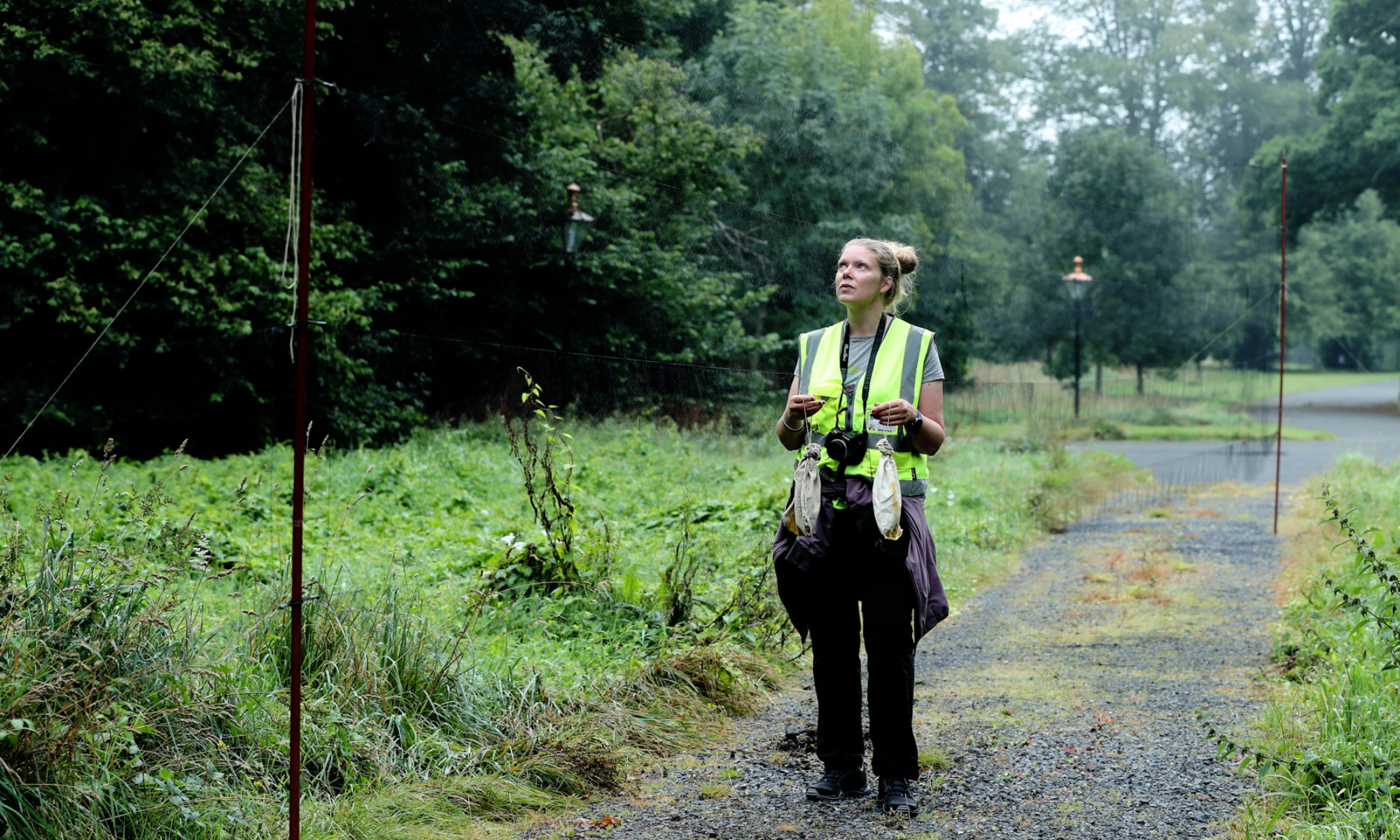
Dr. Aoibheann Gaughran pictured while bird netting in Áras an Uachtaráin as part of the biodiversity survey carried out by the TCD team of ecologists.

EcoEvo@TCD

Trinity College Dublin, Ecology and Evolution

  • Home
  • About
  • Contributors

Tag: public engagement

Posted on 16/02/201414/02/2014

3D dinosaurs are bringing down the Ivory Tower

Tweet

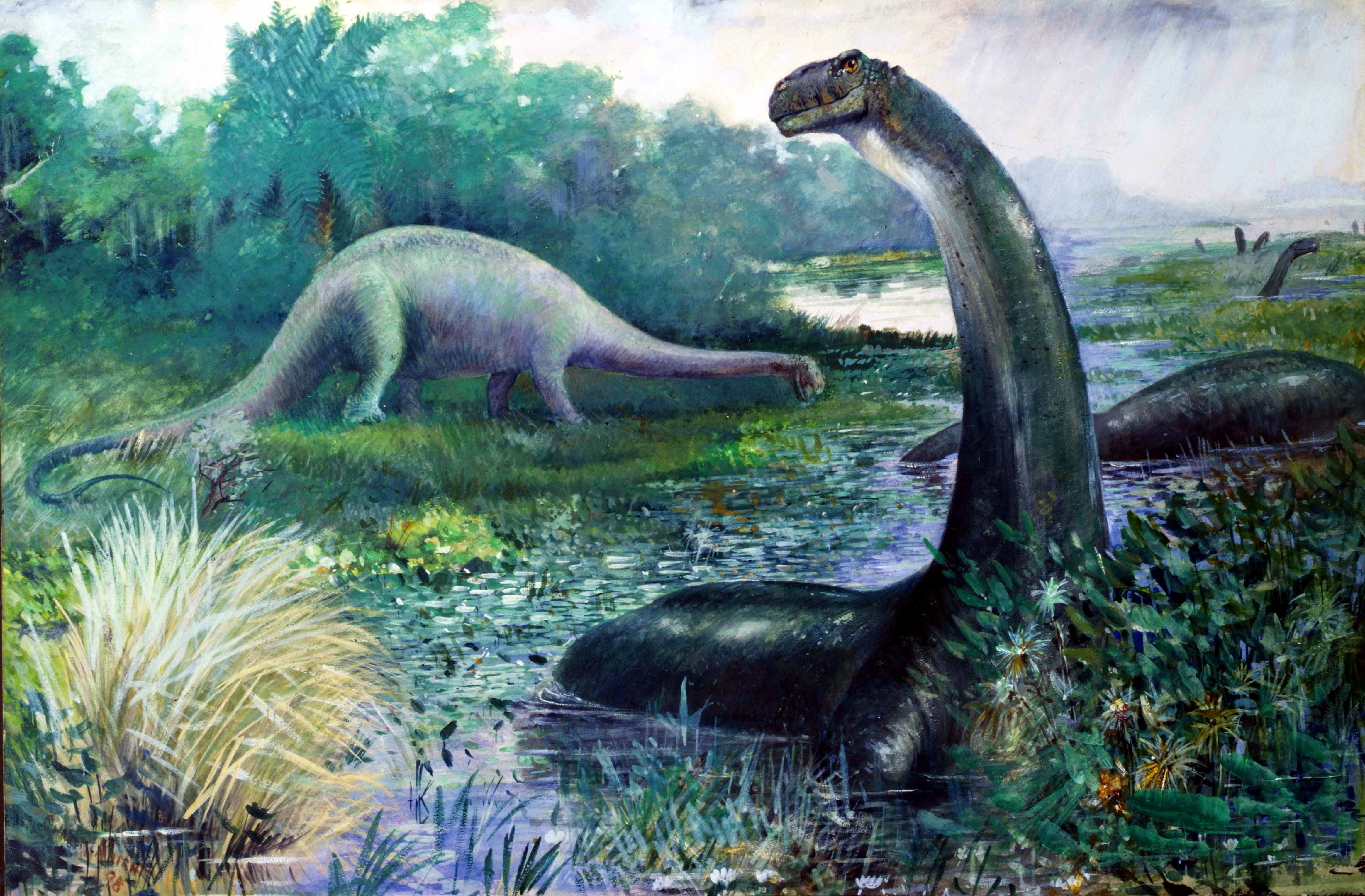
Pasta-Brontosaurus

Adam raised the point of science communication in his last blog post of how science should be communicated to a mainly interested and receptive public. The main question when thinking about science communication is “how should we do it?” However a second question, arising from this one would be “who should do it?”

I believe having an interest in popular science is the first step for starting a career as a scientist. Personally, I was influenced by Jurassic Park, which gave me the idea that in a distant future I would (could) become a paleontologist. I believe this influence is shared by a vast majority of young paleontologists of this Bakker dinosaur’s revolution generation. So, to me, even if Jurassic Park bent some scientific rules (the most obvious one being bringing stones to life), the film created a renewed interest in its related field of palaeontology.

Ok, so that’s a good reason for popularizing science then? It’s not that easy. A fairly large amount of scientists will always look at such attempts to popularize science as a “bastard” child of the scientific adventure, a kind of side effect that makes scientists, in the best case, smile ironically. In the worst case though, they think it propagates massively erroneous ideas: like the one I pointed out above or -another that “makes me smile ironically” – that paleontologists are Indiana Jones-style adventurers that wander around the world and from time to time brush the sand and discover how velociraptors (read Deinonychus) were talking to each other.

Richard Whitley in his book, Expository Science: Forms and Functions of Popularisation, summarises the idea by writing that: “popularization is not viewed as part of the knowledge production and validation process but as something external to top research which can be left to non-scientists, failed scientists or ex-scientists as part of the general public relations effort of the research enterprise.”

This vision of popularizing science is linked to the idea that an increased output of popular science leads to a fatal decrease of legitimate and accurate scientific progress. This is known as the ‘Sagan Effect’ after Carl Sagan and the erroneous claim that his legitimate scientific output decreased after the initiation of his popular science TV series: Cosmos.

Can one popularize science and actively do science?

When one has a look at the actual numbers (scientific articles published vs. popular articles published), one expects that if popularizing science is reserved for “failed scientists”, people publishing more popular articles will publish fewer science articles. Michael Shermer, in his paper published in Social Studies of Science in 2002, brings down this popular belief by calculating the actual numbers of scientific papers published by these popular science writers.

Let’s take a look at the numbers.

As a base line, while the four PIs publishing on this blog all take part in extra curricular activities, they are primarily research scientists. Last year, they published all together 22 papers which gives a respectable average of nearly one paper per PI published every two months! In contrast, if you look at the great popular science writers of the end of the last century (say Carl Sagan or Steven Jay Gould), during their massive and influential popularization of their fields, they produced an average of one paper per month for Sagan and nearly two papers a month for Gould (and that for 35 consecutive years!). So they seem to have it all: “legitimate“ science output and successful careers as science communicators. Just looking at these figures, the myth of the trade-off between popular science writing and actual scientific production is just, as Shermer describes it, “a Chimera”!

Can one popularize science and actively do science?

Yes. And to go back to my first point, with Jurassic Park (which, in comparison to Gould or Sagans’ popular work can easily be classified as a “bad” way to do it), I believe that popularizing science is not a problem: in an altruistic world, scientists should focus on contributing to the advancement of their field by any means possible, not exclusively on their own amount of publications. Thankfully, most scientists manage to combine both popular communication and research output efficiently. I think that one important and still altruistic way to contribute to the advancement of a field is definitely science popularization. Richard Whitley says that “by successfully combining claims to universal validity and social utility through popularization, [Sagan and Gould] laid the foundation for the present domination and expansion of the sciences.” These contributions have a real long-term benefit to the advancement of the field. Firstly, the ideas of the authors of popular science become fixed in the public consciousness and secondly (most importantly to me), they inspire new generations of scientists that will, later on, personally contribute to the advancement of their field.

Is this bad for “legitimate” scientific production? Not at all! By popularizing evolution in a realistic (or perhaps not so realistic) way, Gould and Jurassic Park spark the interest and imaginations of the next generation of potential scientist who, through their research, will make direct contributions to scientific research!

It’s a positive feedback cycle: excellent scientists generate good science communicators; good scientific communication generates scientific interest and curiosity; scientific interest produces scientists and some of these scientists will go on to become good scientific communicators…

Author: Thomas Guillerme, guillert[at]tcd.ie, @TGuillerme

Image Source: wikimedia commons
Tweet
Posted on 10/02/201405/02/2014

The Heat and Light of Science Communication

Tweet

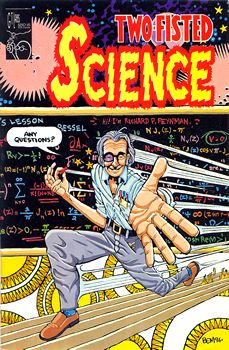
twofisted1

The recent debate between Bill Nye, the Science Guy and Ken Ham, the Young Earth Creationist got me thinking about our methods of science communication such was the controversy it generated.

There is value in communicating science to the lay public when our society is so deeply ramified by its discoveries, its ideas and its risks. And sometimes it’s easy to do so. For instance, there are people who find certain areas of research fascinating but may not have the expertise or money to read journal articles. This ‘gee whiz ‘cohort is actively interested in learning about the next big thing and will devour blogs, popular articles and newspaper reports. It helps to avoid a condescending tone (like saying gee whiz) if you have an inclination to write an article to this audience. As Steven Pinker’s editor put it “You should assume your readers are as smart as you are, as curious as you are, but they don’t know what you know and you’re there to tell them what they don’t know.”

This sounds very like the deficit model of communication, which states that, the only barrier to public understanding and skepticism of science is their ignorance. Provide the information and this deficit will disappear. I think this probably works for most of the non-controversial areas of science when the target audience is interested. I’m thinking of myself learning about subjects in physics or geology that are explained by the legion of science communicators that inhabit every form of multimedia today.

But we have a multitude of issues where the science is not accepted by a significant number outside the scientific sphere, notably climate change and the efficacy of vaccines. This is very problematic because the impact of these controversies threatens everyone, expert and lay person alike. How best to engage with these ‘deniers’? I’d argue that the problem here is fundamentalism. And how do you change the mind of a fundamentalist? To paraphrase Eugenie Scott, some people find the idea that they’re related to animals abhorrent and all the evidence supporting this isn’t going to change their minds. In other words, you don’t. The best we can hope for is that most of us are reasonable people and the lunatic element is just being especially loud.

When it comes to the evolution-creationism debate, many profs advocate the silent treatment; their rationale is that by engaging in debate we somehow elevate the status of the deniers. Much better, they say, to keep on churning out the books and interviews where there’s no risk of some rhetorician running rings around your PowerPoint presentation. Richard Dawkins and Stephen Jay Gould both shared this sentiment. With Dawkins arguing we should deny them “the oxygen of respectability in the world of real science.” But Dawkins has spent half a lifetime engaging with Creationists on different forums, on TV, in his books, and latterly on Twitter. I don’t see much difference. And surely scientists can muster up an individual who can speak sense to an audience while holding their attention with a stentorian voice.

So what about those people who are not particularly interested in scientific discovery but are concerned about the impact that certain fields of research will have on them? Or those of us who do not take the time to read about the controversy and may be swayed by entities like anti-vax campaigns? We have to have an included middle.

Unfortunately to some, certain theories can become “evidence-resistant” and that: “… as climate scientists know all too well, simply relating the facts of science isn’t enough. No matter that the overwhelming weight of evidence shows that climate change is real, or that vaccines don’t cause autism. When scientists find themselves just one more voice in a sea of ‘‘opinions’’ about a complex scientific issue, misinformation takes on a life of its own.” (Jackson et al. 2005)

One way to prevent this is to create a space for scientists to engage with the public, where they can engage in a dialogue. This is in contrast to the one-way, hierarchical approach of the deficit model I spoke of earlier. Jackson, et al.(2005) point out that when the public are left out of any such dialogue it should come as no surprise that they are distrustful of the outcomes of the resulting applications. The arrival of genetically modified organisms (GMO) demonstrated what can happen when there is a lack of upstream public engagement regarding contested science. Frankenstein Food campaigns should come to mind!

It’s also vital to frame science so that it’s easily accessible to the widest range of people all with different biases, beliefs, and ideologies. The anti-vax campaign is successful because it is framed with ‘Think of the children!’ the climate change deniers point to uncertainty of prediction; this coupled with the difficulty in conveying the danger of something that will take decades to manifest helps their campaign tremendously.

Another idea is to teach how science works to people at an early age. This is advocated by Arons who writing in 1983 comes at the issue of science literacy from a paedagogical standpoint. He says that scientific literacy is in a “lamentable state” and crticises the idea that it could be achieved through “verbal inculcation”. According to the author this approach seems to be little more than rote learning.The central point of Arons is his repetition of the idea that scientifically literate individuals should be able to answer “”How do we know …?” and “Why do we believe …?” questions”. If the majority of people were able to give an answer to these questions on the controversies mentioned here I think we’d have much less to lament about.

One trend to be picked out of the evolution of science communication is the realization the public isn’t monolithic either. And to clump every non-scientist into one social unit is a simplification too far. With ancient rhetoric and 21st century technology we have the ability to frame our arguments to every audience who will listen, reflecting their interests, fears and concerns.

References

Arons, A.B. (1983). Achieving Wider Scientific Literacy. Daedalus. 112 (2), p. 91-122.

Jackson, R Barbagallo, F Haste, H. (2005). Strengths of Public Dialogue on Science-related Issues. Critical Review of International Social and Political Philosophy. 8 (3), p. 349–358.

Author: Adam Kane, kanead[at]tcd.ie, @P1zPalu

Image Source: davidakirby.com

Tweet

Posts pagination

Previous page Page 1 Page 2 Page 3

Recent Posts

  • The 2026 Botany & Zoology Symposium 13/05/2026
  • Top 5 Things I Learned During Fieldwork 08/07/2024
  • The 2024 TCD Botany-Zoology Symposium – a Roaring Success! 28/03/2024
  • How protected are protected areas? An exploration of human activities inside European protected areas 28/02/2024
  • Green Labs Glory: How We Earned Our Green Certificate 31/01/2024

Search the EcoEvo Blog:

Posts by Category

Older Posts

Follow us on Twitter!

@EcoEvoTCD

Follow us on Instagram!

@EcoEvoTCD

Like us on Facebook!

@EcoEvoBlog

ZooBytes

Catch up with the latest news from the TCD Zoology Department in their seasonal news digest!

PhytoBytes

Keep up with all the goings on of the TCD Botany Department in their newsletter!


Tag Cloud

  • academia
  • art
  • bees
  • biodiversity
  • birds
  • botany
  • climate change
  • competition
  • conferences
  • conservation
  • dinosaurs
  • ecology
  • evolution
  • extinction
  • field-work
  • Fieldwork
  • humans
  • Indonesia
  • invasive species
  • Ireland
  • island life
  • museum
  • nature
  • NERD club
  • networking
  • outreach
  • palaeontology
  • parasitism
  • PhD
  • PhD students
  • photography
  • phylogenetics
  • pollinators
  • Postgraduate research
  • public engagement
  • research
  • science communication
  • seminars
  • Sulawesi
  • teaching
  • tenrecs
  • Trinity College Dublin
  • vultures
  • women in science
  • zoology

Meta

  • Log in
  • Entries feed
  • Comments feed
  • WordPress.org

WordPress

  • Log in
  • Entries feed
  • Comments feed
  • WordPress.org
  • @EcoEvoTCD on Twitter
  • EcoEvo@TCD on Facebook
  • @EcoEvoTCD on Instagram
Proudly powered by WordPress