Skip to content
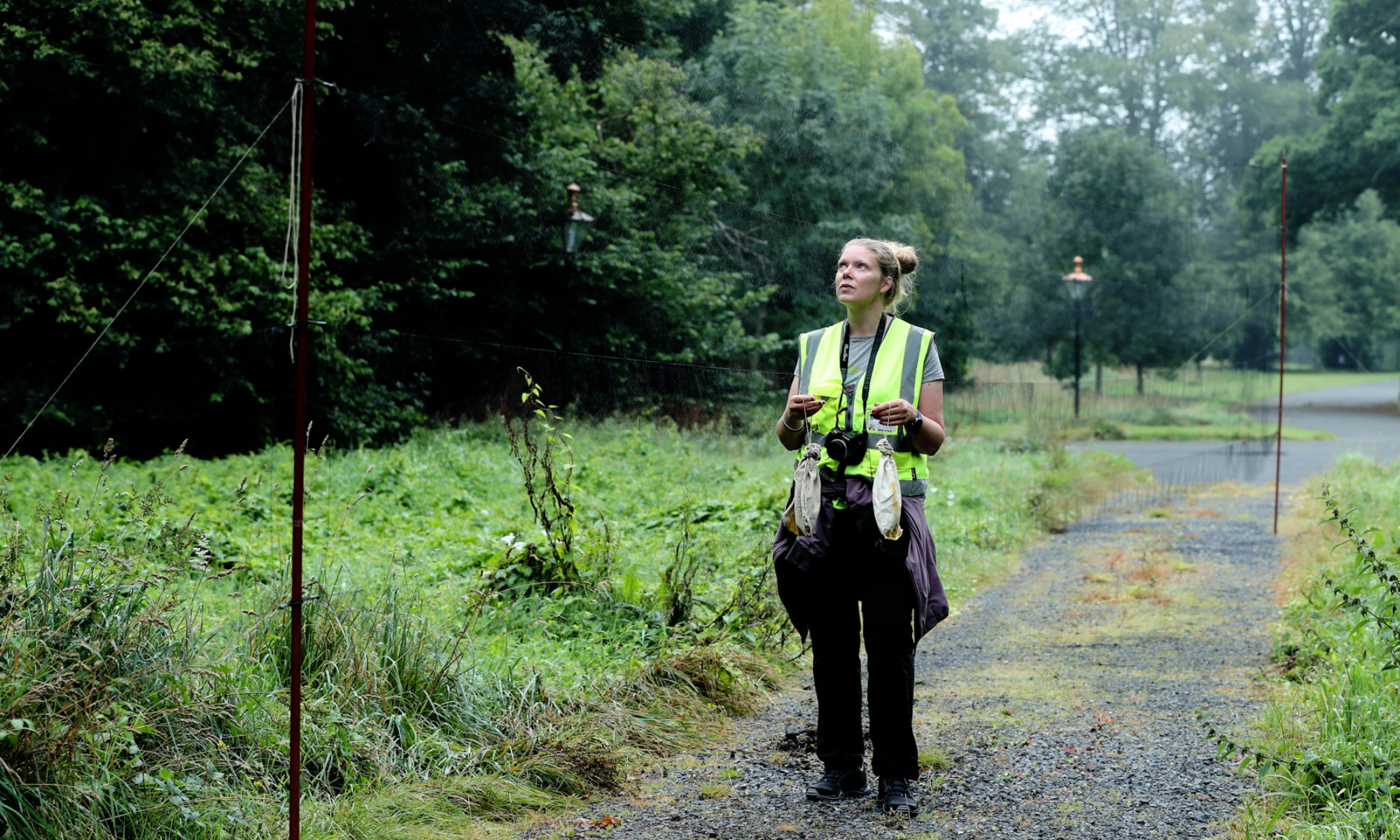
Dr. Aoibheann Gaughran pictured while bird netting in Áras an Uachtaráin as part of the biodiversity survey carried out by the TCD team of ecologists.

EcoEvo@TCD

Trinity College Dublin, Ecology and Evolution

  • Home
  • About
  • Contributors

Tag: public engagement

Posted on 20/10/2015

#AnyoneCanCutGrass?

Tweet

#AnyoneCanCutGrass?

image2

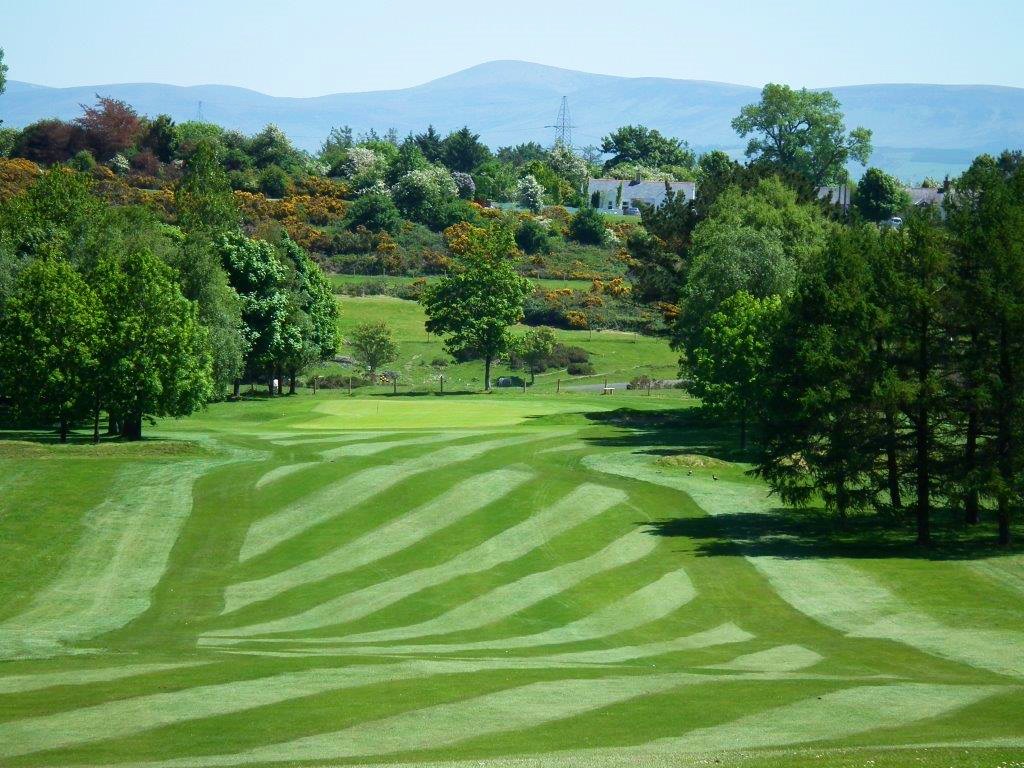
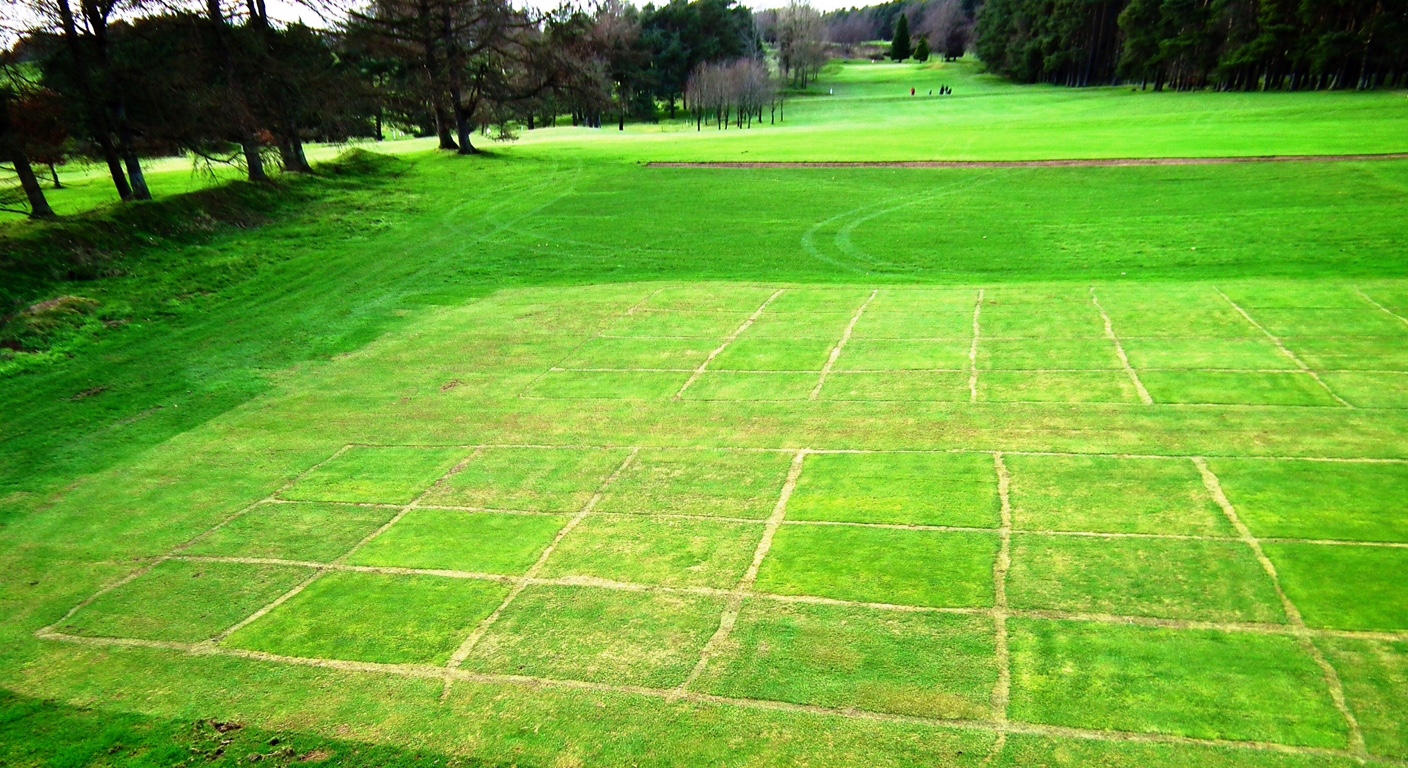
That was a recent hashtag in my Twitter timeline and it stirred me on to put this short piece together, so why would it cause me a thought? Well I’m a turfgrass professional, I have been maintaining amenity turfgrass and managing golf course surfaces for 30 years now and like most professions there’s more to it than meets the untrained eye. As I’m writing this the Premiership and Champions League have just re-started, the Curragh races are on down the road, Wimbledon and the RDS Horseshow are over, and the GAA football and hurling are reaching their climax, not to mention the cricket.……so? Well obviously, these all need quality turfgrass surfaces to  allow the athletes perform to their peak ability and turf surfaces like these don’t grow on trees (oops).


Most people can cut grass ok, but getting the correct grasses to grow in the required manner 365 days of the year takes a blend of experience, craftsmanship and a good base of scientific research and knowledge. Experiences and craftsmanship can come with time, scientific knowledge can be obtained easily enough through many courses and colleges.  My own personal career path began with learning the basic techniques and methods from other greenkeepers and participating in a number of certification courses, this allowed me to carry out the job of maintaining turfgrass surfaces adequately. However, I needed to know more and so I began a BSc in Turfgrass Science…..yes! there is a degree in that!
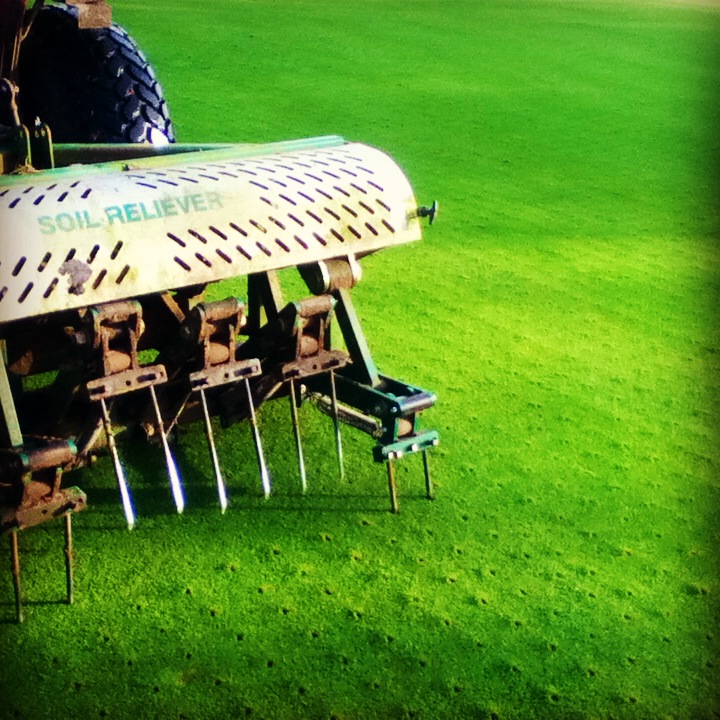
image3

So we cut grass…is all this science necessary! Sure is; bear in mind the turfgrass manager is wholly responsibly for the maintenance and presentation of a multimillion Euro asset, be it a golf course in Ireland, soccer stadium in Spain, cricket grounds in England or the Olympic venues in Brazil! The BSc Honours degree requires passes in 20 modules, covering subjects such as plant biology and physiology, soil science, turfgrass species, cultivation and construction practices in sportsturf, drainage, irrigation, machinery management, research methodology and my favourite…pests and diseases!  Upon completion of your degree, you have an understanding of the science required to produce quality sports surfaces used by many millions of people, either as participants or spectators. You can recognise the numerous genera and species of turf grasses and understand their requirements in terms of growth media, nutrients, drought tolerance and resistance or susceptibility to pests and diseases. You will have covered recent research into biochemistry and intracellular functioning of plants, advances in plant breeding, including plant tissue culture and molecular techniques…. relevant to all plants of course. You’ll recognise the numerous soil chemical and physical properties and their influence on plant growth and development, understand the dynamic process of plant growth, metabolism and reproduction and be able to specify the development and use of artificially constructed rootzones for the production of quality surfaces for a variety of sports.
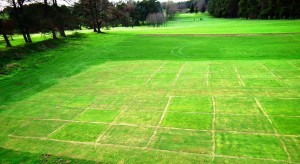
image5

So, do you know all about turfgrass science when you finish your degree?…………sadly no! If you’re smart you will probably understand how little you do know about plant science and how much more there is to be learnt. That was partly my experience: while I learnt a lot about the science behind the job I have been doing for the past 30 years, I realised there was a lot more I could do. In the final year, I undertook a research project on the suppression of fungal disease in trfgrass and it was an extremely interesting and successful project (I even got an invite to present it in France….nice!). This helped me decide to go the whole hog and started a PhD at the University of the West of England in Bristol and based in the Centre for Research in Biosciences. Currently I’m carrying out final amendments to my thesis for completion during 2016! The PhD is research based and involves alternative methods to suppress fungal infection in amenity turfgrasses. The research has produced interesting and novel data, which has significance to turfgrass disease control, but is also relevant to other grass species such as cereals, like wheat, barley and oats. Resulting from this I have been able to present the findings not only to turfgrass professionals in Florida (very nice!) but also to cereal scientists in Scotland and plant pathologists in England.
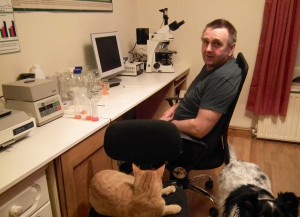

image4

How does all this academic study complement my full time position as a turfgrass manager? Well firstly and obviously, it gives me a thorough understanding of the science involved in turfgrass, and plant science in general. I have developed transferable and personal skills in areas of communication, time management, work prioritisation, critical analysis and report writing. The progress through academia has given me the ability and confidence to interact with other scientists, agronomists, employers and my turfgrass peers. My PhD research has allowed me to develop methods and practices which have helped to reduce disease incidence on fine turf surfaces and enhanced their playing and visual qualities. This not only had a direct impact on my own place of employment, but is being adopted throughout the turfgrass industry worldwide.


Would I recommend this pathway of academic progress to others? Sure! Apart from all the positives mentioned above, working on a BSc or PhD is a great challenge, is very stimulating and can provide you with extreme satisfaction…..eventually!


Can anyone cut grass?…..sure, provided they can get it to grow in the first place!
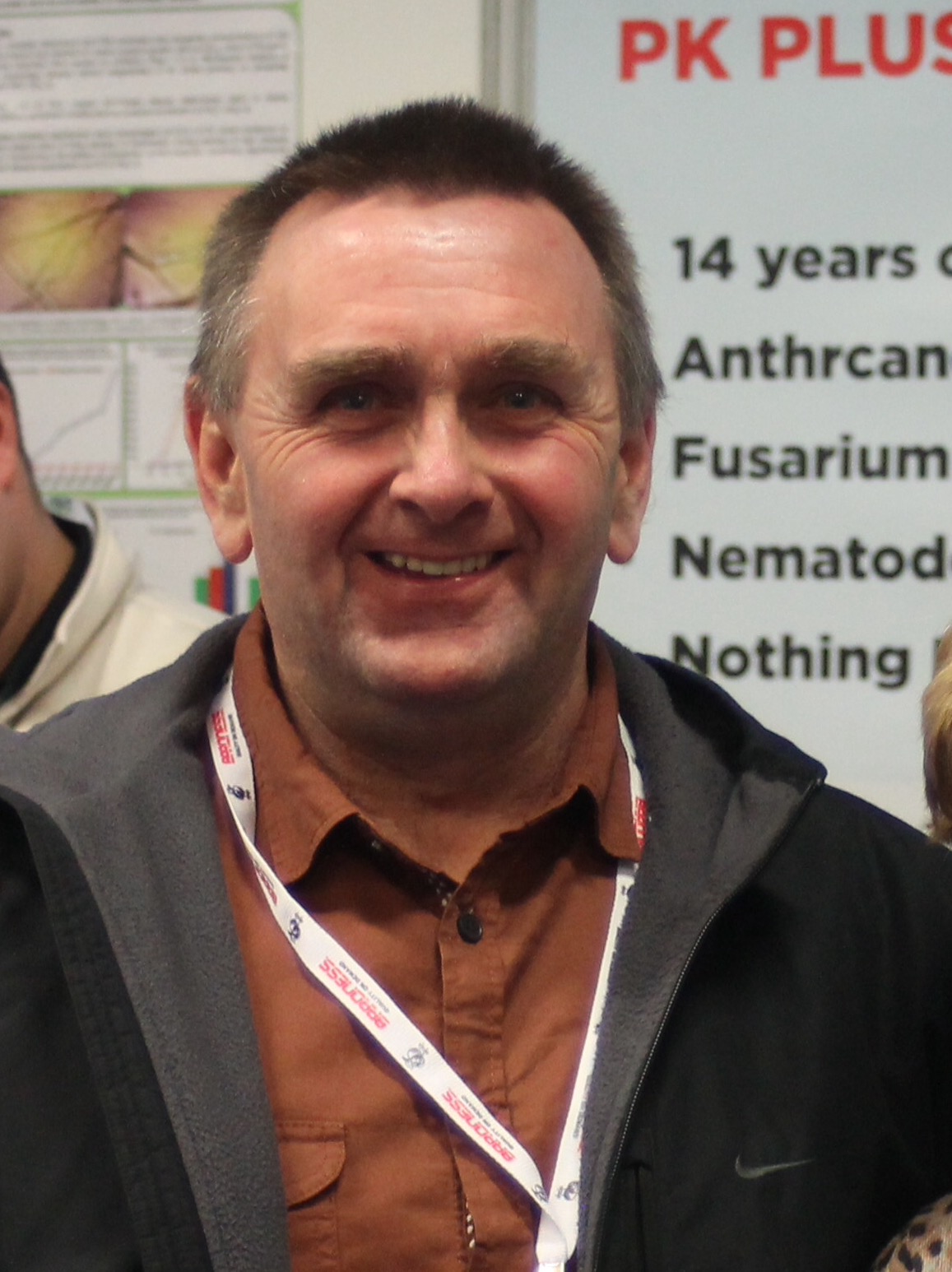
 

 image1

Author: John Dempsey, University of the West of England, LinkedIn, twitter

Images: WikiCommons & Courtesy of John Dempsey.
Tweet
Posted on 11/09/201518/09/2015

Discover Life – Friday 25th September 2015

Tweet

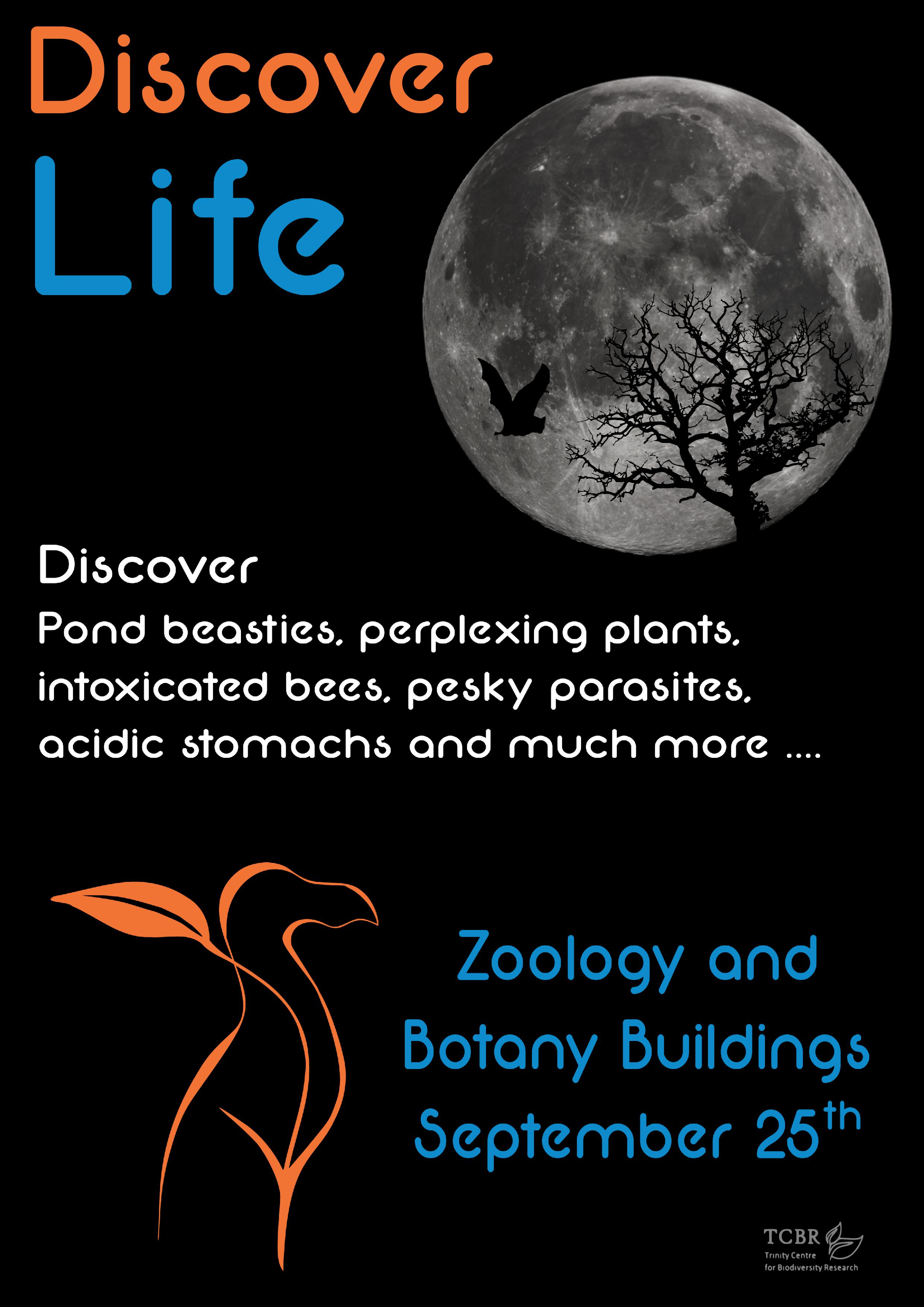
image-0001On Friday September 25, the School of Natural Sciences and Trinity Centre for Biodiversity Research will present Discover Life! in the Zoology and Botany buildings at Trinity College Dublin.

Come and see how researchers are trying to solve some of the world’s most pressing problems and get a highlight of a large variety of internationally recognized research projects!

In the Botany Department ask us about how we are trying to fight biodiversity loss, search for new species and reduce future world hunger. Check out what bees and pond beasties look like up close; find out what happens in a Herbarium; taste some honey; see a wetland in a box; become a pollinator-friendly gardener or even a citizen scientist!

In the Zoology Department, ask us about how we track the famously evasive badger; where plants and animals survive in harsh environments and find the most suitable places to live. Learn how much of the Sun’s energy is captured by living things on Earth; why babies kick in the womb; and why our stomach acid is stronger than car battery acid? Discover how parasites can change how animals think and how some chemicals can make some animals change sex. Researchers will be there to guide you to examine closely some of the most amazing creatures on the Planet in the Museum of Zoology.

All these, and more exciting projects help us understand better how Life makes it on Earth, and how humans could better protect this wonderful living heritage.

Discover Life is just one part of Discover Research Dublin, an annual event funded by the the EU under the Horizon 2020 framework as part of European Researchers Night. This takes place on the last Friday of every September. On this night, Trinity College Dublin invites the general public to the campus to take part in tours, talks, demos and chats. This year’s main themes are Human, Tech, World and Society. Please click through to learn more about each one.

The event is FREE to attend and the Botany and Zoology buildings will be open from 6pm-10pm with the last entry at 9.30pm.

Authors: Anna M Csergo, @csergoa and Eileen Power @POWEREI

Image: Kevin Healy, @healyke

Tweet
Posted on 01/05/201530/04/2015

Pint of Science Ireland

Tweet

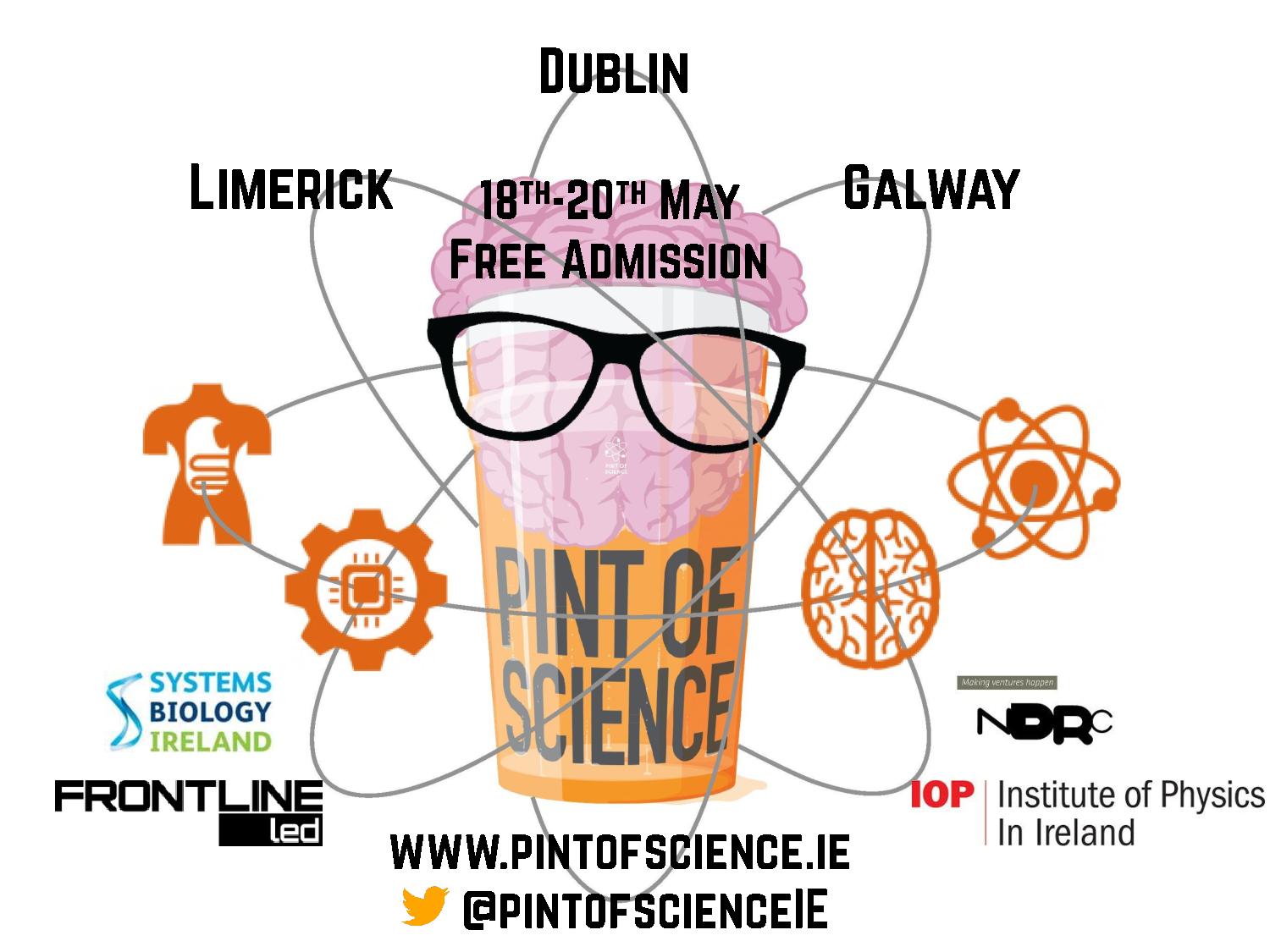
PintofScienceFlyer2015_pic

This May, 80 of Ireland’s leading scientists will bring their research to 8 pubs in 3 cities for 3 fun-filled nights of science! Part of the international festival, Pint of Science Ireland takes science out of the lab and mixes it into some of the most interesting, engaging and unusual evenings you will ever spend in a pub.

Whether you’re a researcher, student or science-newbie, the festival is a great opportunity to hear about the latest scientific research and chat with Ireland’s top scientists over a pint. Running in Galway, Limerick and Dublin from the 18th to 20th of May, come along to one of the 8 venues for fascinating talks within the themes of the beautiful mind (with an added bonus from illusionist Rua), the human body, technology and the physics of atoms to galaxies. Tickets are free but some evenings are already booked out so hurry to get your place!

Find out more on the Pint of Science website (www.pintofscience.ie) and follow @pintofscienceIE on twitter for all of the latest science shenanigans!

Author: Sive Finlay, @SiveFinlay

Tweet
Posted on 20/04/2015

Academic challenge

Tweet

bright club

Bright Club is a variety night of entertainment combining light-hearted research talks from academics and performances from professional comedians. It has been running for several years now across various venues around the UK and recently made the leap to Dublin. Off the back of some grade-A flattery that pandered perfectly to my ego, I agreed to get involved as an academic for the April show. Although being comfortable with lecturing and presenting my science, I have no experience in comedy, or even drama for that matter, so this was a huge step outside my comfort zone. Thankfully, some helpful training from Niamh Shaw in the week beforehand showed me how entertaining starts with being comfortable with yourself in front of an audience. It was a great evening packed with songs, linguistics, one-liners, neuroscience, wit and visualisation.

This was a humbling experience. I think I managed ok with a story about intelligence, cooperation and “devious f***er” politicians, but I learned a huge amount. I learned that narrating a short coherent story without the aid of slides, or props to prompt you is really, really difficult. You have nothing to hide behind: all eyes are on you. You have nothing to jog your memory of your story. You can just stand up there and wing-it safe in the knowledge that you can just talk to each slide as it appears.

This is something that we as academics should challenge ourselves to do: give a talk (not necessarily a comedic one) that lasts 5 to 10 minutes on your research without any notes, slides, prompts or props. It will make you realise just how skilled stand-up comedians are, and how it’s a very different skill to be an entertaining speaker rather than an entertaining lecturer. Of course our job is to be an entertaining lecturer, but there is a lot to learn from the fear and loneliness of standing up in front of a crowd that is hanging on your every word and action. One way to do this would be to get in touch with Bright Club and sign yourself up for an event near you!

Author: Andrew Jackson @yodacomplex

Photo credit: Bright Club

Tweet
Posted on 09/03/201509/03/2015

Radio skills for scientists

Tweet

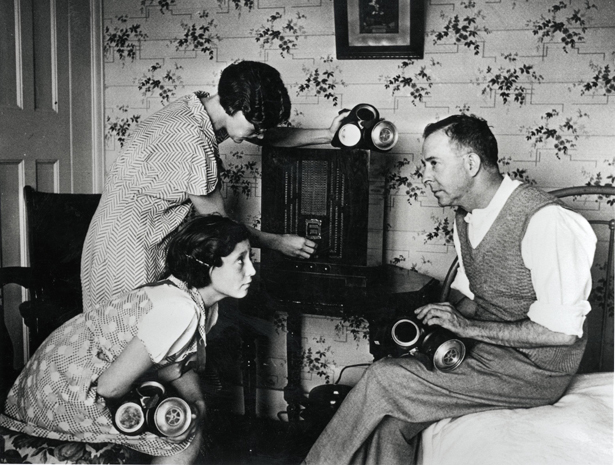
World War Two. England. 1938. The family at home, tuning in to hear the news on the radio news. They have gas masks at the ready.

The Irish Academy of Public Relations recently hosted a free event, “Radio Skills – A Special Evening for the Science Community” at the FOCAS Research Institute in DIT. The points raised and ensuing discussions provided interesting insights into relationships between scientists and journalists.

Ellen Gunning, director of the Academy, chaired the evening. From her experience of teaching public relations and interview skills, she described how many scientists are like Guards (the police) in how they deal with the media. Both professions are trained to communicate in a very impartial, specific and direct way with an unhealthy dollop of jargon. However, the key to effective public communication is to cut the jargon and to identify a clear, straightforward message which will be interesting and understandable for non-specialist audiences.

Professor Hugh Byrne gave a scientist’s perspective of dealing with the media. He highlighted the increasing importance of public engagement and research dissemination beyond the ivory tower of academia. Researchers must engage with the media to create a sustainable scientific research culture in which scientists are accountable for how they spend tax payers’ money.

He also discussed the “dark side” of engaging with the media. Many scientists are wary of journalists because they are afraid of being misquoted or that their research will be sensationalised. The immediacy of a live radio interview is a scary prospect for scientists who are used to careful drafting and re-drafting of their words for academic publications. As Professor Byrne pointed out, many scientists are used to building their arguments backwards: weaving different strands of argument together to finally reach the main conclusion or take home message at the end. Journalists want the opposite: the hook for why your research is interesting or important needs to come first.

However, scientists need to get over their fear engaging with the media. Good journalists are not trying to catch you out: they want to get their facts right just as much as you don’t want to be misquoted. Good science communication stems from a feeling of trust and complicity between the scientist and journalist.

Sean Duke continued the discussion with a journalist’s perspective of working with scientists. He further underlined the importance of building good relationships and trust with researchers. He pointed out that, despite their concerns, scientists have more control of a news story or interview than journalists. Researchers are the experts in their own field, they are the ones who dictate the parameters of a story so it’s up to scientists to find the interesting nuggets of information or take home messages. To do this effectively, it’s a good idea to follow Duke’s checklist for how to deal with journalists.

Journalists want:

A good story: find a way to give it to them by explaining your science through reference to everyday life. What’s interesting about your research and why should people care?

Explanation, not patronisation: scientists need to explain their research clearly so that it’s understandable for a non-specialist audience but don’t slip into “dumbing down” your story.

Scientists who take control: remember that you’re the expert so you should lead the story. If you’re contacted by a researcher for a radio show then treat it as an audition for the live interview. Have an agenda for what you want to communicate, it’s up to you to dictate and take control of the story.

Journalists don’t want:

Jargon: scientists are brainwashed to use complex terms that might as well be a foreign language to most audiences. Think of yourself as a translator: don’t use acronyms or obscure terms that will alienate and confuse your audience.

Defensive interviews: treat an interview with a journalist as an opportunity, not a penance. Good journalists are not trying to catch you out but neither should you expect them to know every detail about your research field. If you are asked what you think is a strange or misguided question, give the journalist the benefit of the doubt instead of becoming defensive about your position.

To be lectured: scientists are used to giving lectures or presenting at conferences. These formal settings are very different to the informal, conversational style of most interviews. Don’t complicate an interview by slipping into lectorial mode.

The Irish Academy will explore some of these topics further and provide more in-depth radio and PR training for scientists during their one day training course, “Radio Interview Skills for Scientists” on the 11th of April. Places on the course are limited to six people and can be booked here. Details of the Academy’s other courses can be found on www.irishacademy.com.

Author: Sive Finlay, @SiveFinlay

Photo credit:

http://www.bbc.co.uk/schools/primaryhistory/world_war2/daily_life/

Tweet
Posted on 15/12/2014

Literacy Levels

Tweet

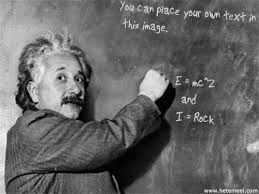
einsteinScientists and science communicators often make the point that the public are scientifically illiterate and that this needs to change. But why? The line goes that as we live in an age of science so everyone should be comfortable reading, writing and talking about science such is its pervasiveness in 21st century society. Robert Hazen argues for the importance of literacy saying, “A scientifically illiterate person is effectively cut off from an immensely enriching part of life, just as surely as a person who cannot read” (1). However scientific literacy is not something that is easily defined. So it is important to look at the various conceptions of it before asking if we can improve it.


Many authors consider science as more than a body of facts or something to be learned by rote and bemoan the dry science curricula, “It has for long been my contention that we are crushing our students into the flatness of equation-grinding automatons and forcing them into blind memorization of problem-solving procedures.” For example, there is the argument that scientifically literate individuals should possess a skill set of attributes and, for instance, be able to answer “How do we know …?” and “Why do we believe …?” questions (2). Richard Feynman said as much when he emphasised the important distinction between knowing the name of something and knowing something. There’s a world of difference between a person who can list off every bird species name and someone with an education in ornithology.

In contrast, it’s been argued that a pursuit of scientific literacy for all is futile. There are two purported stumbling blocks to widespread scientific literacy: the cumulative nature of science, resulting in an ever increasing amount of information and science’s use of counter intuitive descriptions (3). These barriers are so great as to prevent the majority of people attaining literacy. Instead we should engender an appreciation of science. The point is that a person’s early encounters with science involve fascination and curiosity, only for this to give way to courses that stress memorisation and dry subject matter.

But I think this is overly pessimistic. The important concepts in science are readily explicable to a lay person and the same goes for the process of making hypotheses. Even quantum physics, that byword for the impossible, has a legion of eager physicists who draw on a series of ingenious analogies to convey the main points behind it. I would suggest that there is a scale of scientific literacy from an appreciation of science, on to an understanding of how science works and then on to knowing the particulars of a given area i.e. a scientific vocabulary.

References

  1. Hazen RM. Why should you be scientifically literate. ActionBioscience org. 2002.
  2. Arons, A.B. (1983). Achieving Wider Scientific Literacy. Daedalus. 112 (2), p. 91-122.
  3. Shamos, M. 1988. The lesson every child need not learn. The Sciences 28(4):14–20.

Author: Adam Kane, kanead[at]tcd.ie

Photo credit: www.hetemeel.com

Tweet
Posted on 12/12/2014

Vox populi – when science and the public engage

Tweet

1280px-Douglas_Fairbanks_at_third_Liberty_Loan_rally_HD-SN-99-02174Scientists are now being held to greater accountability by a variety of communities (both public and private), and the idea that scientists should be trusted to work in the interest of the public good, by virtue of their profession, is no longer accepted. So we now have a situation where government leaders and policy makers worldwide are finding ways to effectively communicating science and technology issues to the public and to include citizens in science and technology decision-making processes. This is a process termed upstream public engagement. Successful dialogue should prevent the given scientific issue from becoming ‘evidence-resistant’ which seems to have happened with genetically modified organisms where public fear of GMOs is a serious constraint.

It has been pointed out that when the public are left out of any such dialogue it should come as no surprise that they are distrustful of the outcomes of the resulting applications. Yet a number of arguments have been levelled against public participation in science. Bill Durodié cites four reasons that count against public participation: demoralising scientists, patronising the public, elevating new ‘experts’ and deflecting blame. However, I think his arguments are alarmist and have a number of faults which undermine his contention with public participation.

He argues that including lay opinions will result in science and scientists becoming marginalised. He says “But science is not ‘just another point of view’. It may be culturally situated, but this does not mean that it is only contextually valid.” Such a conflation of lay opinions with expert evidence would of course be disastrous but this is not what public participation is about. Upstream engagement would allow people to understand the potential risks of a science in its infancy.

According to Durodié “By having to make science more ‘accessible’ in order to be ‘inclusive’, this ends up by diluting the detail, eroding the evidence and trivialising the theory.” But simplifying science happens among scientists and science communicators all the time. Experts always have to frame their ideas to allow for ideas to be communicated to a specific target audience.

The nanotechnology seems to be taking stock of the consequences that a bad PR campaign can have. The GM debate has resulted in a ‘nanophobia-phobia’, i.e. “the phobia that there is a public phobia [,]” with respect to nanotechnology (Joly and Kaufmann 2008). The so-called emerging technologies of nanotechnology, biotechnology, information technology and cognitive science will certainly require upstream engagement with the public.

Computer scientist Bill Joy (2000) advocated a policy of relinquishment for such technologies which he deemed too dangerous. Science does not have any inbuilt mechanism to determine if research should continue; there is no moral component to the scientific method. And although I do not agree with Joy’s viewpoint, such anxiety demonstrates that certain areas of science require public upstream engagement. Indeed some commentators rightly point out that uncertain science can have an ethical and moral component and lay people are just as entitled to have their say in this respect. It is encouraging that some scientists have the prescience to recognize potential dangers of upcoming technology.

Author: Adam Kane

Photo credit: Wikimedia commons

References

Jackson, R Barbagallo, F Haste, H . (2005). Strengths of Public Dialogue on Science-related Issues. Critical Review of International Social and Political Philosophy. 8 (3), p. 349–358.

Joy, B. (2000). Why the future doesn’t need us. Available: http://www.wired.com/wired/archive/8.04/joy.html.

Tweet
Posted on 31/10/2014

Science in a Box

Tweet

Steam-PromoLeaflet-Final (1)-page-001“Where did dinosaurs come from?” “How are black holes created?” “How big is the Universe?” “If we use mud wraps for our skin, why can’t we use mud as shampoo for our hair?!”

These are just some of the interesting (and very diverse) questions I’ve received from enthusiastic primary school students over the past couple of weeks. They’re testimony to the curiosity and imagination that’s unleased when you encourage children to think about science.

I’m a co-teacher for the new “Science in a Box” scheme: a pilot programme for a new way of teaching science in primary schools. The programme was developed by Kevin O’Callaghan, Seamus Devlin and Alice D’Arcy from Steam Education Ltd. in partnership with University College Cork, Queens’ University Belfast and Trinity College Dublin. This year they’re focusing on science lessons (25 one hour modules to be taught weekly) but they’re planning to extend their teaching philosophy to modules on Technology, Engineering the Arts and Maths.

Science in a Box partners science professionals (PhD students and industry volunteers) with primary school teachers to create a new way for children to learn about science. Scientists and teachers work together to co-teach lessons that have been developed to be engaging fun and interactive. Each lesson arrives “in a box” with a whole host of unusual props that help the children to learn science by doing rather than just by listening. At the same time, the teachers learn new skills and techniques that they can pass onto their colleagues and future classes.

Science in a Box is a powerful example of an age-old saying: get them while they’re young. All children have an innate curiosity about how the world works and an interest in science is a natural extension. Science in a Box targets 10-13 year olds: the crucial stage when childlike curiosity starts to be either lost or translated into an interest in more formal science subjects. The idea is to encourage children to question and explore their world and to inspire them to retain their natural fascination with science into secondary school and beyond.

It’s all about learning through questioning, hands-on activities and having fun. Hence I found myself explaining lessons about our Universe using balloons (very popular with the children!) and the “toilet roll of time” (an almost 14m scroll that details the history of time from the Big Bang to modern day). I loved teaching the classes: the children were bright, enthusiastic and genuinely interested and excited by what they were learning – a welcome change compared to some of my previous undergraduate teaching experience! Working with the class teachers is a great system: combining my science background with their teaching expertise is a good way to use our skills and learn from each other.

I think Science in a Box is a fantastic scheme with great potential for making a lasting change in how children think and feel about science. I’ve loved teaching the lessons so far and I’m looking forward to lots more exciting classes in the coming months. This year is a trial run in 20 schools in Dublin, Galway and Cork but the plan for next year is to roll out the programme into 100 primary schools across the country. There are plenty of exciting times ahead for Irish science!

Author: Sive Finlay, @SiveFinlay

Photo credit: steam education ltd

Tweet
Posted on 20/10/201418/02/2019

Nature jargon

Tweet

eschew_obfuscation_bumper_stickerAt a recent meeting on “Natural Capital”, Jo Pike from the World Forum on Natural Capital drew our attention to a “sustainability jargon buster” that they developed last year. Jo has a background in communications and highlighted an important point: if we are to conserve and sustainably exploit the environment, we need a common language. Ecologists can’t always agree on terminology amongst themselves but when we try to talk to economists and businesses to try and convince them of the value of the natural resources, conversations and actions can be frustrated by jargon and our opposing academic backgrounds.

How do we ever expect the general public to engage when we are thoroughly confused ourselves?

As part of a first year undergraduate module, members of the public in Dublin were interviewed to find out what they know about biodiversity and ecosystem services. People were asked 3 questions:

  1. what do you understand by the term “biodiversity”?
  2. do you know what “ecosystem services” are?
  3. do you think it’s important to maintain green space in urban areas?

Only 12% of respondents could give a complete correct definition of biodiversity and 28% had no idea what biodiversity was or had never heard the term before.

Even fewer people knew what ecosystem services were, with 23% of respondents giving a correct definition or defining them as “something nature does for us e.g. food/air/water”. Nearly half (48%) had no idea what ecosystem services were.

Despite this lack of understanding of the jargon, 74% of respondents answered that urban green space was essentially important and only 4% said that it isn’t at all important and that we should leave green space for the countryside.

So let this be a lesson to us – be clear, be concise and be consistent.

Enough said.

Author: Jane Stout, stoutj[at]tcd.ie

Photo credit: http://www.cafepress.co.uk/+eschew_obfuscation_small_framed_print,579649105

Tweet
Posted on 06/10/201406/10/2014

Blog Awards Winners 2014

Tweet

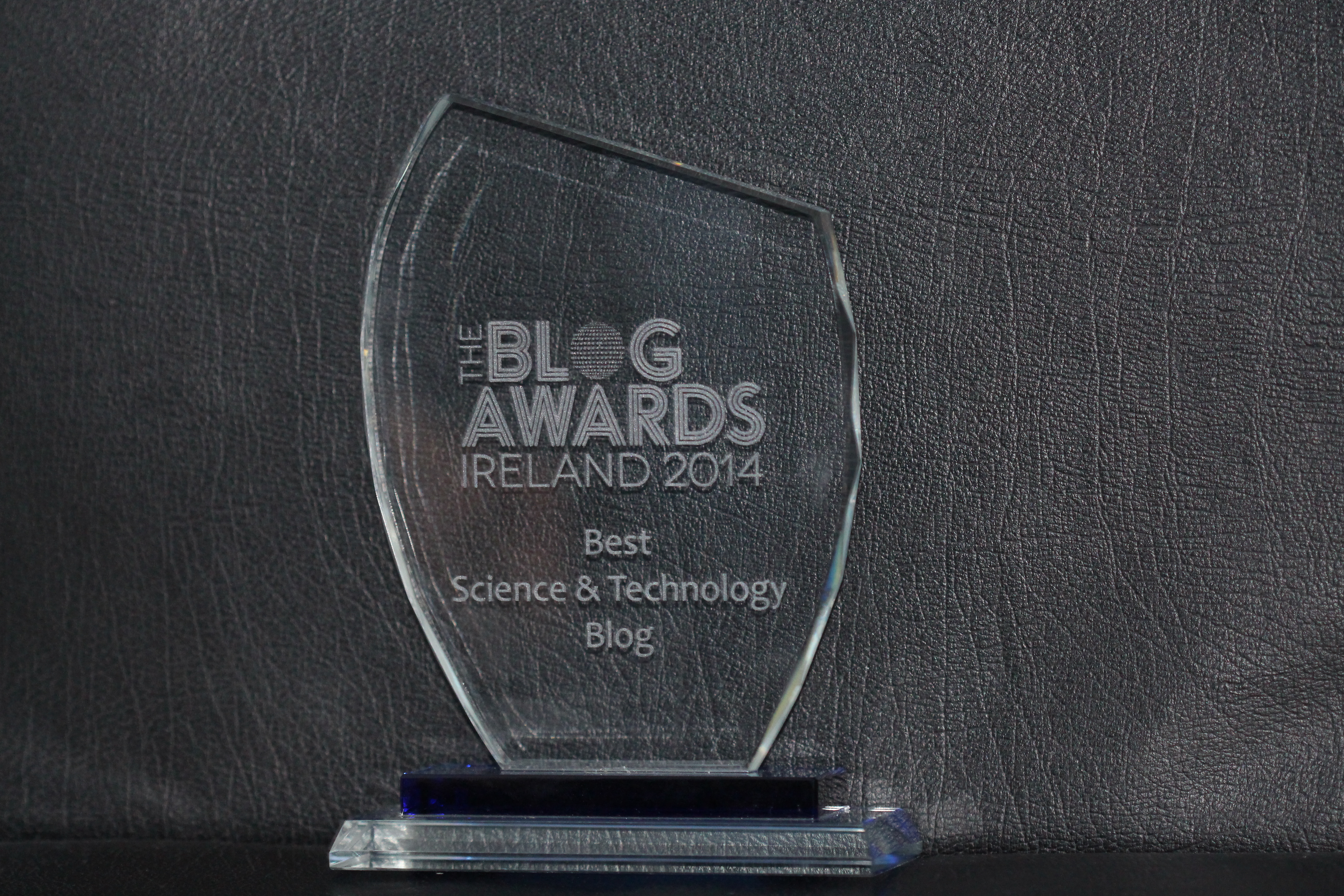
IMG_8203EcoEvo@TCD was awarded Best Science & Technology Blog in Ireland at the Blog Awards ceremony on Saturday. Thanks to everyone who has contributed posts over the past couple of years. It’s nice to know that we’ve put some good thoughts down on paper! Keep the posts coming.
 

Tweet

Posts pagination

Previous page Page 1 Page 2 Page 3 Next page

Recent Posts

  • The 2026 Botany & Zoology Symposium 13/05/2026
  • Top 5 Things I Learned During Fieldwork 08/07/2024
  • The 2024 TCD Botany-Zoology Symposium – a Roaring Success! 28/03/2024
  • How protected are protected areas? An exploration of human activities inside European protected areas 28/02/2024
  • Green Labs Glory: How We Earned Our Green Certificate 31/01/2024

Search the EcoEvo Blog:

Posts by Category

Older Posts

Follow us on Twitter!

@EcoEvoTCD

Follow us on Instagram!

@EcoEvoTCD

Like us on Facebook!

@EcoEvoBlog

ZooBytes

Catch up with the latest news from the TCD Zoology Department in their seasonal news digest!

PhytoBytes

Keep up with all the goings on of the TCD Botany Department in their newsletter!


Tag Cloud

  • academia
  • art
  • bees
  • biodiversity
  • birds
  • botany
  • climate change
  • competition
  • conferences
  • conservation
  • dinosaurs
  • ecology
  • evolution
  • extinction
  • field-work
  • Fieldwork
  • humans
  • Indonesia
  • invasive species
  • Ireland
  • island life
  • museum
  • nature
  • NERD club
  • networking
  • outreach
  • palaeontology
  • parasitism
  • PhD
  • PhD students
  • photography
  • phylogenetics
  • pollinators
  • Postgraduate research
  • public engagement
  • research
  • science communication
  • seminars
  • Sulawesi
  • teaching
  • tenrecs
  • Trinity College Dublin
  • vultures
  • women in science
  • zoology

Meta

  • Log in
  • Entries feed
  • Comments feed
  • WordPress.org

WordPress

  • Log in
  • Entries feed
  • Comments feed
  • WordPress.org
  • @EcoEvoTCD on Twitter
  • EcoEvo@TCD on Facebook
  • @EcoEvoTCD on Instagram
Proudly powered by WordPress