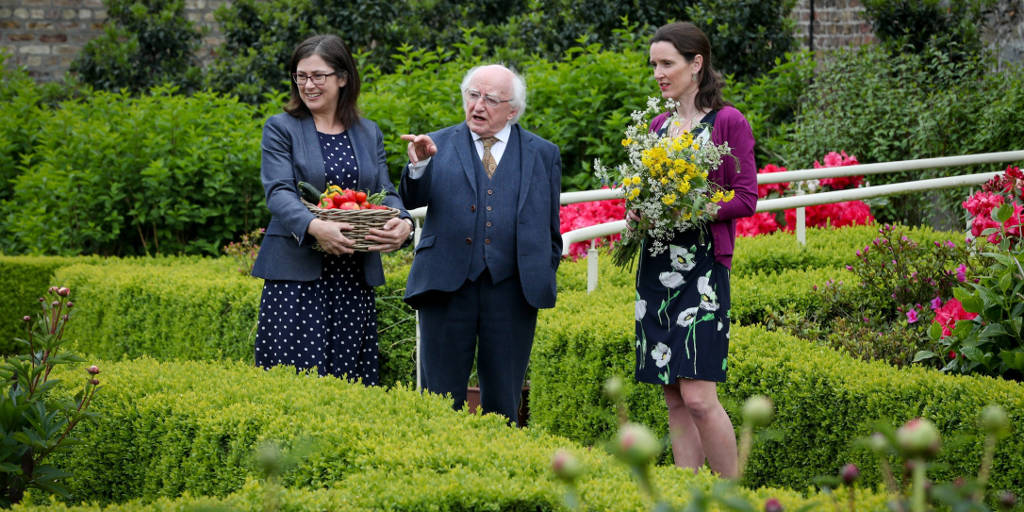
As well as launching our lab theme song, this World Bee Day, I was privileged to meet the President, Michael D. Higgins, at Áras an Uachtaráin. Along with Una Fitzpatrick, the Chair of the All-Ireland Pollinator Plan from the National Biodiversity Data Centre, we visited the walled garden in the Áras and discussed bees, the importance of pollinators and the plight of biodiversity in general. The President is a staunch advocate for nature (see his impassioned speech from the National Biodiversity Conference here), as illustrated by his press release today…
This short story was first published in the March 2019 issue of The Niche, the magazine of the British Ecological Society, as part of their “Horizons” ecofiction series. “Horizons” aims to use fiction to help visualise a better future aided by ecological science.
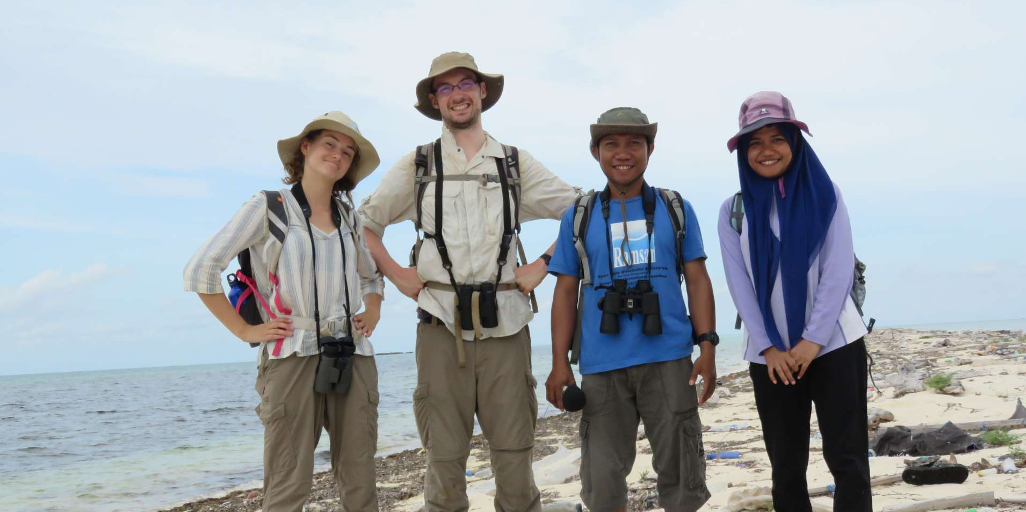
Almost as long as I can remember, I’ve wanted to be a Zoologist. Growing up on a steady diet of Attenborough documentaries, I dreamed of exploring new lands, discovering weird and wonderful species. I wanted to be the next Darwin. The next Wallace. In a lot of ways, my PhD research has been the fulfilment of that dream. It all started with my undergraduate thesis project in the Trinity College Dublin (TCD) Zoology Department. When Prof Nicola Marples and Dr David Kelly offered a project studying speciation on islands, I jumped at it. I spent the summer before the final year of my undergraduate island hopping in south-east Sulawesi, Indonesia, collecting data on how the physical traits of sunbird species had changed on isolated islands. Nicola and Dave’s project fieldwork was organised by Operation Wallacea, so we worked with Operation Wallacea staff as we moved around the islands and got to interact with scientists focusing on some of the other unique wildlife of Sulawesi.
Sulawesi is a region of massive interest to evolutionary biology. It is the intersection where Asian and Australian flora and fauna meet, and is separated by deep ocean trenches ensuring it has never been connected to a continent, allowing many unique species to develop there. As well as providing a fascinating study system, South-east Sulawesi has some incredible wildlife. Knobbed Hornbills, Tarsiers and Sulawesi Bear Cuscus are weird and wonderful treats. In particular, working with the birds of this region was incredible, and I was adamant it wouldn’t end up being a once in a lifetime experience! As well as allowing me to follow my island-hopping ambitions, this project kicked off what I predict will be a lifelong obsession. Having previously been a typical fan of large charismatic mammals, I became a full convert to the world of birds (it’s fundamentally all about the birds!).
This was my first time in Kobe, famous for its beef and
cheesecake. Much of the city was rebuilt in the wake of a devastating
earthquake that claimed the lives of more than six thousand people in 1995. The
city mascot is Kobear (コーベア), a pun almost as clever as the bear is cute. The
conference centre was a vertical maze of meeting rooms and halls, with signs in
Japanese and an army of concierges attempting to funnel us towards our venue of
choice.
I had met Dr. Maria Dornelas at the entrance hall on day one and introduced her to Yuka Suzuki. I’ve known Yuka for a couple of years at this point, but we had never worked on anything together until this conference. Yuka and I had been chosen to organise a symposium at the Ecological Society of Japan’s 2019 annual meeting (ESJ 66), an honour not often given to such early career researchers. The ESJ meetings do not have plenary speakers, meaning that the few invited speakers that headline organised symposia act as the big draw. So, the pressure was on for us to deliver a symposium that people would find interesting and inspiring.
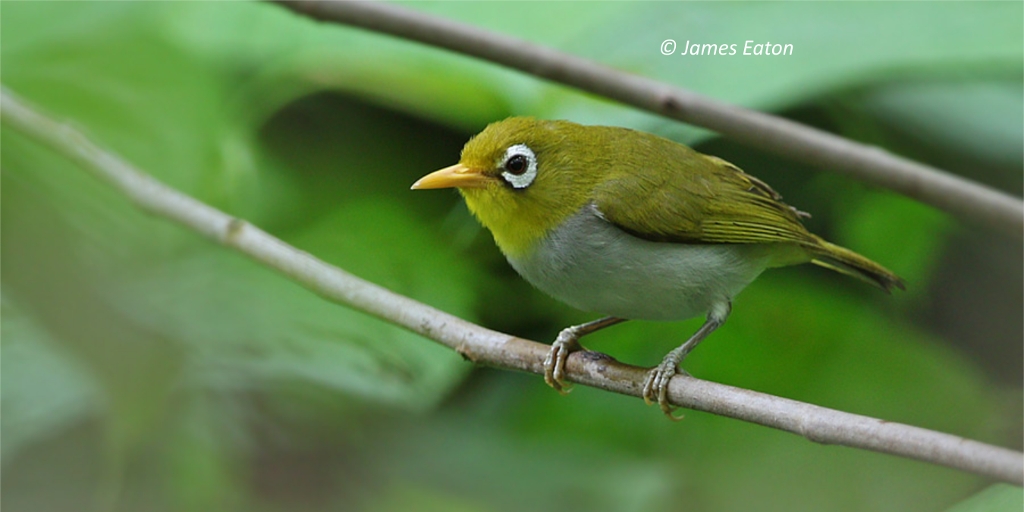
The Wallacea region has always been known to be home to many unique species, with birds of paradise, giant reptiles and marsupial versions of sloths found among its many islands! The region takes its name from Alfred Russel Wallace, who along with Darwin, developed the theory of evolution from his studies of the species of Wallacea. When I first set my heart on a career as a Zoologist (a decision made with absolute certainty at age 12!) I dreamed of following in the footsteps of these great naturalists. So it is of no surprise that when I finally got around to starting my PhD many years later, I chose to study speciation (the formation of new species during the course of evolution) in the birds of Wallacea, with the hope the region still held mysteries to uncover. Our research focused on South-east Sulawesi, Indonesia. Sulawesi is a weird and wonderful part of the world, and island hopping through that region has provided me with a lifetime of unforgettable memories. It also allowed me to fulfill my dream, as in our recent paper in the Zoological Journal of the Linnean Society, we describe two new bird species from the Wakatobi Islands, an island chain off South-east Sulawesi (Figure 1).
Zoology TY week is a programme of events put on for 24 transition year (4th year) students per year, drawn from schools across Ireland. Gaining a place is a competitive process, with 90 or so applications in each year so far. The winners get to experience what it’s like to be a zoology undergraduate, participating in workshops, practicals, lectures and discussions, with a tree walk, a bird race and a mini-field trip thrown in. They get hands-on experience and also the opportunity to discuss the life of a zoologist with undergraduates, post-graduates and teaching staff. The sessions are designed to show the breadth of the subject, ranging from consideration of tiny biology like the genetic analysis of what makes an embryo grow correctly, through individual animals in their parasitology, marine and terrestrial biology, and behaviour, up to the entire system in ecology and evolutionary biology. They are taught by the same lecturers as teach our undergraduates, so the TY class get to know their future teachers too. The following blog consists of paragraphs written by the Zoology TY class of 2019, half way through their week.
Applications for next year’s TY week will open in November – look for an application form on the TCD Zoology website then!
Every year, the Trinity College Dublin Zoology, Botany, and Environmental Science moderatorship students (final year undergraduates) complete their own research projects related to their course. It has been my absolute privilege to spend time with these talented students and to watch their projects take shape. I am blown away by the dedication they show, the incredible topics they cover, and the way in which they approach their investigations. After their theses are submitted, the students hold a poster session where they present their work. From beetles to beer and back again, this year’s students have done impressive and solid work. I hope all our readers enjoy learning about these projects as much as I did! If you’d like to contact any of these students to congratulate them, offer them prizes/jobs, or learn more about their projects, most of them have included contact information. Without further ado, I’ll let them take it away! -Maureen Williams, PhD Student, Zoology
In answer to the call for posts about ‘Modern Women in Science’, I decided to write about my sister: Dr Elizabeth Dobson BSc (Biology), BSc (Vet. Bio), BVMS (Hons), MSc, Diplomate ACVP.
Why my sister? Well, first because she’s an
accomplished scientist in the field of veterinary and wildlife pathology. And second,
because she’s had a unique career. It’s an example of how scientists can draw
on diverse experiences to shape their future and play an active role in carving
out a professional niche that aligns with their goals (and financial needs!).
Going right back to the time of
Darwin, competition has always been seen as a driver of evolution. When we
think of natural selection we often think of hyaenas and lions fighting it out
on the plains of Africa, or a pack of wolves hassling a bear over a carcass.
Resource competition like this is a daily part of survival for most animals,
with a delicate balance of power between competitors which can change in
different environments. However competition for resources takes place not only
between species (interspecific competition), but within them (intraspecific
competition), and often this is where competition is at its most fierce.
Sexually dimorphic species present a special case when studying competition in
different environments. They are species where the males and females are
physically different, often in body size, but also in colouration and other
characteristics. Males and females in sexually dimorphic species often occupy
different but interlinked ecological niches. If intraspecific competition becomes
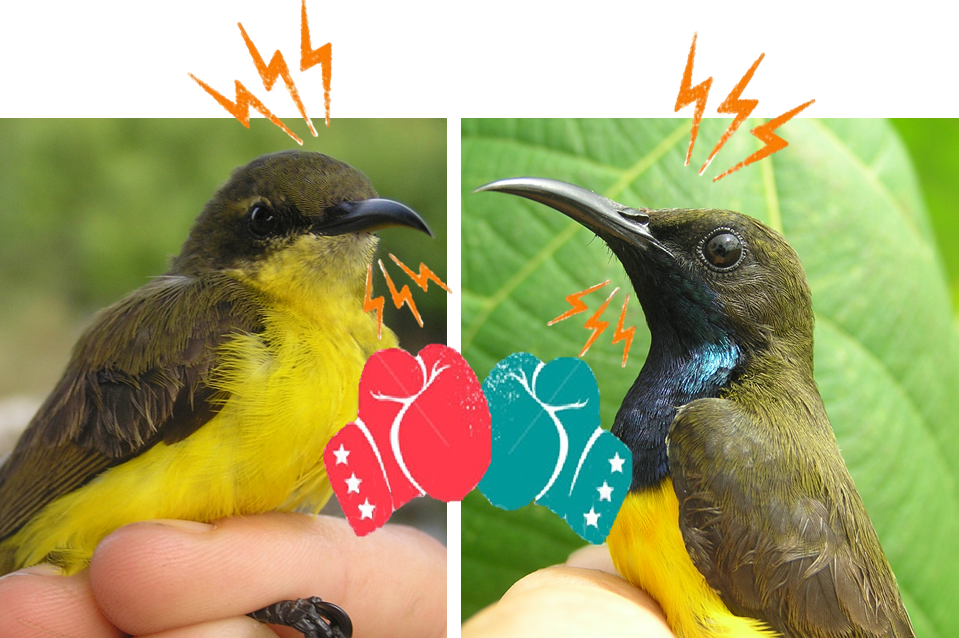
more intense within a population of a sexually dimorphic species then one sex
may suffer more than the other due to being smaller. In our recent paper in Emu
– Austral Ornithology we report on one such case with a niche contraction
in female Olive-backed Sunbirds (Cinnyris jugularis), but not males, in a highly
competitive environment on small islands. This work was carried out on the
remote and understudied islands of South-east Sulawesi, Indonesia (Figure 1),
where a joint team of scientists from Trinity College Dublin (TCD) and Halu
Oleo University (UHO) have been carrying out research into bird evolution since
1999.
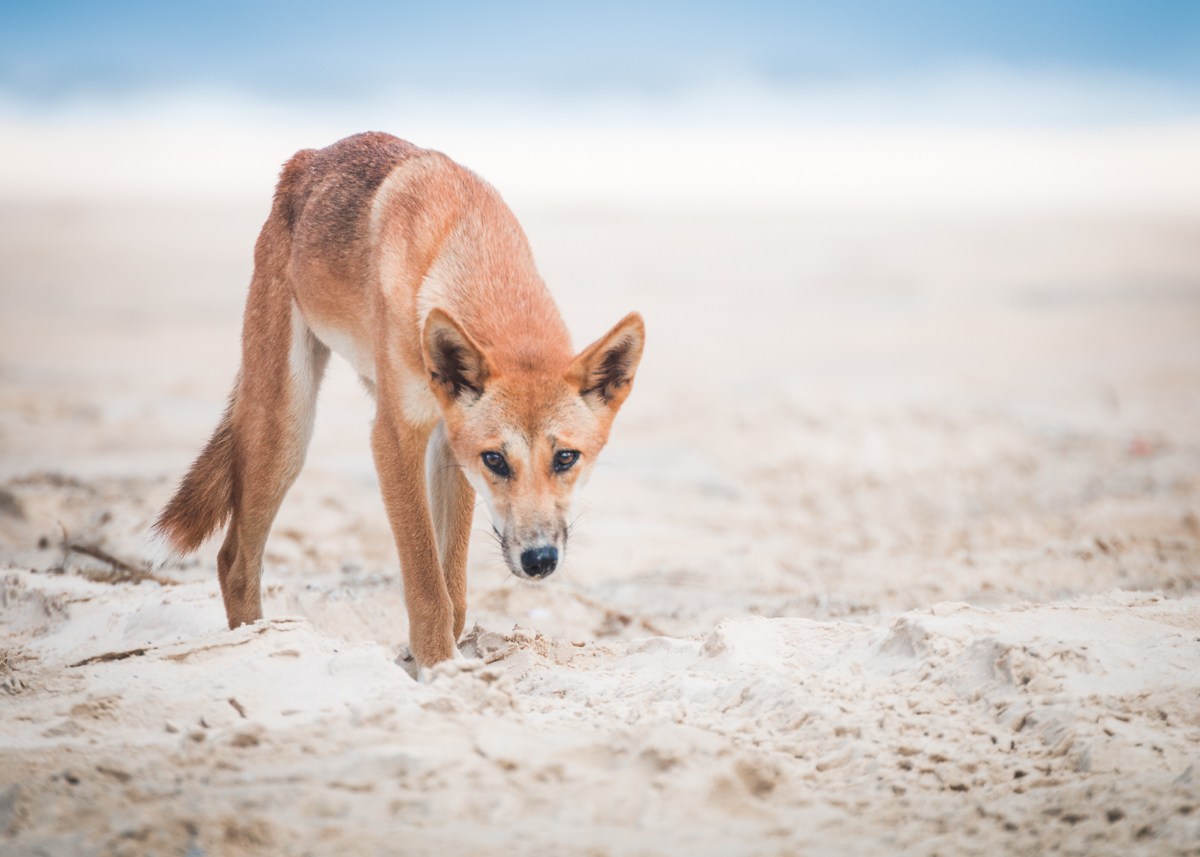
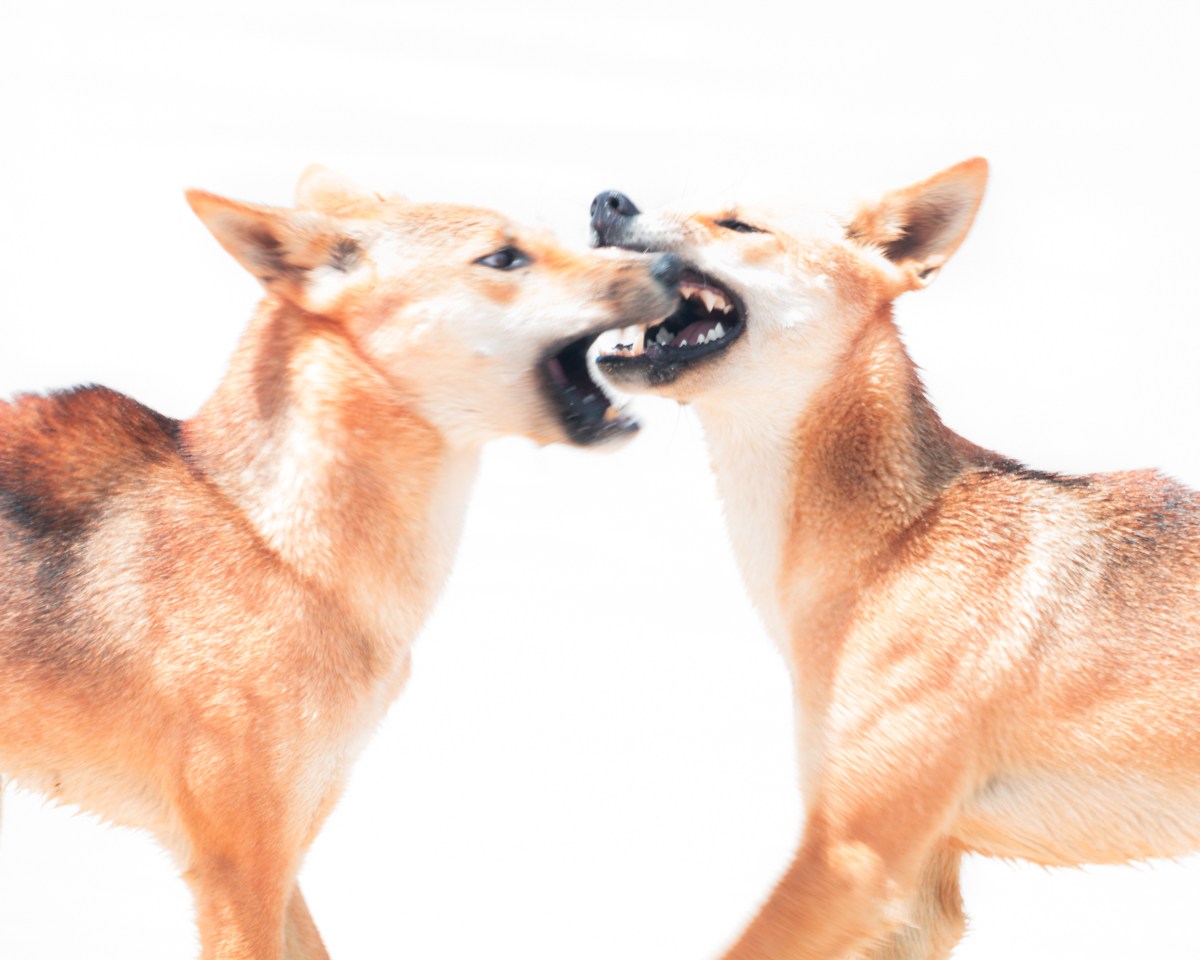
From my time exploring New Zealand and Australia last year, seeing
Dingoes on K’Gari was definitely the most goosebump-inducing experience!
Fireballs
K’Gari, also known by the colonial name of Fraser Island, is the largest sand island in the world. K’Gari is a word from the local Aboriginal people’s language that means “paradise”.