An army of skeletons with lasers

The word “Morphometrics” was already mentioned on this blog here and here. It’s a horrible term which nevertheless describes a really cool field in evolutionary science…

Today we’re having a workshop with François Gould (@PaleoGould) so hopefully everyone will know more about all things morpho by the end of the day. I won’t go into the juicy details of procrustes analyses, elliptic Fourier transform or other Bezier polynomials (see Zelditch and colleagues “Geometric Morphometrics” book or Julien Claude’s excellent “Morphometrics with R” for further details about these friendly terms). Instead, I’d like to talk about one aspect of data collection.

In a simplistic way, morphometric data can be sorted into two categories. Two dimensional data, such as linear measurements or shape outlines, can be obtained in many ways, from trusty calipers (which are digital these days) to computer measurements of landmarks placed on pictures (see here for a nice list of usable software). The second type of data is obviously 3D data which, again, may be collected in many ways using fancy technology from digital microscribes to medical CT-scanners.
IMG_1825
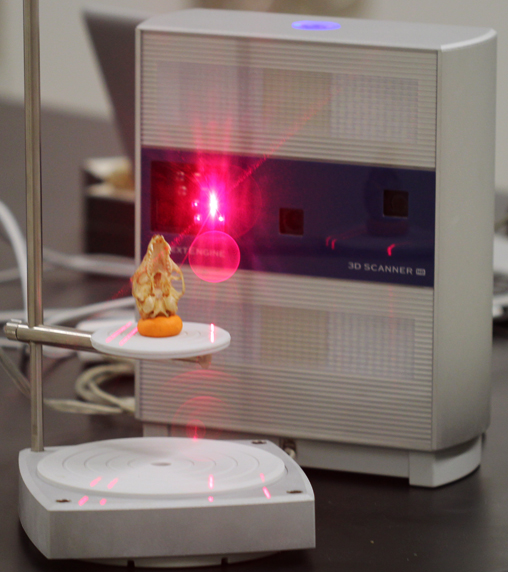
3D scanner

I use a surface 3D scanner like this one which has a fairly well defined list of pros and cons.
-Firstly, it is way more time consuming to scan specimens than to use either 2D methods or a 3D microscribe. My scanner takes roughly one hour per skull.
-Secondly, the scanner is quite expensive even though the final scans aren’t always completely accurate and may have problems of poor quality.

Despite these problems, I’ve found that, in the end, the list of pros is much longer!
-It is really easy to use the scanner and, even if the price is not cheap, it’s far from unaffordable.
-The data you get from a scan is easily transportable and therefore easily sharable; think about posting or e-mailing a skull! I think this point is really important when you are studying fossils. You can usually find skulls of most living primates in any natural history museum but fossils are really rare and specimens are only housed in a few places so access to 3D scans would be a great asset to interested researchers.
-Another point linked to this sharing idea: it is more scientifically friendly since you can put your scans into online supplementary materials and publish them with your papers.
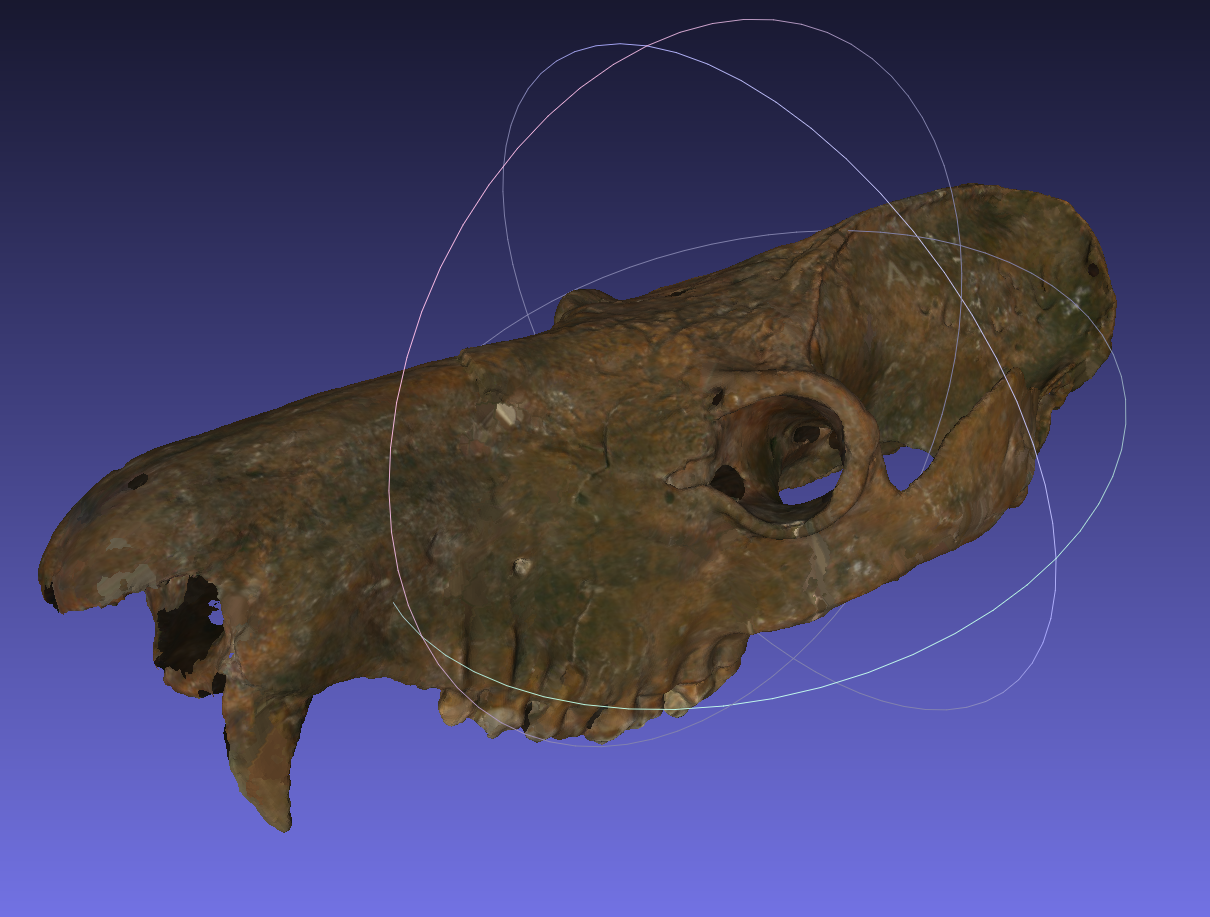
-Furthermore, even if it’s a less technical point, 3D scans look pretty amazing and are excellent illustrations for your papers like this 3D ring-tailed Lemur skull:

This list of pros and cons can continue on ad infinitum and ultimately all morphometric methods have both advantages and disadvantages of one kind or another. Aside from all these technical details, I think that the best part of using a scanner is the chance to play with lasers! It’s just so cool to be measuring skulls in a museum with a normal set of calipers while your scanner spits out lasers in all directions and then, by magic, the giant lemur (Megaladapis) on the desk is there staring out from your computer screen.
Screen Shot 2013-06-13 at 14.46.10
Megaladapis – the skull in the American Museum of Natural History is about 30cm long but only 50MB on my computer!


Author

Thomas Guillerme: guillert[at]tcd.ie

Photo credit

Thomas Guillerme
Back from the dead

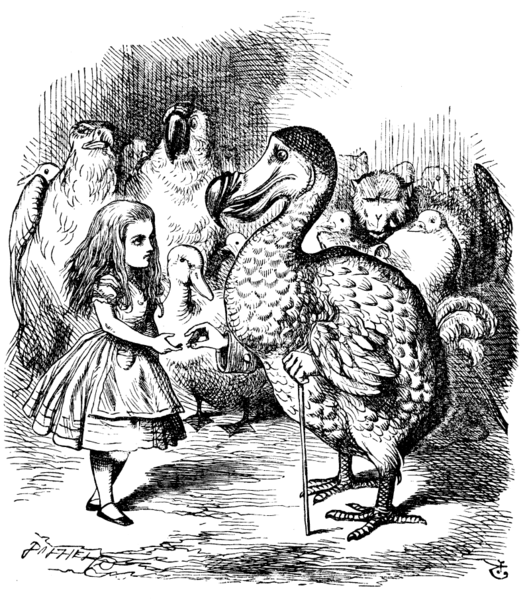
525px-Alice_par_John_Tenniel_09What do you associate with the word “extinction”?

I think of death, dinosaurs, dodos, desolation and despair (well maybe the last ones are a bit overly dramatic but I was feeling the alliterative vibe). No matter what your initial reactions may be, I think the concepts of extinction being irreversible and ultimately a “bad thing” would feature in most of our reactions to the word. It turns out that neither of these initial associations is necessarily true.

Extinctions are not always bad. It is all too easy to overlook their important role in shaping the evolution of life, a topic explored in a fascinating exhibition now on at London’s Natural History Museum. Extinction is arguably just as important as speciation in the evolution of our ecosystems so to think of it in a completely negative light is misguided.

However, extinction’s negative connotations are still very much justified. When humans mess with “natural” extinction trends is where we encounter problems. It’s a sad but true cliché that where humans go extinctions swiftly follow. Humans were either the direct cause or a major contributing factor in a depressingly long list of extinctions; from dodos and Tasmanian tigers to passenger pigeons and giant moas. When the last individuals of these species were either killed or lived out their days in captive isolation they marked one more reduction to global biodiversity and another page in the annals of the history of human stupidity and greed. Yet their extinction pronouncements may not be as final as they seem…

On the back of a recent TED special event, de-extinction is receiving increasing levels of attention and interest. The key concept arises from the intriguing difference between individual and genetic extinction; if DNA is salvageable then the possibility of raising species from the dead remains open. It’s a very attractive idea; extract some DNA, conduct some genetic jiggery pokery (can’t you just see my genetic expertise) to create viable stem cells or embryos, find a living relative of your target species and hey presto; an elephant gives birth to a woolly mammoth. The difficulties are found within the jiggery pokery steps; how to get enough good quality DNA to create viable stem cells and whether you can make a “pure” embryo of your species or create some kind of hybrid between living and extinct species. Despite the difficulties, the project to revive passenger pigeons is already underway with other candidate species including woolly mammoths, sabre-toothed cats and the great auk waiting in the wings.
The idea of coming face to face with a giant elephant bird or having your very own pet dodo is exciting to say the least – think of the revenue of a zoo which offered rides on a woolly mammoth! Yet de-extinction is a veritable minefield of ethical, ecological and legal debate. One of the main concerns, which I share, is the worry that even remote chances of successful de-extinction could detract from conservation efforts to save very much alive but critically endangered species. If we lose living species we can’t just 3D-print carbon copies and plonk them back into their habitats. De-extinction should be seen as a difficult, expensive and ultimately very risky last-resort measure to regain lost biodiversity, not an alternative to protecting what we have now.

Conservation issues aside, if by any chance we did manage to successfully re-create an extinct animal what happens next? Would it just become an expensive sideshow attraction at some zoo or, perhaps, have a glittering movie-star career (creating employment for the sabre-toothed cat animal trainers of tomorrow)? There are arguments that, with mass-scale de-extinction and subsequent successful breeding, new populations of revived species could be re-wilded back into their natural environments and help to restore ecological functioning. It sounds great but, given our chequered history of ecosystem meddling through species introductions it’s difficult to see how we could accurately predict or control what would happen if we introduced genetically engineered species into habitats which, most likely, have undergone extensive ecological change in that species’ absence.

De-extinction research is undoubtedly fascinating from a purely technological and scientific point of view. Furthermore, the prospect of reclaiming species from the past is sure to excite the latent Jurassic Park Ranger career aspirations of all of us. However, the controversies surrounding the process are well-justified and it’s clear that we have a long way to go before booking our next woolly mammoth safari holiday.

Still, perhaps the phrase “dead as a dodo” does not have as final connotations as we once thought…

Author

Sive Finlay: sfinlay[at]tcd.ie

Photo credit

Wikimedia commons

Bringing our perceptions closer to reality

mmw_womenscience0716This blog post was originally written and published here on the SoapBox Science blog. The Soapbox Science event showcases UK women in science to inspire the next generation of scientists by making science fun and accessible. This year it will take place on Friday 5th July 12-3pm on the Southbank in London. If you’re in the area why not go and take a look?

First a little thought experiment: without over thinking it, list ten top scientists in your field…now, honestly, what percentage of your list are women? Continue reading “Bringing our perceptions closer to reality”

Beasties in the grass

On the 22nd of May, Trinity held its first BioBlitz day where members of the public and all nature enthusiasts alike were invited to see what little beasties they could find around the campus. We decided then to get our own trusty field books and cameras out to see what lurks just outside our department doors!

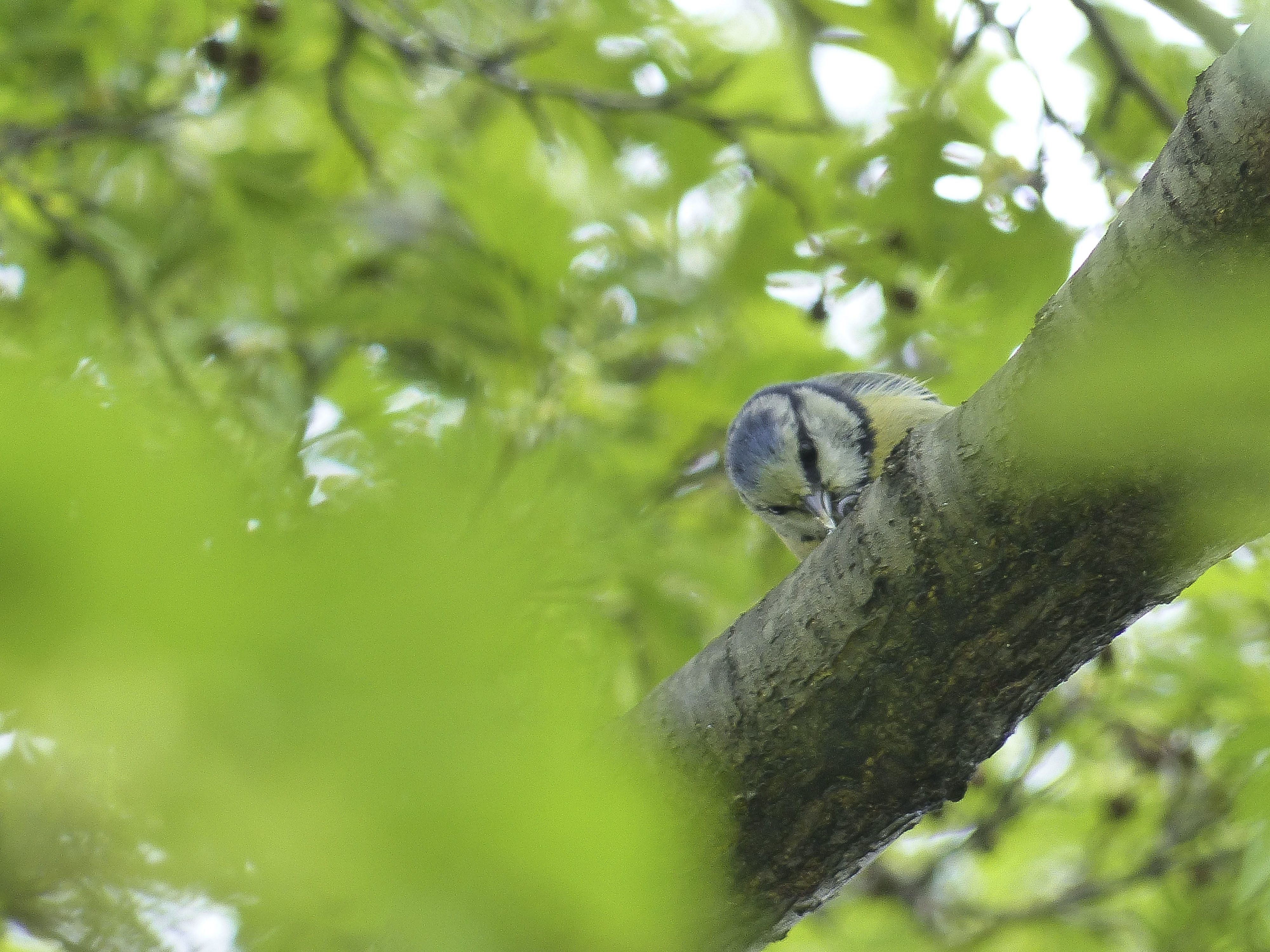
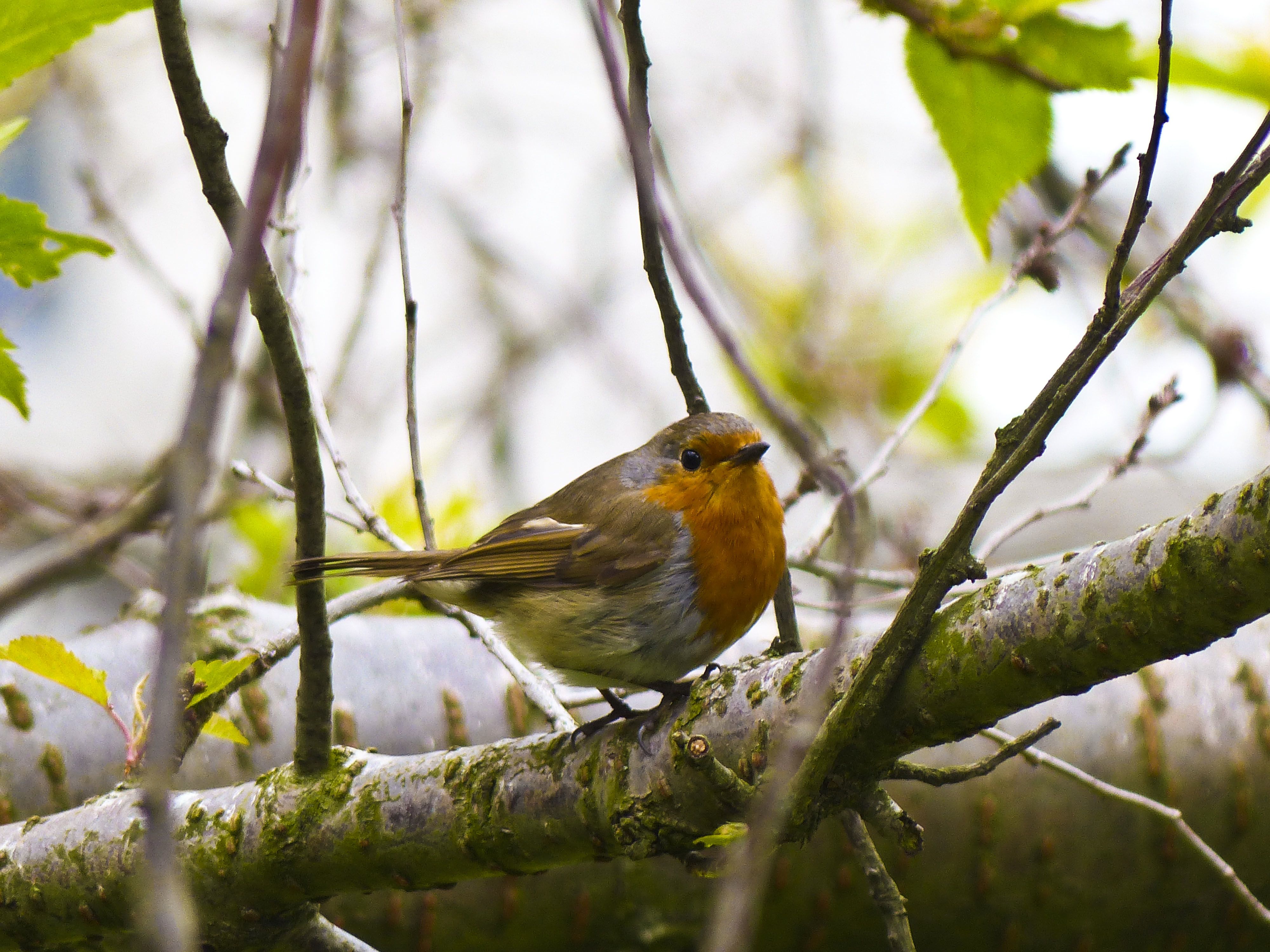
The most obvious animals to find around the campus are the numerous bird species, including many small passerines that set up territories in the trees outside the department such as this robin and blue tit.

Blue tit
Blue tit
Robin_1
Robin

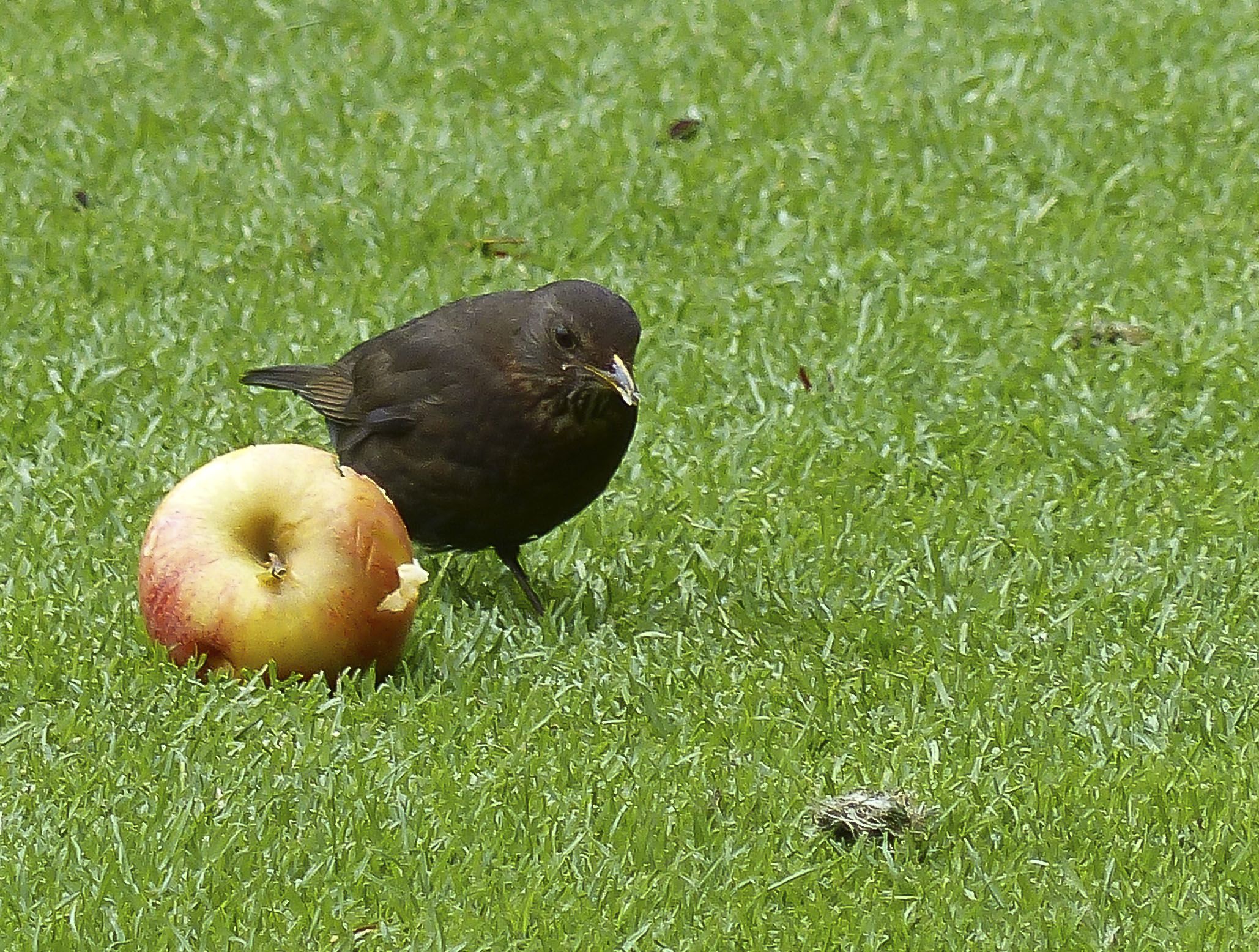
The birds around campus seem to like to follow the lunchtime behaviour of us humans, such as these blackbirds.

Female Balckbird
Blackbird

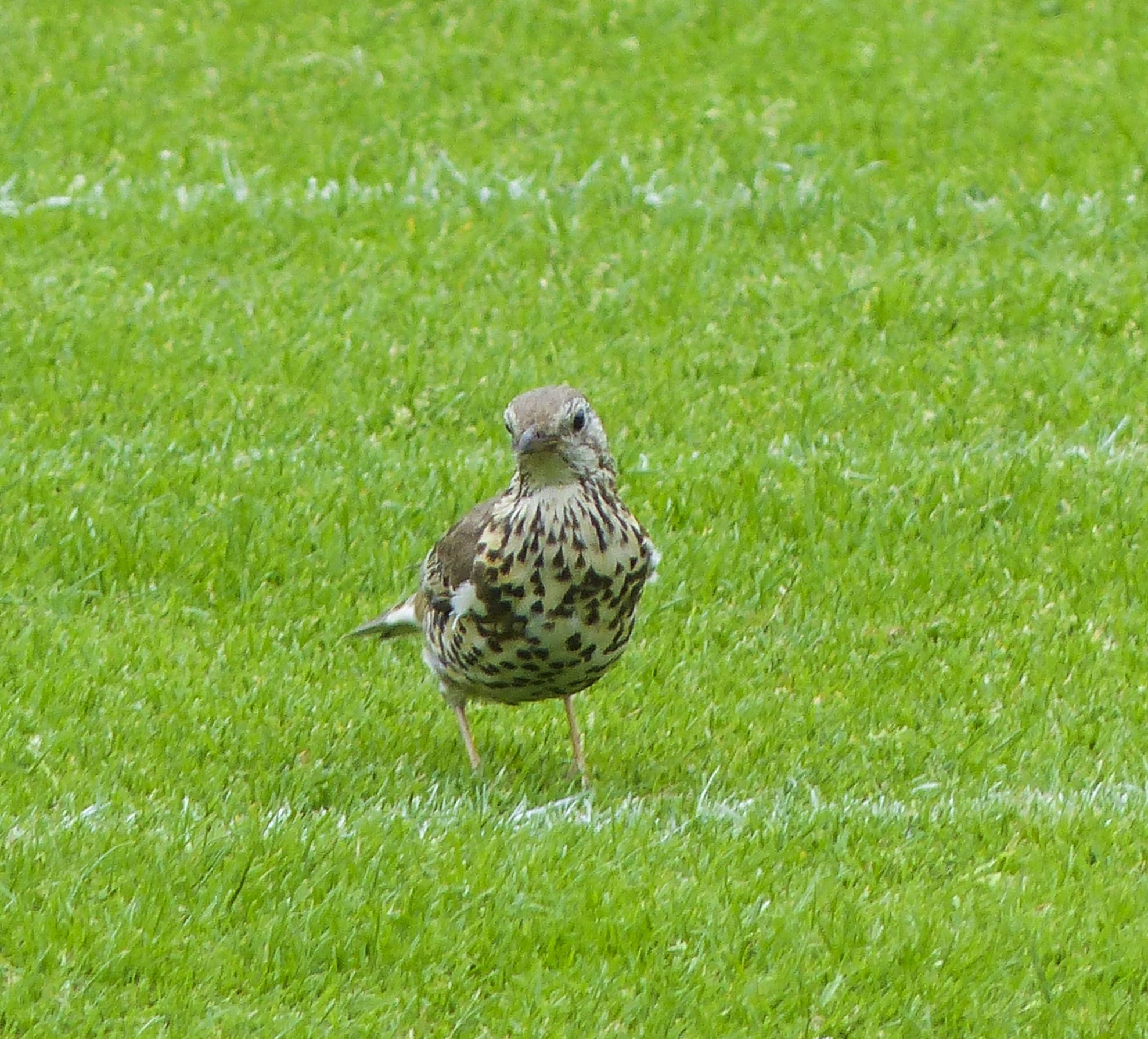
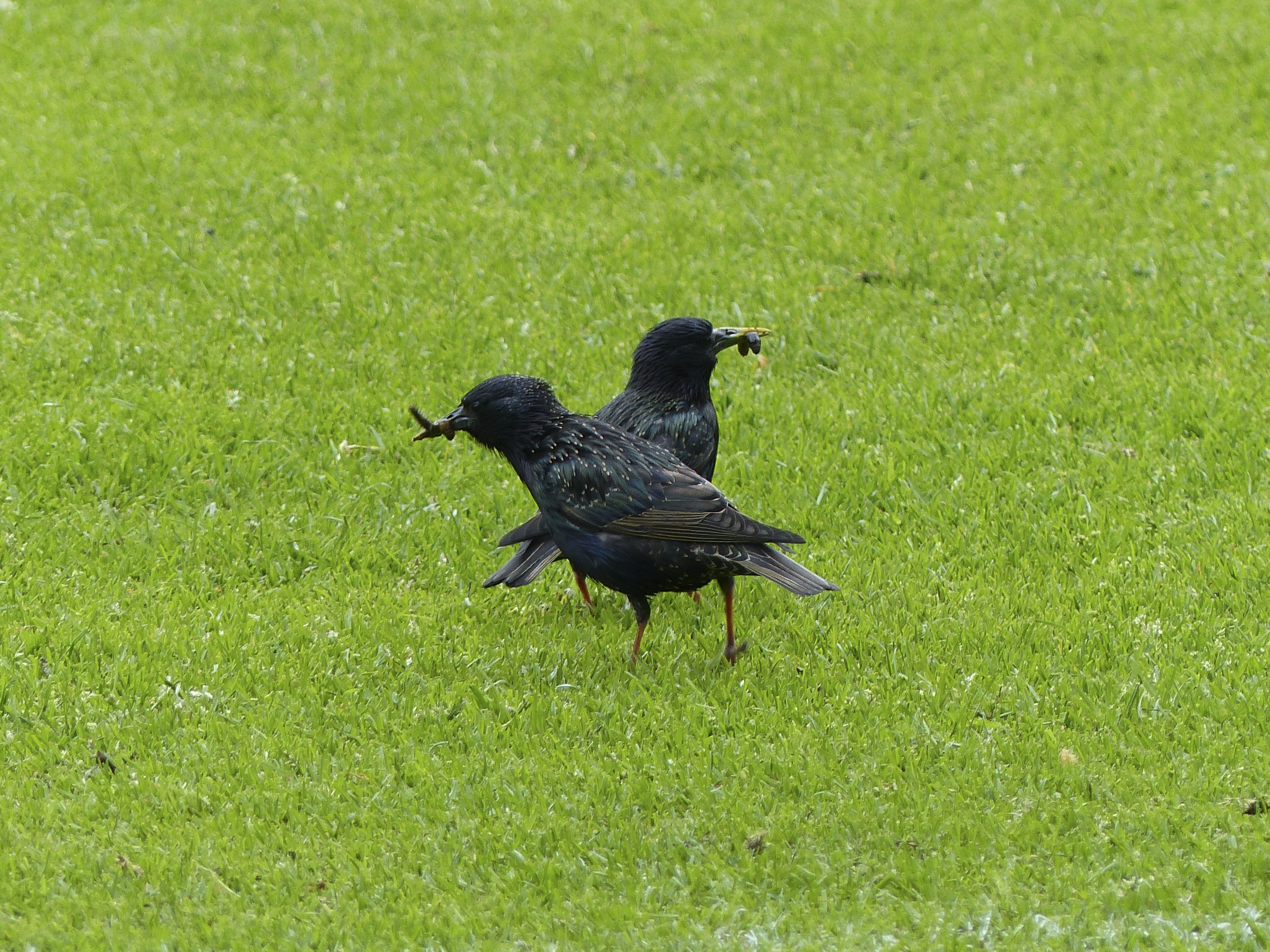
However there are lots of tasty invertebrates around the various sports grounds.

Mistle Thrush
Mistle Thrush
Starlings with grubs
Starlings

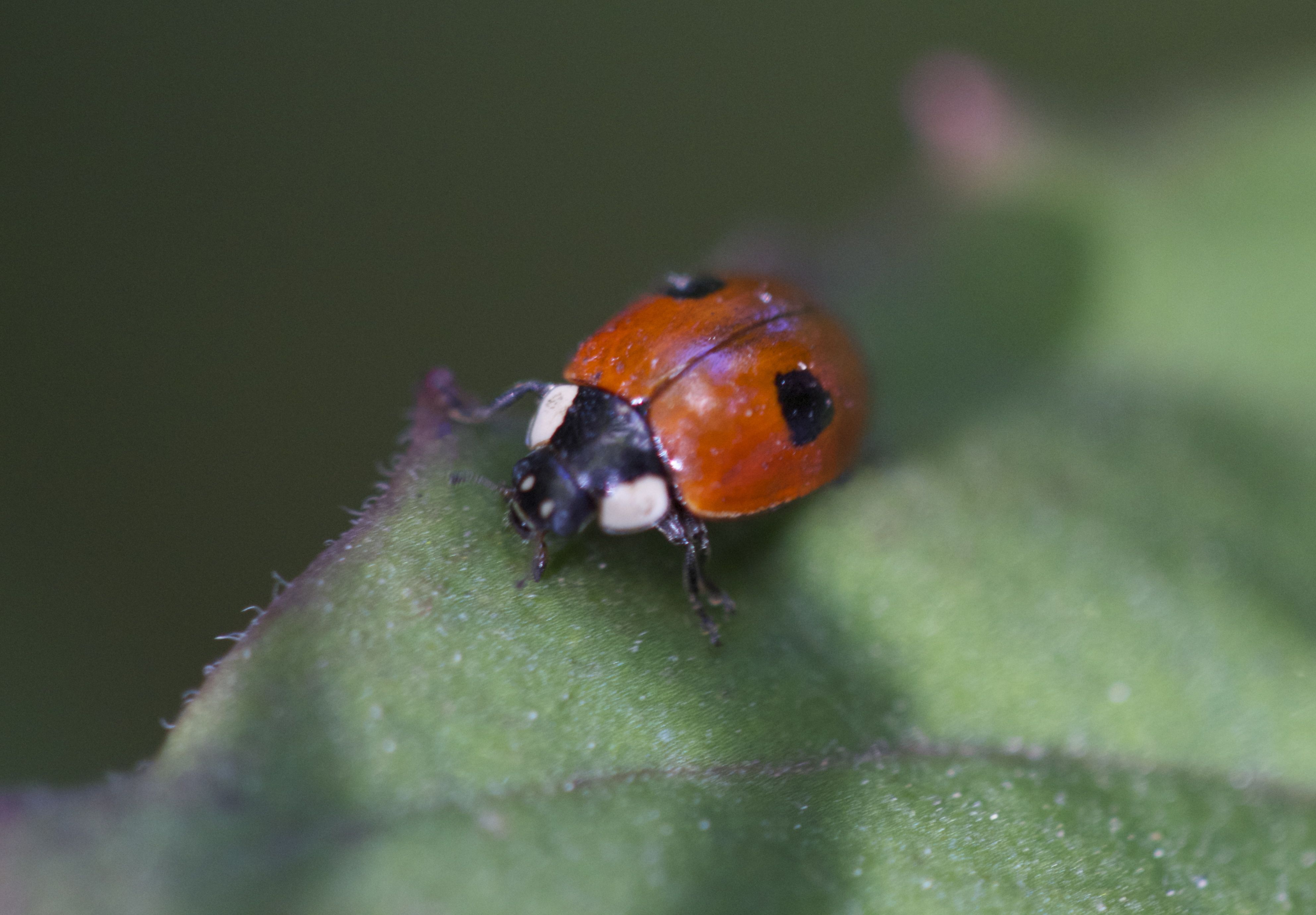
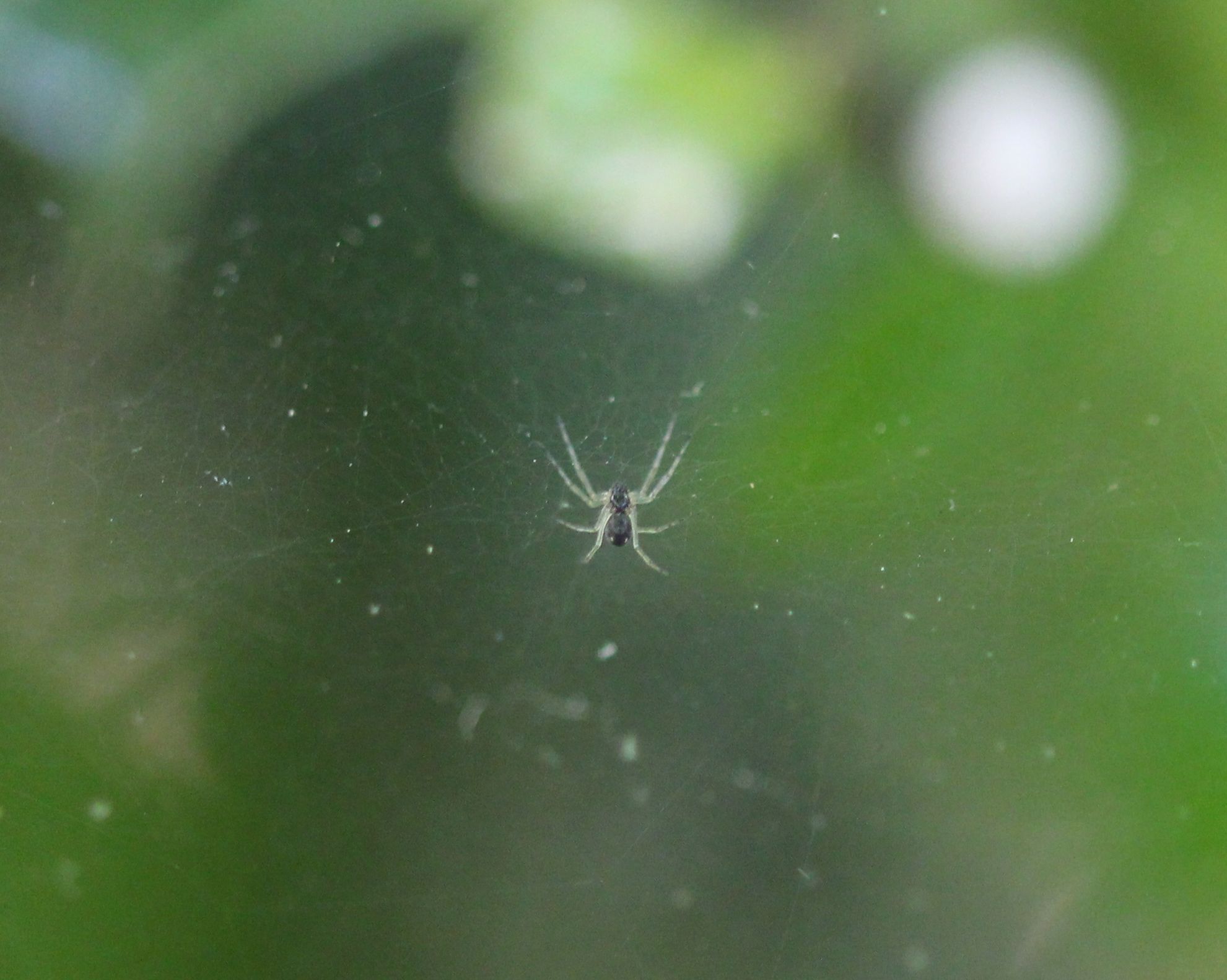
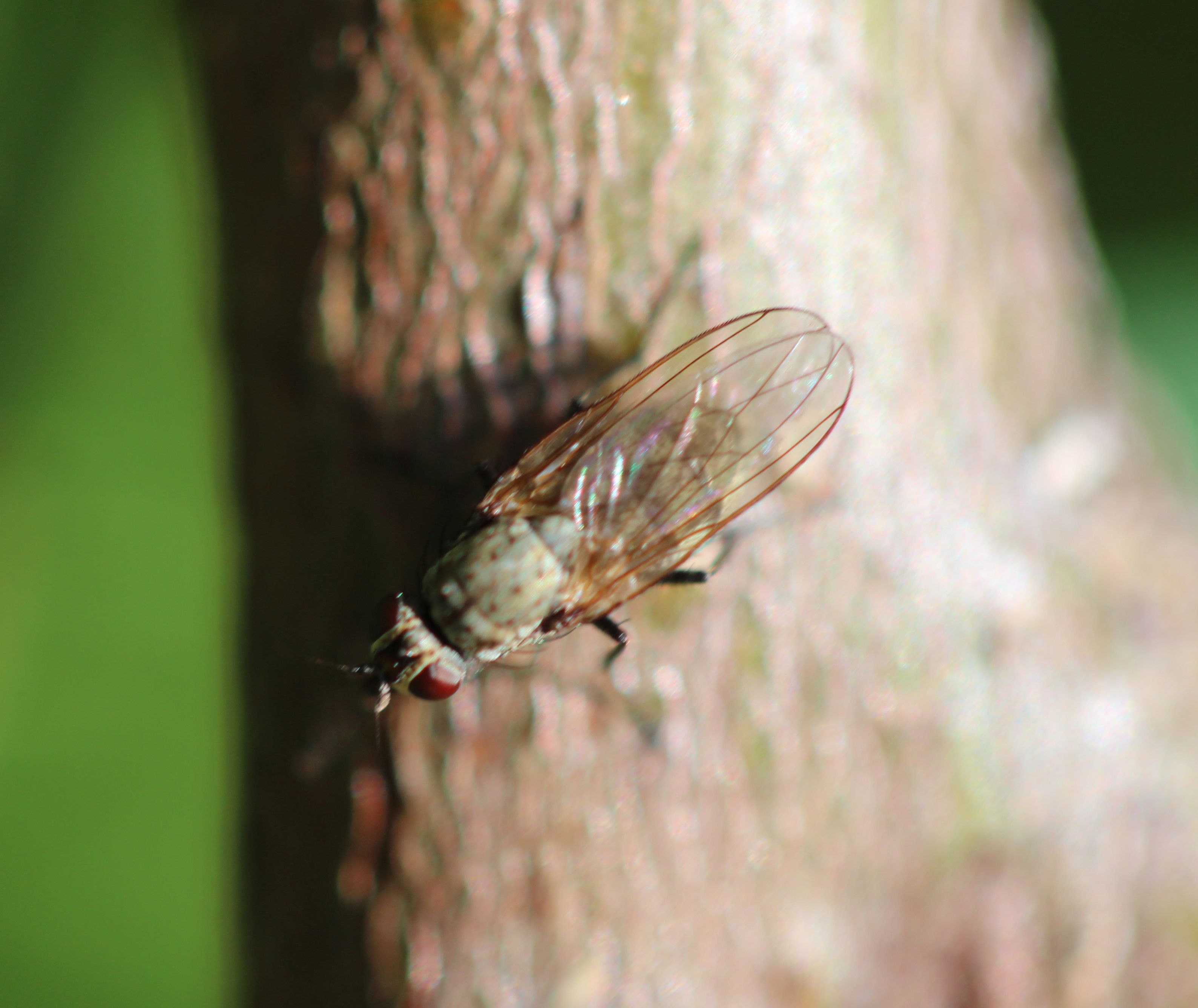
We confined ourselves to the long grass, however, in our search for inverts finding the usual suspects such as aphids, spiders, Drosophila and ladybirds.

aphids
Aphids
Spirling
Garden Spider
Fly
Drosophila
Ladybird
Two spotted ladybird

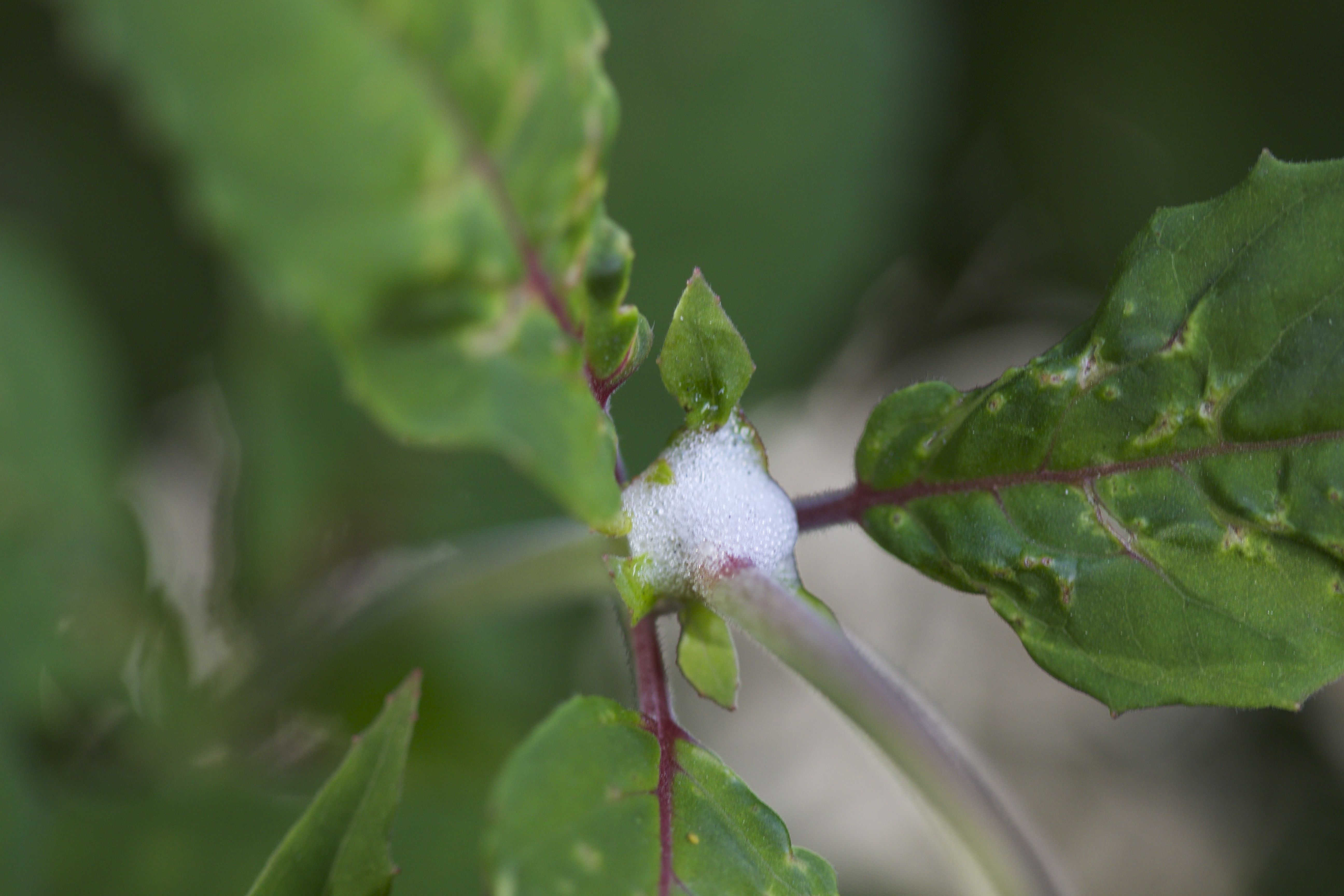
We also found nymph froghoppers, a Hemipteran (True Bug) that protects and shields itself by producing a mass of foam.

Cookcoo spit
Froghopper foam

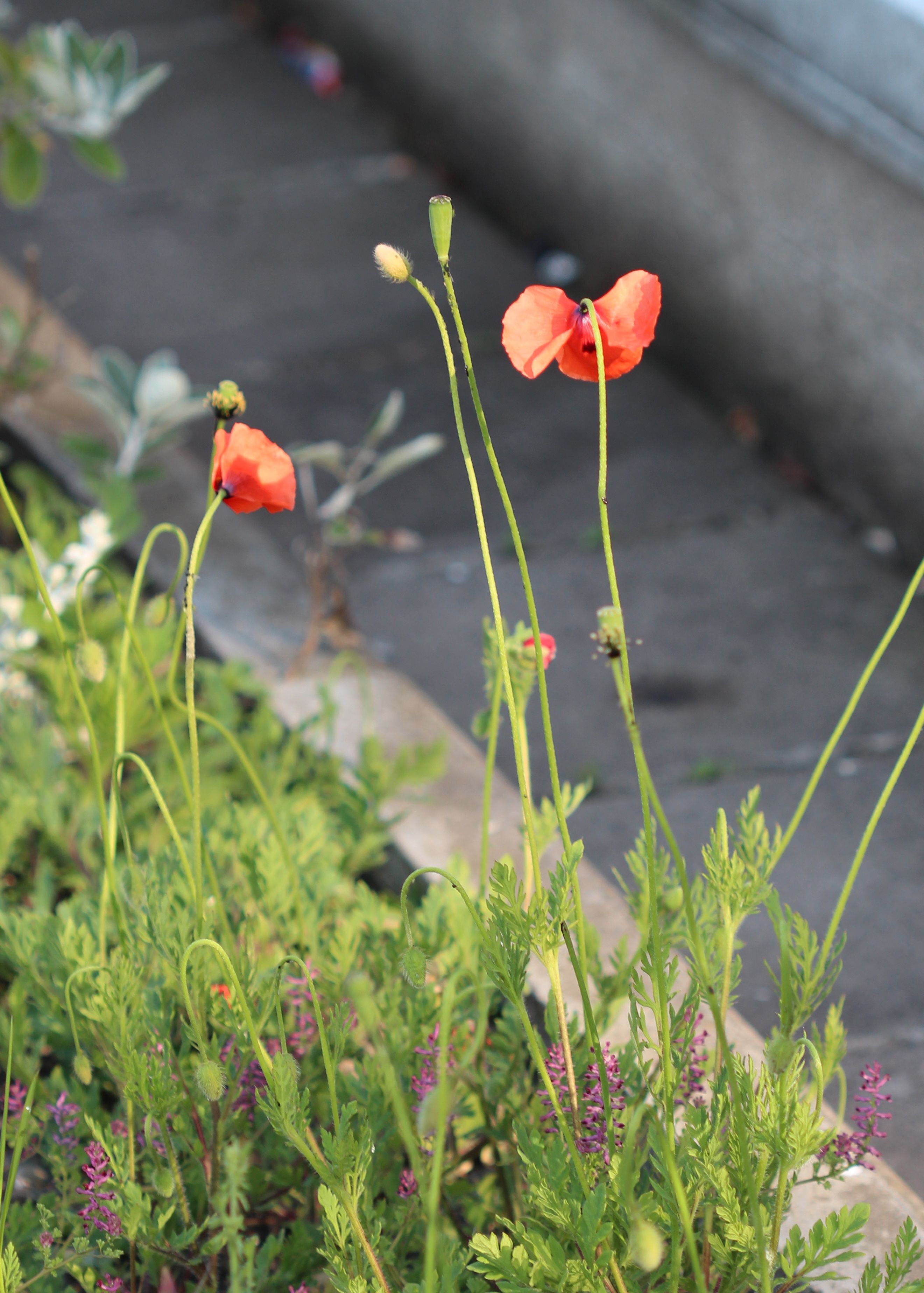
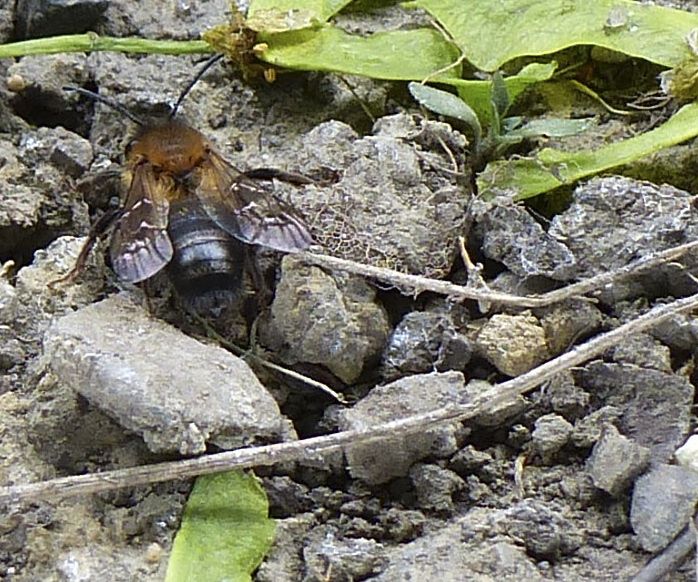
Despite the large amount of non native plants on campus, such as poppies and orchids, pollinators still manage to squeeze out a living on campus as demonstrated by the presence of a seemingly social group of solitary Andrena bees beside the cricket pitch.

Poppy
Poppy
Orchid
Legume
Soliatry Bee sp.
Andrena spp

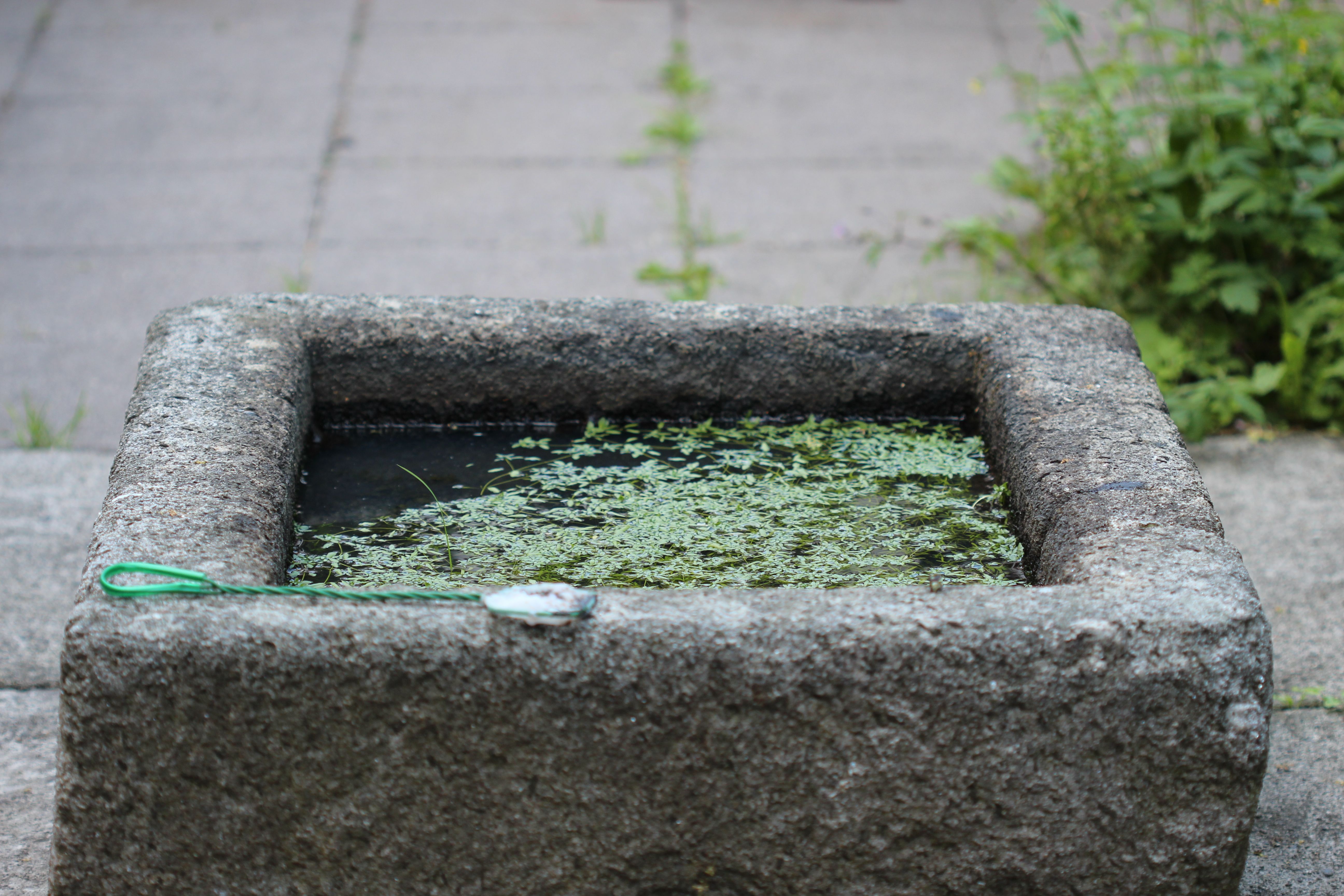
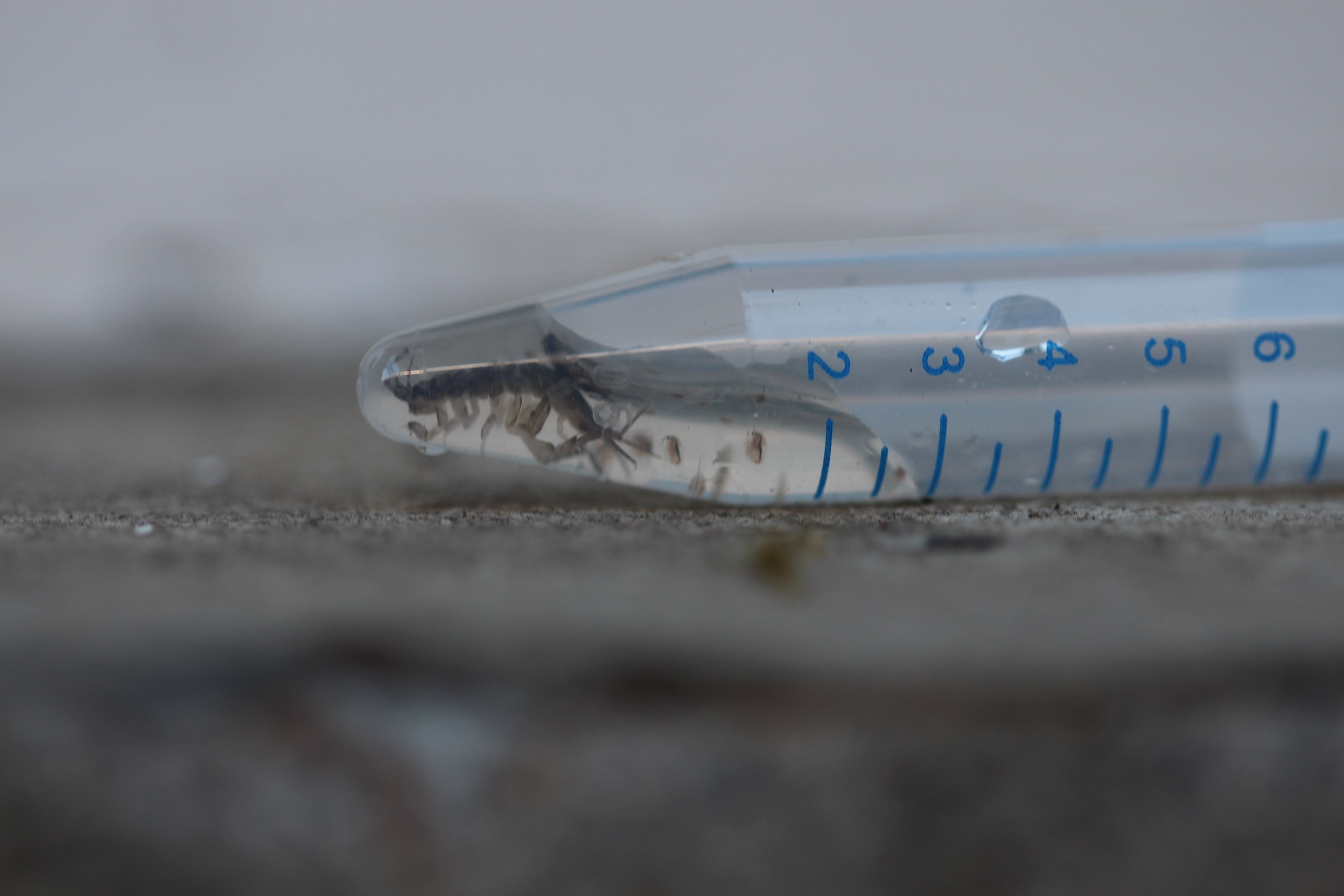
Finally we searched in what we thought was a lifeless stagnant pond in the back of the department only to find it teeming with daphnia, gammarus and hoglouse.

Pond
Department pond
Daphnia and Hoglouse

So even in the centre of Dublin a closer look at biodiversity can often surprise you!

Author

Kevin Healy: healyke[at]tcd.ie

Photo credit

The Zoology Department BioBlitz Team

The Evolution of Natural History Museums

I’ve been touring international natural history museums as part of my PhD research. The “behind the scenes” aspect of each museum is fairly unchanging; row upon row of cabinets with some very unusual objects lurking within – the taxidermic tastes of some people just leave you wondering… Aside from the obvious dissimilarities in size, the major difference between the museums I’ve visited is in the style of their public exhibits. Like any other industry, museum exhibition styles are subject to fashion trends which reflect society’s interests and inclinations at the time of the exhibit’s creation. Visiting collections in Dublin, London, Washington DC, New York and Harvard University is an interesting trip through the evolution of natural history museums.

A visit to Dublin’s Natural History Museum should be treated as an historical trip back to the golden age of Victorian interests in the natural world. The museum’s first floor gallery is typical of the “classical” approach to natural history collections; collect and stuff as many animals as possible and cram them together in display cases to be admired. Scientific information is often limited to just species names and any niggling doubts about taxidermic accuracy should be ignored (have a look at the Orang-utan’s less than life-like features on your next visit). I love this old style, not only because you never know what odd creatures are lurking around the corner but also for its testimony to the collecting frenzies of 19th century naturalists.

A quick tour around London’s natural history museum gives a flavour of the evolution of exhibition styles; from display cabinets similar to Dublin’s “dead zoo” approach through to the ultra-modern and interactive Darwin Centre where you can watch a real-life scientist at work behind a glass screen (maybe not so far removed from a zoo after all?) The human biology exhibits lie somewhere in the middle of these two extremes. The interactive displays that allow you to re-live your time in the womb and explore how your senses work represent some of the earliest changes in exhibition planning; the move from passive presentation of natural objects to interactive attempts to inform and entertain museum visitors.  These changing attitudes are documented in Richard Fortey’s excellent book about life at London’s museum.

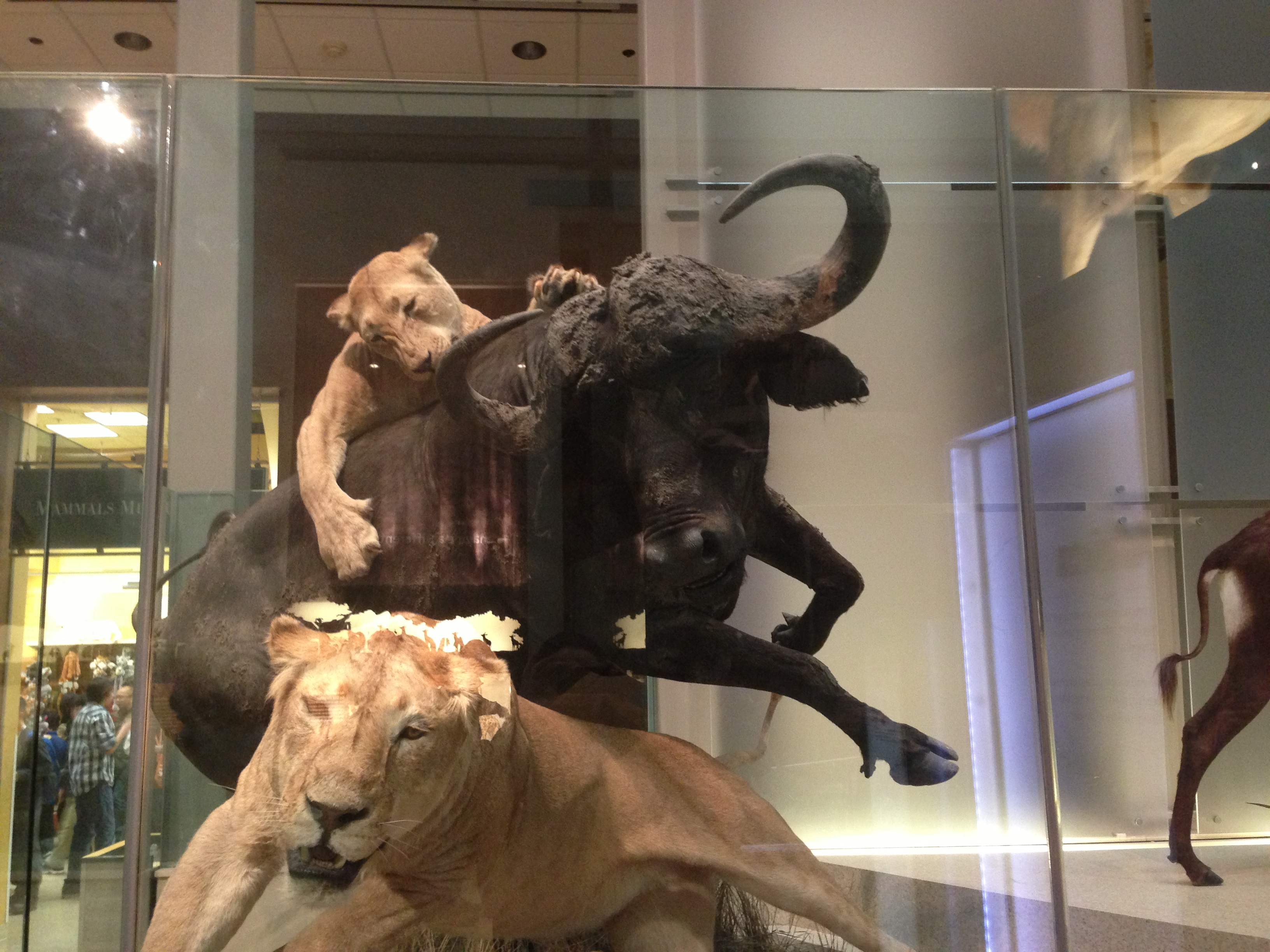
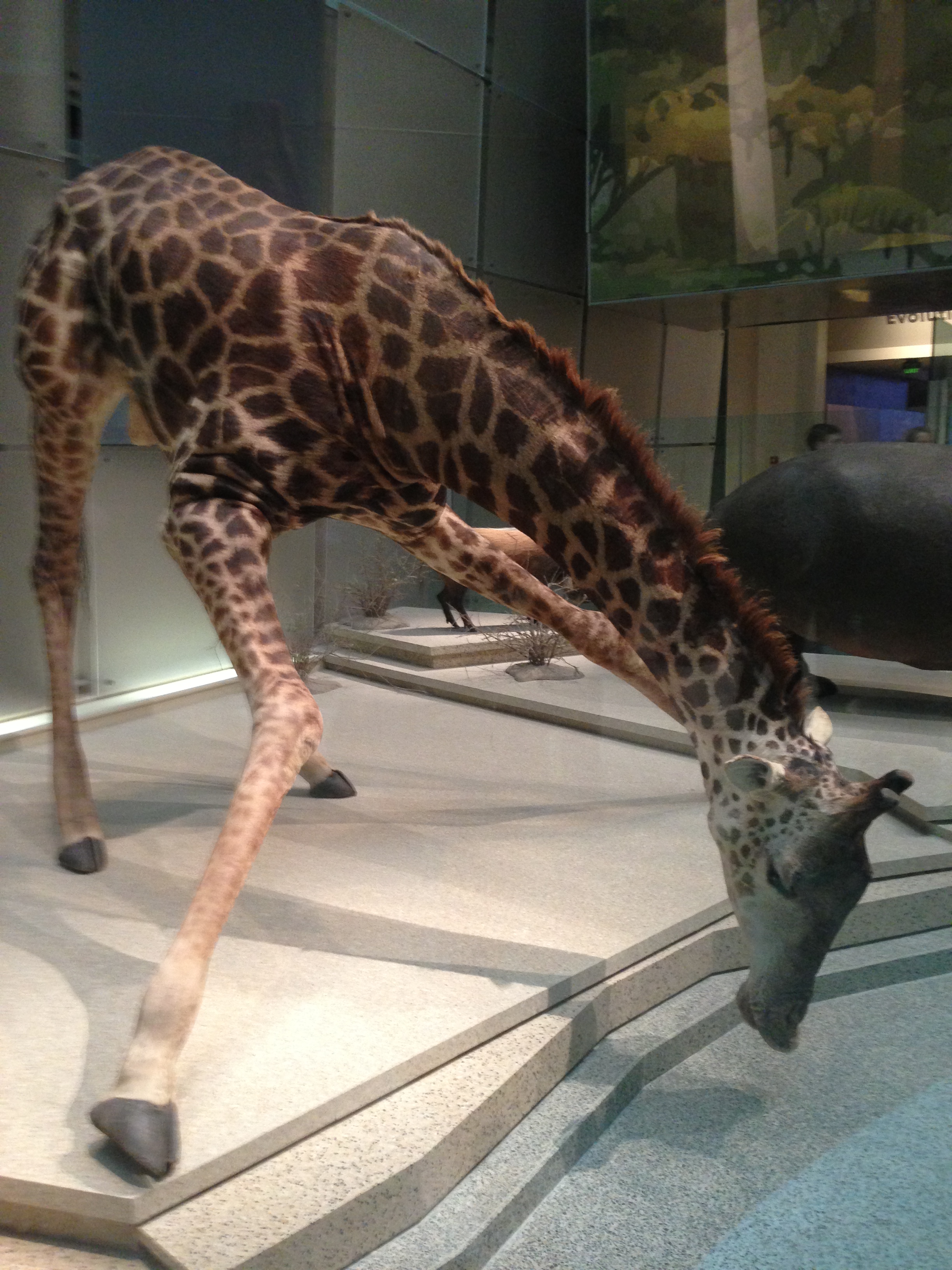
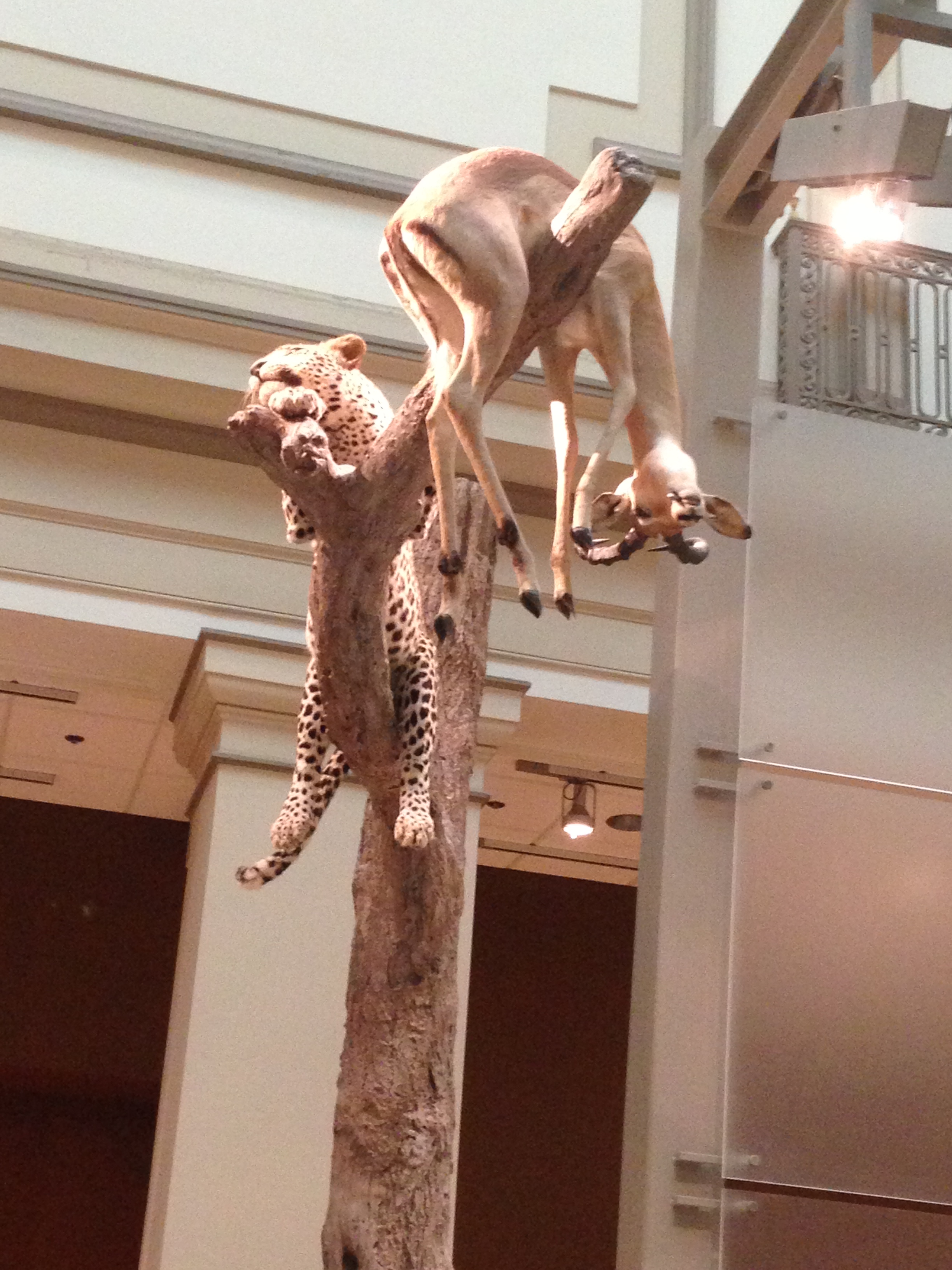
In different ways, the American museums I visited also mix old and new approaches to museum exhibits. The Smithsonian Institute seems to have a taste for dynamic and life-like taxidermy. They have a giraffe drinking from a waterhole, a leopard hanging out with its kill in a tree and lions in the middle of taking down a water buffalo.

IMG_0368

IMG_0369

IMG_0367They’re the same species as can be found in Dublin or London but their action-style poses certainly adds a bit more realism to the exhibits. You just have to wonder about what weird contortions and odd framing apparatus must have been used to preserve these animals in mid-action poses for ever more.

The American Museum of Natural History has a different approach to adding a touch of life to their dead zoo. Many of their species are displayed in dioramas; recessed windows frame scenes from Savannah, tropical rainforest, desert and woodland life. The AMNH also has a cleverly designed and beautifully displayed wing where visitors can walk the vertebrate tree of life. Feeling somewhat Dorothy-esque, you follow the vertebrate phylogeny laid out on the ground, stopping en-route to see fossil or skeletal examples from all the major lineages. Instead of going down the “pull a lever/ push a button/ touch a screen” route of exhibition interactivity, the AMNH has enlivened the traditional natural history style by displaying their species in an evolutionary or ecological context which is far more interesting and informative for the visitor. They are certainly lovely scenes to admire, though I do admit that I spent most of my time wondering what happens when everything comes to life at night

Although smaller in size, Harvard’s Museum of Comparative Zoology combines all the exhibition styles of its big city museum counterparts. There are dead zoo-style cases of stuffed animals, ecological dioramas of species found in New England forests and high tech, interactive touch screens to explore the tree of life (a lovely tool but not completely up to date – because I’m pedantic I had to check how they classified tenrecs…) The added benefit of the MCZ is their inclusion of exhibits based on current and previous research of the museum and affiliated staff. They have specialised, themed exhibits based on their research expertise, I particularly loved the displays about the evolution of animal colouration and camouflage based on research from the Losos lab. Despite its limited size, the MCZ combines all major aspects of the evolution of museum exhibits; from static stuffed animals through to interactive attempts to inform visitors and clear links with active, current scientific research.

There’s clearly a huge variety in natural history museum exhibits and it’s interesting to see how each institution tackles the task of preserving their tradition while still continuing to keep a pace with the demand for new and more exciting exhibits. Our own TCD Zoology museum is no exception to this evolving museum trend as we prepare to welcome our first public visitors of the summer in just a few weeks’ time. I look forward to sharing some our own quirky museum stories; just how did our elephant, Prince Tom, fit in through the door?

Author

Sive Finlay: sfinlay[at]tcd.ie

Photo credit

Sive Finlay

If you please – draw me a dino…

Imagine you’re stuck in the desert, your plane has crashed and you’re trying hard to fix it. Then a child pops up out of the blue and asks you straight out “If you please – draw me a dino…”. Now let’s say you do as Antoine de St-Exupéry and take up the challenge without asking too many questions. How would you draw that dino? I guess it depends on when you were asked the question.

Let’s go back through the history of drawing dinosaurs. The pictures I grew up with were the ones from Jurassic Park who came directly from the last dino-revolution started by Ostrom and Bakker‘s work (especially with the publication of Dinosaures Heresies, in 1986). This vision was then heavily popularized by the three (nearly four?) blockbuster movies we all know and love…

Since the late 1990’s, the increased availability of formerly highly expensive techniques such as CT scans or synchrotrons, has helped to understand dinosaurs better than ever. Led by new discoveries from vast, previously unexplored deposits, some of the most interesting work from recent times shows an even closer link between birds and dinos than we previously thought (see last week’s Science NOW). So I believe (and hope) that the next generation will grow up with the pictures of dino-chickens and see their lunch time chicken wings as true theropod meat…

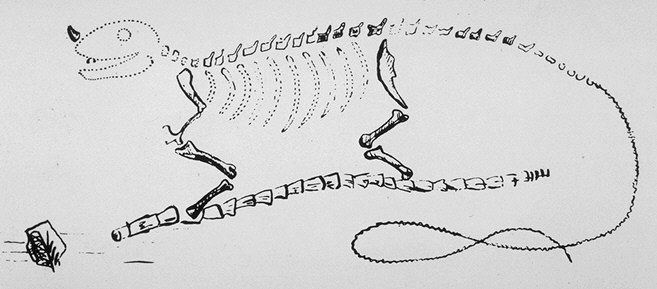
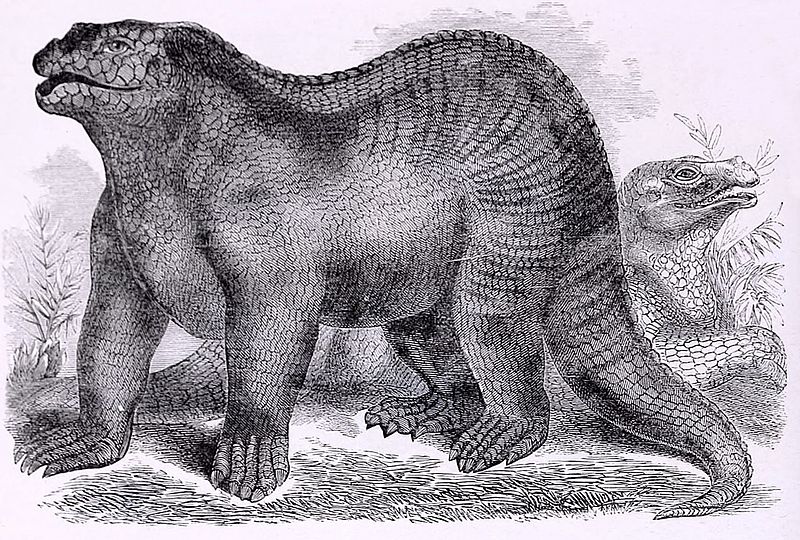
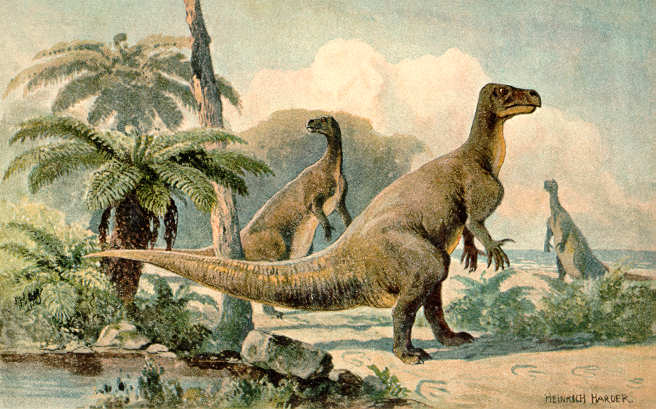
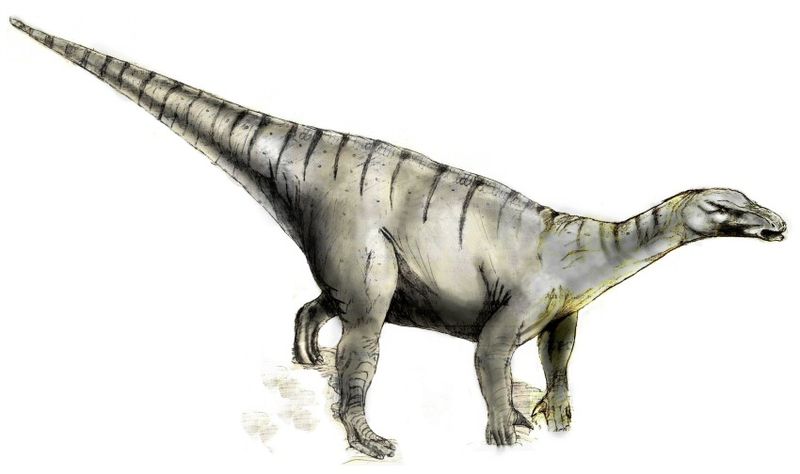
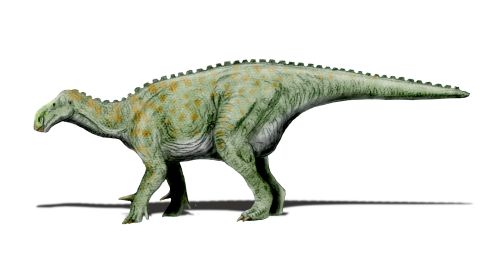
It is always really interesting to look at all the work that has been done and presented to the public through dinosaur pictorial art; from the weird/funny starts in the first half of the 19th century to the modern, highly accurate representations of today (the French artist Alain Bénéteau is just one example among many). As a nice example, have a look at the pictorial evolution of the second oldest scientifically described dinosaur: the Iguanodon.

Mantell's_Iguanodon_restoration
Mantell‘s Iguanodon – 1825
800px-Goodrich_Iguanodon
Goodrich‘s Iguanodon – 1859
Harder's Iguanodon - 1916
Harder‘s Iguanodon – 1916
Bekaert's Iguanodon - 1995
Bekaert‘s Iguanodon – 1995
Tamura's Iguanodon - 2012
Tamura‘s Iguanodon – 2012

But here I’d like to emphasize my love for what I think was the “golden age” of dinosaur pictorial art. I obviously want to refer to the work of artists like Charles R. Knight (1874:1953), Zdeněk Burian (1905:1981 – have a look at this awesome online gallery) or Rudolph F. Zallinger (1919:1995). Their beautiful and (for their time) highly accurate scientific artwork was crucially import for bringing palaeontology into the public eye. This “golden age” was made possible by the upgrading of palaeontology to the status of a true science and the general acceptance of Darwin’s theory. Public interest in palaeontology at this time was also fueled by new fossil discoveries from expanding European colonies and the American frontier eventually leading to the most epic palaeo-story ever: the Bone Wars (soon to be seen on HBO)!

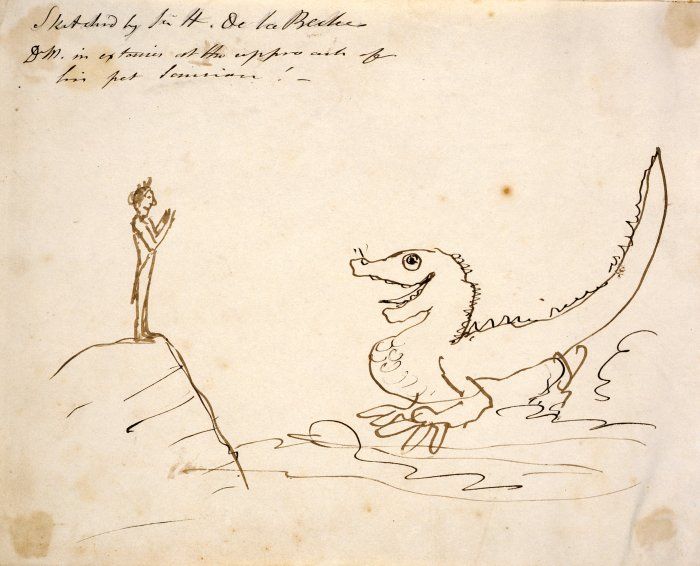
I refer to this period (second half of the 19th century and first half of the 20th) as a “golden age”  but that does not mean that it was the peak of palaeontological discovery or interest. Our palaeo-knowledge has never been richer. Dinosaurs are no longer merely unknown beasts from an ageless past. They are now placed in accurate phylogenetic frameworks and are just one of the many extinct tetrapod groups which we can now link to extant biodiversity. However, identifying birds as living remains of the dinosaur lineage does diminish dinosaurs’ mightiness. They are no longer the perfect romantic group of fossils: giant monsters that ruled the earth for over 150 million years before being completely wiped out by a single meteorite that cleared the way for us to evolve and exist. Even if I actively try to fight against this simplistic view of the History of Life, I have to admit that it is the one that brought me into palaeontology, not the chickens I used to keep in my parents’ garden… So, although I have no drawing talent whatsoever, because I think that dinosaurs are still awesome but lacking the mightiness they deserve, I’ll draw that little prince something like this:

Dr_M_in_extassies_at_the_approach_of_his_pet_Saurian_by_Henry_De_la_Beche
A sketch from De la Beche (1930) titled: Dr M[antell] in extasies at the approach of is pet Saurian
This post was inspired by the excellent “Dinomania” chapter of Gould’s Bully for Brontosaurus 1991, by a master’s project done with F.Barbiere, S.Enault and B.Ramassamy and by the excellent blogs which can be found about this subject such as here, here or here.

Author

Thomas Guillerme: guillert[at]tcd.ie

Photo credit

Wikimedia commons

Who’s afraid of the big bad wolf?

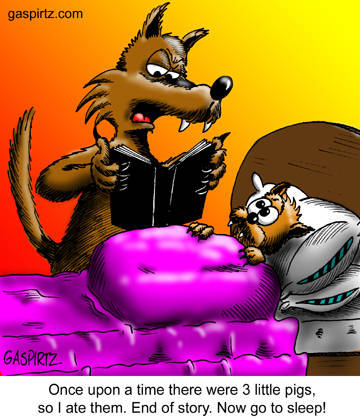
Wolf_reading_bedtime_story

In popular culture, especially literary references, wolves are usually sly, cunning and vicious. Think of the fairy tale wolf villain who used his drag queen and voice modulation skills to fool Little Red Riding Hood into thinking that he was her aged grandmother. Some literary wolves are more than a little bit gullible; thwarted in his attempts to demolish a house of brick, the Big Bad Wolf resorted to a chimney entrance route to reach his porcine prey. Not the wisest option; he should have known that the Three Little Pigs had plenty of straw and sticks to kindle a substantial fire.

Captive wolves can be just as cunning as their fairy tale counterparts. RTE’s series on Dublin Zoo featured amazing footage of an extensive tunnel system the wolves had excavated below their exhibit. They were slowly making headway towards the boundary fence and would have eventually escaped into the Phoenix Park had their attempts not been thwarted by vigilant keepers. Surely these wolves’ valiant efforts deserves a theme tune

Anthropomorphic representations of wolves are undoubtedly influenced by their status as carnivores. It’s easy to project evil characteristics or motivations onto animals that hunt and kill cute and placid grass-munchers. In contrast, can you think of any stories about evil or menacing herbivores? (What exactly is an evil giraffe?)

Interestingly, though, our literary biases against carnivores only extend to some species. Think of all the children’s books about cute and cuddly polar bears; somehow they manage to gloss over the blood and gore at the end of this incredible video.

Cultural biases and anthropomorphic labelling of wolves as “evil” or “cruel” may even contribute to some of the staunch opposition to wolf reintroduction and management programs. Wolves are sometimes perceived as vicious killers with no role in or value to an ecosystem. This is in contrast to other sympatric predators, such as cougars, which can be equal if not greater threats to both humans and livestock but don’t elicit the same controversies or opposition to their management or conservation. The difference in our perceptions of these predators seems to be historical.  It’s much easier for ranchers to accept and cope with the threats from cougars than to contemplate or deal with the problems associated with reintroducing wolves back into areas which formed part of their historical range.

I’m not attempting to dismiss or belittle the very legitimate concerns and problems associated with managing and protecting wolves. But perhaps if we change how we perceive and depict wolves in our stories and culture it would help to rejuvenate their image and re-cast them as no more evil or menacing than other predators with which we have learned to cope.

I think we need to boost wolves’ PR. The Twilight series is certainly playing its role in this mission; wolves have never been so popular among teenage girls.  Despite these efforts, we need more positive cultural and literary links to wolves. Perhaps a new series of children’s books about “Winston the wistful wolf” or an uplifting Disney wolf cub coming-of-age story would do the trick? These majestic creatures should not suffer the fate of perpetual villain type-casting.

Author

Sive Finlay: sfinlay[at]tcd.ie

Photo credit

Wikimedia commons

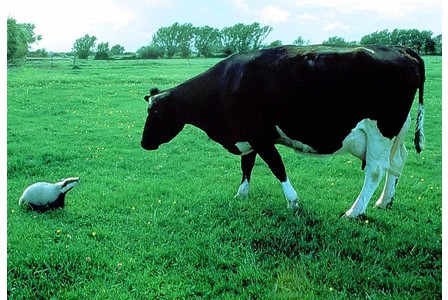
Do badgers play Friesian tag?

image001

While there is irrefutable evidence for the transfer of bovine TB between badgers and cattle, the mechanisms of transfer are not clearly documented. In order to reduce such transfer, it is obviously important to understand how infection takes place.

With such questions in mind, data from a study of free-ranging badgers was combined with detailed records of paddock use by cattle. Each study badger was carrying a personal GPS unit on a tailored collar, so their movements could be monitored to within a few meters. The paddock use of the cattle was recorded on a daily basis. The data were combined, using mapping software, such that a daily log could be constructed for badger and cattle activity. Continue reading “Do badgers play Friesian tag?”

IUCN Red Listing Ecosystems Workshop

Peatlands_-_geograph.org.uk_-_6592

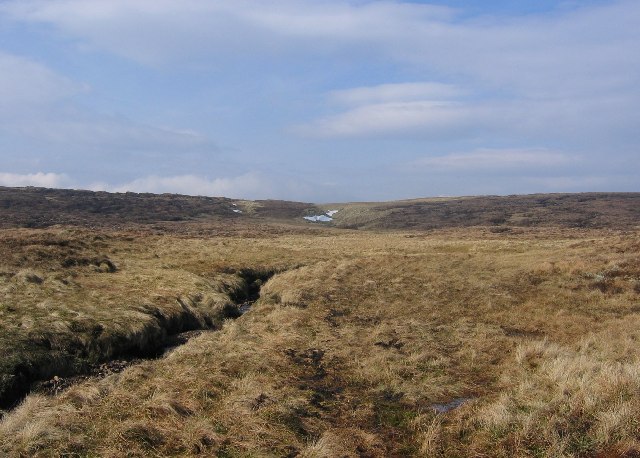
Many of us attended a fantastic seminar on Friday the 17th of May, given by Dr Ed BarrrowsIUCN Red List of Ecosystems: An evolving tool for risk assessment, priority setting and landscape action. Dr Ed Barrows is a former graduate of Trinity’s Zoology Department and is currently the Head of Ecosystems at the IUCN. The focus of his talk was to introduce us to the new risk assessment criteria developed by the IUCN to assess ecosystems. This will ultimately provide the world with a Red List for Ecosystems. We were all familiar with the concept of a Red List for Species but this was the first time we had been introduced to concept of a standard global assessment of risks for entire ecosystems or “higher levels of biodiversity”. First we had a great introduction into the new ecosystem assessment tool developed by the IUCN. Ed brought us through the process behind the model and the need for such a tool. Incorporated in the model was the interesting concept that of ecosystem collapse. When does an ecosystem go beyond recovery and change into something else.

A well deserved cup of coffee and great pastries helped us to digest and process this information.

Following this, a number of the lucky ones who had signed up for the workshop traipsed over to the SNIAM building where we were in for a treat. Ed was hosting a two hour workshop to give us all some practical experience of applying the model and carrying out a risk assessment on an Irish ecosystem. There really was a great mix of people attending from permanent Trinity staff, post docs, master’s students, undergraduates and members of various NGO’s.

We were divided in to four groups. The model uses four distributional and functional symptoms to assess ecosystem risk. Two of the groups were to look at the criteria A & B (distributional) and the other two C & D (functional). Ed explained to us that the process of evaluating a habitat would normally take over four months and extensive amount of backing data. He then proceeded to tell us that we had two hours and two scientific papers with which to assess maybe one of the most politically sensitive habitats in Ireland “Peat lands”! A lively debate ensued as the two groups from each section gave their results and the reasons as to why they come to those conclusions. The final discussion looked at the fifth criterion which estimates the risk of ecosystem collapse and assigns it to critical, endangered or vulnerable – I think there are still people arguing over it…

Author

Caoimhe Muldoon: muldoocs@tcd.ie

Photo credit

Wikimedia commons

May I take your order?

Not_a_Common_Visitor_to_Somerset

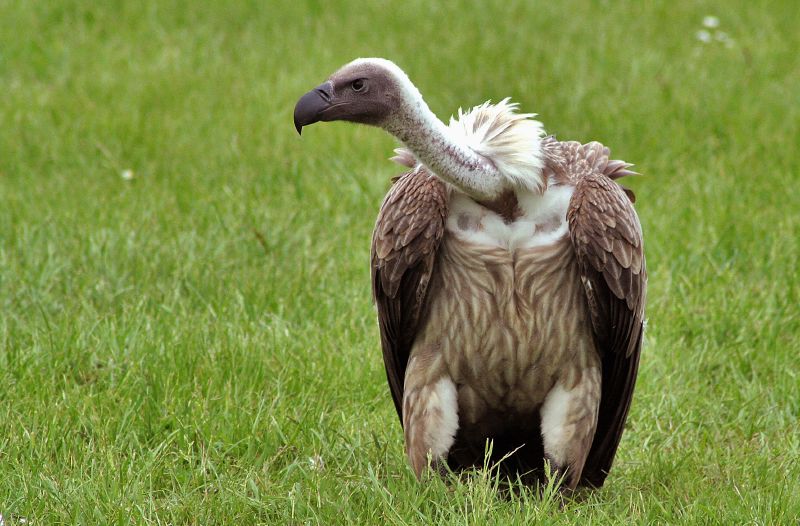
My PhD involves studying the foraging behaviour of vultures. So far I’ve done theoretical work and also had the luck to get some second hand empirical data. But I’d like to be able to get some field data first hand. To that end I’m setting off to Swaziland on Saturday with the intention of building a vulture restaurant and a walk-in trap. The first item takes a little explaining. Vultures are carrion feeders, which means their food source is unpredictable, the bird never knows when the next wildebeest is going to drop dead. So they’re quite sensitive to declines in food availability. But a vulture restaurant is a conservation tool that acts as a supplementary feeding station for the birds. The people organizing the restaurant can deposit carrion at the site thereby providing an extra food supply for the vultures. This is done to keep the birds within an area, to feed them during times of food scarcity or in my case to aid in their capture.

Alongside the restaurant we’re going to build a walk-in trap, a simple structure that the birds walk into before we close the door behind them and have a PhD’s worth of data points. Well, it’s not quite that easy. I want to be able to find out to where these birds are foraging at a high temporal resolution so we will be putting GPS tags on the vultures once we capture them. This means some poor soul will be entering the trap and extracting the birds one by one, each animal getting tagged before being released back into the wild. I should stress this has been done before on many occasions and the birds are all freed within minutes without any ill effects.

So far a lot of research done in this area provides us with broad-scale movement patterns. With my finer scale data I’ll hopefully be able to pick out some quite specific aspects of vulture foraging behaviour. Wish me luck!

Author

Adam Kane: kanead@tcd.ie

Photo credit

Wikimedia commons