From a Frozen Zoo Then Back to Life: A Clone’s Story

The media love to brand cloning as an apocalyptic threat that involves mad scientists, evil doppelgängers, and mutated monsters like Frankenstein. Thanks to such misconceptions, cloning discussions highly focus on the idea of human clones and what this means for our individual identity. However, much like the Sun does not revolve around the Earth, life is more than mankind. This human self-entitlement draws away from the fact that cloning can be a tool used to right our wrongs, as cloning has the potential to save species that we have endangered or even resurrect species that we have driven to extinction. But before Jurassic Park and Ice Age fans get too excited, I’m here to convince you that we should focus our cloning resources on reverting species decline rather than de-extinction. Read on with an open mind and look past the assumptions that the media have distilled in how we think and understand the science of cloning.

Credit cover picture: USFWS Mountain Prairie is licensed under CC BY 2.0
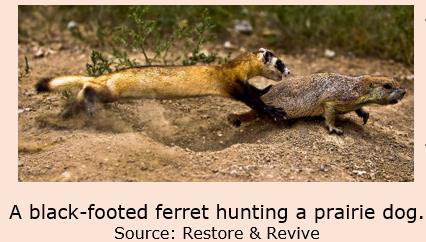
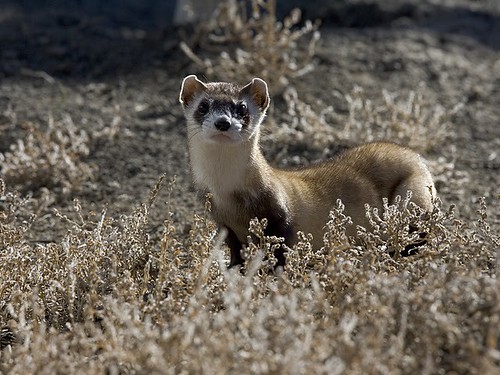
To demonstrate how cloning can successfully save a dying species, I am going to take you on a journey as we explore the life, death and rebirth of a clone named Elizabeth Ann. Elizabeth Ann is a black-footed ferret whose species is native to the United States. In the 1970s, this species was thought to be extinct after farmers and ranchers destroyed the main food source of black-footed ferrets, the prairie dogs.
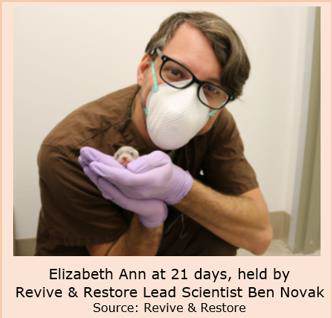
However, a ranch dog named Shep surprised the world when he uncovered a remaining population in 1981. These surviving black-footed ferrets were monitored intensely and the population seemed to be thriving, up until they were nearly wiped out by canine distemper and sylvatic plague. The very last 18 black-footed ferrets were rounded up and taken by the Fish and Wildlife Service before it was too late.
Of the remaining 18 black-footed ferrets, only 7 were successful in breeding and passing their genes onto offspring. As a result, all newborns arose from the same 7 founders, meaning all black-footed ferrets alive today are related. This incestuous existence creates a population with little genetic diversity which can wreak all sorts of havoc on the success and maintenance of a population. You see, differences and variations in genes are what enable a species to fight off diseases and better adapt to their surroundings. Without this diversity, a species is less likely to survive on this ever-changing Earth.
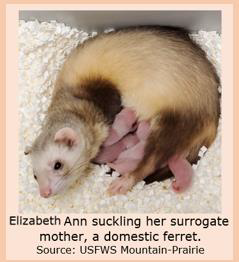
The black-footed ferret cloning process began when forward-thinking conservationists at the Wyoming Department of Game and Fish suggested that the cells of a female black-footed ferret, named Willa, be sent to the Frozen Zoo within the San Diego Zoo Wildlife Alliance (SDZWA) when she died in 1988, as Willa had a particularly diverse genome. These cells became one of the 1,100 cryopreserved (frozen) cells of rare, endangered, and even long-dead species who are silently waiting for technology to enable their return. 30 years later, Willa’s frozen cells were used to make Elizabeth Ann, along with the collaborative help from the U.S. Fish and Wildlife Service, ViaGen Pets & Equine, Revive & Restore and the SDZWA.
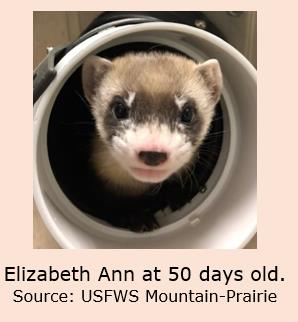
The cloning process involved taking eggs from sedated domestic ferrets (a related species) and replacing the nucleus and genetic material of the eggs with the contents of Willa’s cells (picturing a yolk transplant between a chicken and a duck egg helps me make sense of it). The resulting embryos were implanted into a surrogate domestic ferret and, lo and behold one embryo took and a black-footed ferret foetus was conceived.
On the 10th of December 2020, Elizabeth Ann was born via C-section with tests on her 65th day revealing that she is, in fact, of the black-footed ferret species and a clone of the pre-existing Willa. The arrival of Elizabeth Ann brings new hope for the species as a broadening of the gene pool may help black-footed ferrets reproduce more easily and become more resilient to disease and environmental stressors. Therefore, cloning can aid in overcoming the genetic limitations that are disrupting the recovery of the endangered black-footed ferrets. If Elizabeth Ann successfully breeds and provides greater genetic diversity, this will legitimise cloning as a reproductive technology for the conservation management of black-footed ferrets and other endangered species.

Although cloning can be a successful way of saving living species from dying out, cloning specialists at Revive & Restore continue to work towards resurrecting extinct species such as the passenger pigeon and the woolly mammoth. But take note, bringing an extinct species back to life is very expensive, much more complicated, and highly controversial. There’s no knowing if an extinct species could even survive in the climate we have created today. So, let’s stick to what we know can work and clone to save our existing species first.

What do you think?

Keep up-to-date with Elizabeth Ann’s journey via the black-footed ferret conservation project Facebook page: https://www.facebook.com/FerretCenter

References:
1. Maio, G. (2006). Cloning in the media and popular culture: An analysis of German documentaries reveals beliefs and prejudices that are common elsewhere. EMBO reports, 7: 241-245
2. Ryder, O.A. and Benirschke, K. (1997). The potential use of “cloning” in the conservation effort. Zoo Biology: Published in affiliation with the American Zoo and Aquarium Association, 16: 295-300.


Based on the ideas discussed in: Shapiro, B. (2017). Pathways to de-extinction: how close can we get to resurrection of an extinct species?. Functional Ecology, 31: 996-100.
Evolution in the understorey

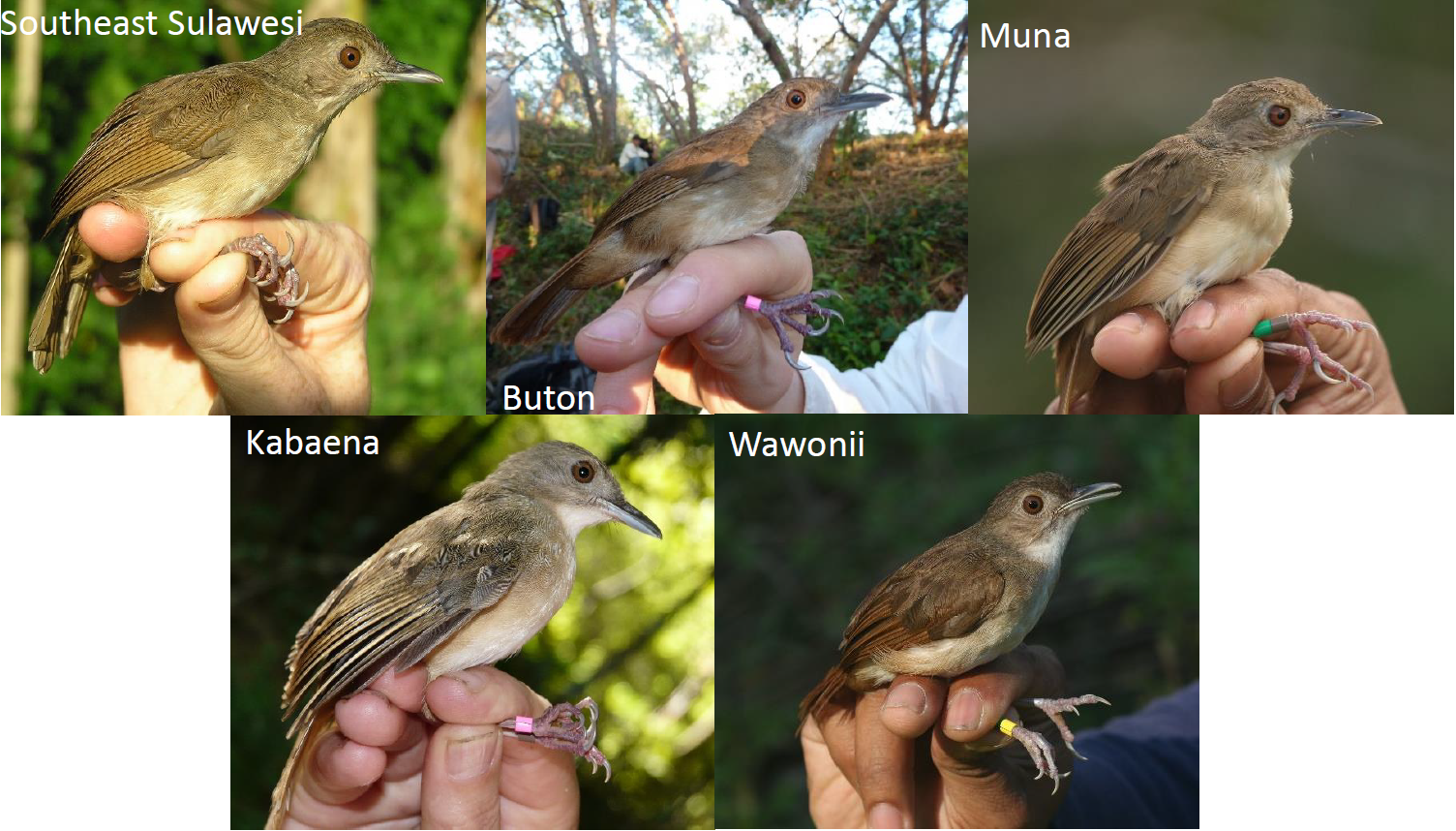
Sulawesi babblers from several islands

What is the first image that comes to mind when you think of evolution? Possibly a line of cartoon primates marching, slouching monkeys at one end and naked men with spears at the other. Or a branching tree diagram where each twig represents an organism, maybe with a tentative “I think” scribbled above it. Alternatively, you may have pictured an illustration of related birds from isolated islands, each showing a dramatically different bill shape adapted to a different diet. Darwin’s Galápagos finches represent a foundational influence in terms of where we tend to look for signs of evolution and what we expect these signs to look like. Our new paper, just published Open Access in Zoologischer Anzeiger: A Journal of Comparative Zoology, provides a contrasting image. We looked at the Sulawesi babbler (Pellorneum celebense), a dull brown bird that spends its time hiding in bushes on less isolated islands in Indonesia, looking pretty similar from one island to the next. Nevertheless, we found that several of its populations are quite different from one another in mitochondrial DNA, in morphology, and in song.

Continue reading “Evolution in the understorey”

Celebrating bees on World Bee Day – Getting to know them better!

The authors

Irene Bottero is a 3rd year PhD student in Botany (Trinity College Dublin). She is part of PoshBee project (https://poshbee.eu/) and in her thesis she is evaluating the impact of different habitat types on pollinators, specifically, honeybees, bumblebees, solitary bees, hoverflies, and butterflies.

Elena Zioga is a 3rd year PhD student in Botany (Trinity College Dublin). She is part of PROTECTS project (https://protects.ucd.ie/) and in her thesis she is evaluating the levels of pesticide residues in pollen and nectar of plants growing in Ireland.

Getting to know them better!

The 20th of May is declared as the ‘World Bee Day’ and its purpose is to acknowledge the importance of bee pollinators in our ecosystem. Animal pollinators play an important role in the reproduction of many plant species (90% benefit from animal pollination – https://onlinelibrary.wiley.com/doi/full/10.1111/j.1600-0706.2010.18644.x), including crops (crops pollinated by animals make up 35% of global food production – https://royalsocietypublishing.org/doi/10.1098/rspb.2006.3721), ensuring the abundance and good quality of fruits, nuts, and seeds, which are crucial for human nutrition. Beyond food, pollinators also contribute directly to medicines, biofuels, fibers (e.g. cotton and linen), and construction materials.

Continue reading “Celebrating bees on World Bee Day – Getting to know them better!”

Happy World Tuna Day!!

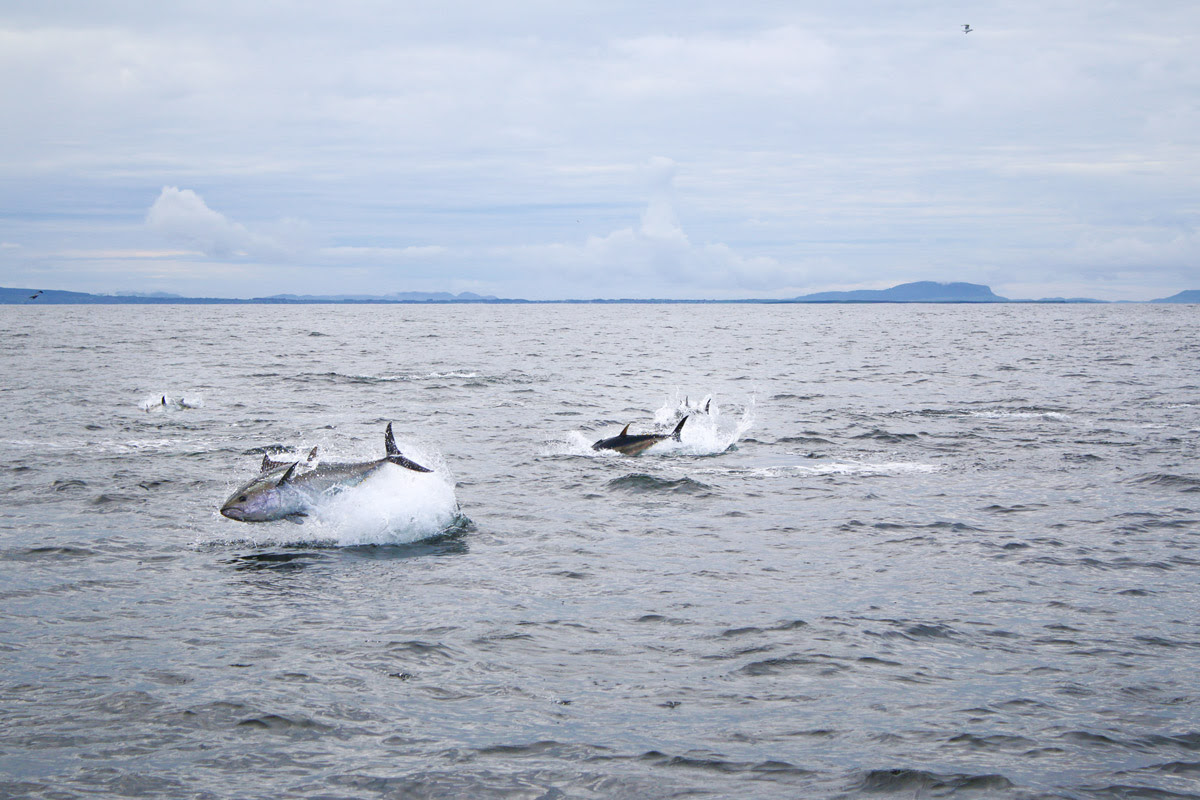
Picture credits: Donegal bluefin © David Morrissey

This picture shows Atlantic Bluefin Tunas (ABFT) (Thunnus thynnus) bursting through the surface to feed; just off Donegal (Ireland). ABFT are warm-blooded fish which display many physiological adaptations to regional endothermy in order to warm up their red muscle and increase their swimming performance. Swimming without stopping for thousands of kilometers every year: from spawning in the warm waters of the Mediterranean Sea and the Gulf of Mexico to the cold and productive Irish, Icelandic and Norwegian waters. Such is the life history of adult ABFT. Indeed, tunas evolve in a vast habitat where food resources are scarce. The open ocean is the marine equivalent of a desert in terms of the distribution of food resources. To sustain their high metabolic rate, it is in the northern feeding grounds that adults access highly caloric prey such as herring, mackerel and scad. The incredible profile of these powerful fish tells us how crucial it is for them to swim efficiently and minimize their drag and transport costs through morphological and behavioural adaptations.

Tuna are obligate swimmers (ram ventilators), meaning they breathe passively by opening their mouth while swimming. This highlights the importance of such adaptations for the survival of these endurance champions. This picture also illustrates that ABFT are one of the best sprinters of the oceans. By maximising their energetic surplus through behavioural adaptations such as dive gliding when they travel or search for food, they are able to capitalise this energy into impressive speed burst events to catch prey. Reaching speeds of 6 to 8 m.s-1, their fast twitch white muscle allows them to lift their 200 kg out of the water!

Herbarium in Trinity College Dublin

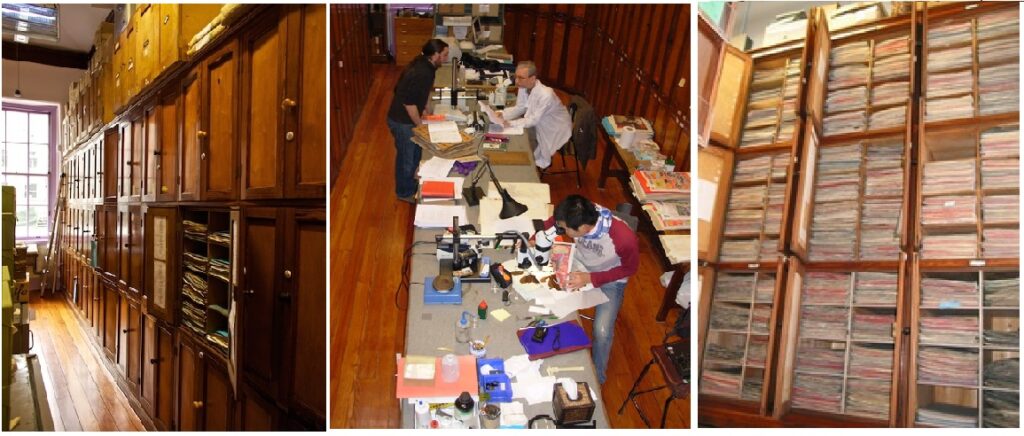
A herbarium contains collections of dried, pressed and therefore preserved plant material. Herbaria are amassed primarily for the purposes of understanding plant evolution, biogeography and systematics but are also useful in very many other domains including, for example, pharmaceutics, climate change, ecology and conservation.

The interior of the TCD herbarium (on the left and in the middle) and a typical set of cabinets in the TCD herbarium (on the right) showing the array of preserved specimens in presses. Those specimens in red covers are type specimens – specimens which are the reference specimens for the species.

Whilst the TCD herbarium is internationally renowned it is perhaps not as well know as it should be inside the walls of TCD.

Continue reading “Herbarium in Trinity College Dublin”

Interview with the Speakers of the 2021 Botany/Zoology Postgrad Symposium

Last month the Botany and Zoology departments at Trinity held their annual Postgraduate Symposium. Research students from both departments present a talk on recent and upcoming projects for their thesis, and the whole event is run by the students themselves. This is a big event for Botany/Zoology postgraduates not just because they get to show off their work and discoveries to the college community – it’s also great practice for future events, and students receive feedback on their presentations both from other postgraduates and from lecturers and professors in the two departments. Developing your ability to communicate your research is a crucial skill for all scientists. After all, what’s the point in discovering things about the natural world if you can’t share that knowledge!

Continue reading “Interview with the Speakers of the 2021 Botany/Zoology Postgrad Symposium”

The socio-economic theory of animal abundance

Where do animals live and why? These are some of the questions that ecologists are interested in. Sure, we can talk about patterns of abundance in an area in terms of abiotic or biotic factors or niche variation. But what if there’s more to animals than that?

What if a young animal is concerned not just about eating, being eaten and living to reproduce but also with their finances, housing, commute and social mobility? What if a larger or older individual lives where they live not because they can outcompete smaller individuals for limited resources, but because they have accrued greater capital over time and thus have higher purchasing power?

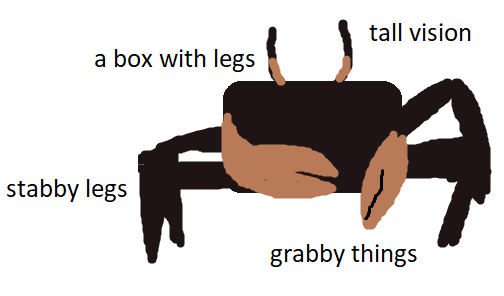
None of these questions are answered by current ecological theory. We need an alternative explanation for animal distributions and abundances. Here, I present to you the socio-economic theory of animal abundance. I illustrate this theory using the Australian ghost crab (Ocypode cordimana) as a case study.

Continue reading “The socio-economic theory of animal abundance”

A Beginner’s Guide to Dietary Conservatism

Talking about your research interests can be stressful. After all, you’ve spent ages poring through the literature, devising experiments, developing a thesis, justifying your ideas for grants and in publications – trying to condense that into something appropriate for casual conversation (often with a well-meaning relative asking “what are you studying?”, shortly followed by “oh, what’s that?”) is a dangerous rabbit hole. It’s even more perilous when your research interest is something that’s virtually unknown even among other researchers in the field. Trying to explain something that niche to an audience can very quickly make you look quite mad. My research is on dietary conservatism. Hands up who’s heard of dietary conservatism?

Continue reading “A Beginner’s Guide to Dietary Conservatism”