
What makes a good undergraduate (or Masters) thesis?

thesis-writing

Here’s something that few students realize, and even fewer believe: your lecturers and professors actually want you to do well! I gave this advice to the final year undergraduates in October, and now they’ve handed in I thought it might be valuable to share it more widely. Note that they are in no particular order and I’m not talking about specific projects.

1)     Do not annoy the people marking your thesis.

Most of my advice comes back to this point! Remember that most people marking your thesis will be marking a lot in a very short time (although this varies among institutions and subjects). Therefore if you make this as easy for them as possible you’re more likely to get a good grade.

2) Read the marking scheme carefully.

For example, there’s no point in listing every single thing you did if there’s no effort mark. See point 3.

3)     Be concise.

There are two reasons for this. Firstly, having to read a 10,000 words (or more) monster thesis is going to make your marker grumpy before they even open it, especially with 5-10 theses to mark each year. You won’t be marked down for that (though most places have penalties for going over the word count), but you may find the marker more likely to notice other problems (see point 1).

Secondly, and more importantly, a long thesis usually indicates a lack of understanding of the really interesting findings of your research. Almost anyone can collect data from the lab, field or the literature and then go away and analyse it in every way possible. However, it’s a real skill to pick out the key results and discard the extraneous information. All of the best theses I’ve seen have been short (though I’ve also seen some terrible short theses!). They have an introduction that concisely builds towards their aims/questions, clear predictions, methods and results describing succinctly what they did to answer their questions and whether their predictions were met, and then a careful discussion of how their results fit into the wider literature. Showing every single thing you did is NOT going to get you more marks (see point 2).

People have a horrible habit of writing too much in the introduction. Think very carefully about what the reader needs to know to understand your questions. If you’re working on tortoises in Ireland in field site X, does the reader need to know what a tortoise is? No. Do they need to know where Ireland is? Not really. Do they need to know where your study site (field X) is? Not really, unless you only want to apply your results to field X or if field X is really special or weird. They may need to know the species of tortoise or the climatic conditions at your site but that shouldn’t take more than a sentence.

4) Presentation is really important.

I sometimes joke that you can work out the class (1st, 2.1, 2.2, 3) of a thesis just by looking at how it’s presented, particularly the reference section. However, there’s a lot a truth to this. If you take care on the presentation, it usually means other aspects will also be good. Part of this is a time management issue. I know it’s difficult but if you can complete your thesis a few weeks early you will have time to polish the presentation and probably to deal with other minor issues in the thesis. Note that many places give marks for presentation so even if you struggled with some aspects you can pick up a few extra marks just by fixing the typos and formatting your references correctly. Note that this is a great thing to do when your brain is too tired to do any more writing or analyses.

5) Take advantage of people who offer to read drafts.

Chatting about this at coffee the other day we estimated that students who got their supervisors to read a draft of their thesis before handing in got a mark that was around 5% higher than it would have been otherwise. 5% might not seem much in the grand scheme of things, but if you got 66%, 5% extra would get you a 1st… Also take advantage of family and friends for their proof reading services. A great idea would be to do this early and often with your classmates, perhaps reading each other’s work section by section. Again this requires you to have good time management skills – if you want your supervisor to read something make sure you give them AT LEAST a week to read it and AT LEAST a week for you to deal with corrections.

6) Structure is really important.

When writing your thesis imagine you’re telling a story. You start with the background and general area of the study and slowly progress towards the specific questions you are going to address. You then explain your methods, continually referring back to how these methods will answer the questions you want to address. In your results, show how your analyses answered your questions. Finally in the discussion show how your results fit within the published literature and then talk more broadly about what they mean for the subject area. Your questions and aims need to be clear throughout so make sure they are linked together.

7) Be careful with subheadings.

I’m a big fan of subheadings but it’s very easy to overuse them and to use them so you don’t have to link sections together. Even with subheadings, there needs to be some kind of link or the sections become disjointed and your story gets lost. They are ideal for separating major themes in your thesis – for example I always advise my students to have subheadings in the methods section for DATA COLLECTION and ANALYSES.

8) Don’t worry if your final thesis doesn’t match your proposal.

Things change all the time during projects. Perhaps your experiments didn’t work so you had to change them, perhaps there wasn’t enough data for you to test your hypothesis, perhaps you couldn’t catch any of your chosen study animal. Of course these problems are frustrating but they shouldn’t affect your thesis (trust your supervisor, they will help you fix this!). However, when you come to write up make sure that your introduction matches the question you ended up asking, not the question you intended to ask. I know it’s painful to set aside all the work and reading you did for your proposal, but you won’t get credit for irrelevant information (see point 2).

9) Analyses in methods and results

Students often get confused in these sections. As a guideline, although you don’t need to understand the maths, you do need to understand WHY you are doing the analyses you are doing.  Which of your questions are you testing? Why are you using a t test or an ANOVA? Why did you log your variables? In the results explain what the result means biologically – i.e. if you have a significant correlation between body size and shell size in your tortoises write this then give the statistics in brackets afterwards. Check with your supervisor about how to report statistics. Also check published papers! You should have read plenty by this point. Another pitfall to avoid is assuming that really small p values equal really important results. P values tend to get smaller when you have lots of data, so you can get a tiny p value but when you look at a scatter plot the points are all over the place. Instead look at r2 values, a high r2 value shows you how strong the correlation is between your variables (but again be careful as when you have very few data points r2 are likely to be high).

10) So how do I get a 1st class (A) mark?

Again see point 2 and check the marking scheme. However, most institutions will have broadly similar requirements. We want you to show us that you could be a professional scientist and that your thesis could be written up for publication with some extra work. This means we want to see the following: really clear links between your background information, aims, methods, results and discussion, critical evaluation of the methods you employed and the results you obtained (how could you do things differently?), excellent presentation throughout, clear understanding of how your project fits into the bigger picture and the wider literature, and evidence of novelty. Novelty is really hard to understand, but what we’re looking for is evidence that you engaged with the project and really began thinking like a scientist. This may be demonstrated by how you’ve linked your results with those of someone working in a different system or by excellent suggestions for how you’d further your project. We need evidence that you’ve gone above and beyond the advice of your supervisor and things you’ve learned in lectures and thought beyond the narrow confines of your project. It’s hard to explain what I mean, but when I see it I know instantly because I stop thinking of the project as the work of an undergraduate student and start thinking of it as the work of a future peer. Note that everything else must also be of a very high standard, so although you may show evidence of novelty in your discussion, if your presentation is a mess you will not get a 1st.

Author

Natalie Cooper

nhcooper123

ncooper[at]tcd.ie

Photo credit

http://911thesis.blogspot.ie/

Complementary colours

zalando

Any designer will tell you that choosing the right colour combinations are essential to strike the right tone and balance in a room, particularly if your goal is to attract clients. Well, what if your room is a web and your client is a moth?

This is just the situation the rather drab and dreary coloured Cyrtophora unicolor finds itself in. These spiders live almost exclusively on large moth prey, which are attracted by pale colours and twinkling lights, a problem if your evolution has led you to optimize your “I’m a brown leaf” appearance. Enter the small but enchanting Argyrodes fissifrons (a member of the dewdrop spiders). These spiders by contrast are endowed with a glistening silver and black pattern. These little guys face a rather different dilemma: they are kleptoparasites (food thieves!), meaning that they use the web of another larger spider species for feeding and reproductive territory.

Somewhere along the lines these two species found each other and struck up what is the first recorded example of an arthropod predator mutualism based on colour. Predator mutualisms, where both species benefit from the relationship, are rare due to conflicts of interest. Most dewdrop spiders live off the webs of others and suffer high levels of aggression from the hosts (somewhat understandably!). It was noticed however that A.fissifrons and C.unicolor seemed to coexist quite happily and that webs of C.unicolor even seemed to intercept more prey when A.fissifrons was present. The reason: The twinkling silver body of A.fissifrons. Against a leafy background the silver A. fissifrons is quite conspicuous and even attractive to the primarily visually oriented Hawkmoth prey. It is thought that the moths read the silver as some kind of a cue, potentially reflecting the moonlight at a similar intensity or wavelength as the stars, used by the moths for celestial navigation. These large moths however are much to big for little A.fissifrons to tackle; they prefer the smaller “accidental” prey. The result: These two species live quite contentedly side-by-side, one providing the house and the other the decoration.

Most animals that use colour signals use them as warnings, as mating indicators, service providers (as is the case in cleaner fish), camouflage and mimicry. If your ecological and evolutionary pressures demand a more low-key and less vibrant costume, adding a splash of colour from a friend with similar interests it seems may lead to joint benefits. Co-evolutionary related colour patterns, such as those associated with mimicry, usually arise from antagonistic interactions among species so it is interesting to see examples like these and wonder whether some might also arise from, or might eventually evolve as a result of, synergistic interactions among species.

Author

Deirdre McClean: mccleadm[at]tcd.ie

Photo credit

wikimedia commons

Dinosaurs are useless if they don’t go in trees!

kuxlarge

I’d like to ask the question many paleontologists have to face when they (foolishly) venture out of their museum storage: “So you’re studying fossils right? But what will that bring to the people? A cure for AIDS?”. There are many possible answers from a punch in the face to more mature responses. But I was recently asking myself the question from a biologist’s point of view: “What can biologists really do with the fossil record?”. Well obviously, we can use it to recreate and understand the history of our planet (like in Nature last week) or to do use some nice methods in trying to understand ancient ecosystems. People even might feel lyrical and do some serious work on paleo-poetry! But all of these guys are paleontologists right? They live in their museums and only go out for a movie once every 10 years… How about the other biologists?

Think about it, when ever you’re studying any organism, it is obvious (thanks to this bearded ape) that they had a 3.5 billion year history behind them. Ignoring that might lead to a misunderstanding? As an example, I’d like to use my favorite PhD-presentation example: the crocodiles. When we talk about crocodiles, we automatically think about the few species of big lizard that live in rivers in the tropical/sub-tropical latitudes. But, after a quick look at the history of our planet, the only description that is more or less correct is “lizard” (archosaurians to be more precise). Crocodiles are composed of many species (8 genera today – soon to be 6 – but >70 in prehistoric times) that lived in rivers as much as in the sea, on the ground or even sometimes in trees and in tropical to temperate climates (remains of crocs were found in Normandy – France).

Well maybe that’s just because of this group. But if you think about it, many other groups have ecological or evolutionary features that becomes truly astonishing once you take into account their full history. For my PhD I decided, with Natalie, to look at this fun fact (life existed before yesterday and the people studying it don’t always focus on dinosaurs) through primates. My idea is to combine extant data based on DNA with extinct data based on morphology to have an integrative tree of all primate history. I agree that this sounds a bit too easy and naive, (the method is a bit more complex) and I’ll probably end up with something more humble. However I think the primates can be a good example to illustrate the point about the hidden diversity among extinct groups. The primate fossils are not dramatically different than the extant once (unlike crocs, there were no pelagic primates) but they still show some really interesting features, for the macroecology side, combined extant and extinct primates show massive variation in body mass in some groups (lemurs) but very few variations in others (tarsiers). Or on the macroevolution side, such an integrative tree could provide some further understanding to the old debate of primate origins! Well at least I hope so. For now I’m just comfortable with eating some burgers with a diet coke and a gun in a pickup truck while I’m scanning some primates in the Smithsonian Institution in Washington DC.

Author
Thomas Guillerme: guillert[at]tcd.ie
Photo credit
Scott Hartman
http://www.skeletaldrawing.com/

Tyre Pressure

image001

I’ve recently been spending a lot of time working with undergraduate students and marking their work and much of it has been on the subject of evolution and natural selection.  This can be a difficult topic to clarify in the mind of younger students and it’s often difficult to recall specific examples which can be easily explained. Usually you have to come up with some hypothetical situation whereby some selection pressure drives a population towards evolutionary change. A newly published study in Current Biology by Brown and Brown however provides a beautiful (and more importantly brief) example of evolution and natural selection at work.

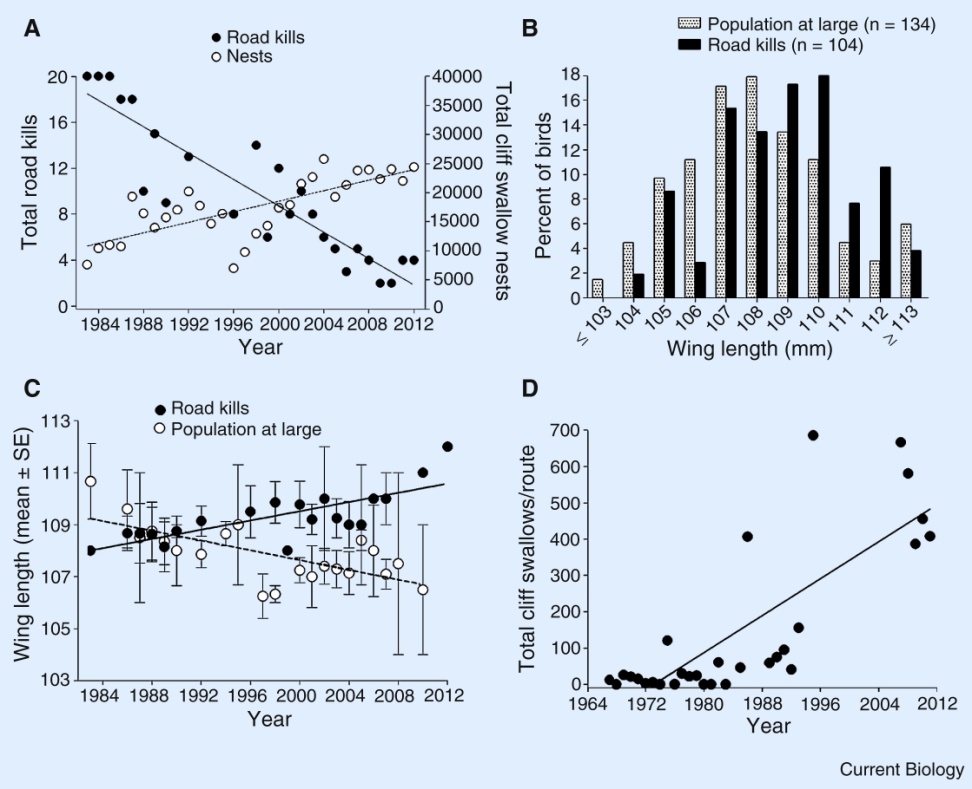
They have been studying populations of cliff swallows (Petrochelidon pyrrhonota) in Nebraska for almost thirty years, attempting to evaluate the costs and benefits of group living in these highly social birds. In an interview with John Dankosky lead author Charles brown explains how his habit of checking road killed birds for rings (or bands, as they are called in the US) led to an intriguing discovery. Firstly they noticed that over the years fewer and fewer birds were being killed on the roads (Figure 1), but also that these road killed birds tended to have longer wing lengths compared to individuals of the general population.

Figure 1. Change in wing length and number of road killed swallows (From Brown and Brown 2013).

So if you are a cliff swallow why does having a longer wing make you more likely to be run over by a car? Well it all comes down to the angle of escape. Birds with shorter more rounded wings are able to take off more vertically compared to individuals with longer more pointed wings, essentially shorter winged birds can get out of the way of oncoming traffic more quickly. It seems that this selection pressure from vehicles has been driving (I make no apology for the pun) the evolution of shorter wings in this population of cliff swallows.

Cliff swallows are migratory birds, travelling from South to North America annually and longer more pointed wings are generally seen as an advantage when it comes to long distance flight. Therefore it seems that the shorter winged individuals may pay an energetic cost compared to their longer winged conspecifics, but this cost may be outweighed by the benefit of being able to avoid traffic. Whatever the case may be I think this study provides a nice example of selection pressures steering morphological adaptations along the road to survival. Next time a student needs clarification on this I’ll remember, tyre pressure.

Author

Keith McMahon: mcmahok[at]tcd.ie

Photo credit
Tommie Kelly (www.tommiekelly.com)

Bees and biofuels….what’s the buzz?

800px-Bumblebee_05

As oil prices sore and the future of world energy is uncertain, there is rising demand for alternatives to fossil fuels. From solar energy to wind to algae fuel and biodigestion, the alternatives are numerous. One alternative that has received substantial media attention is the use of bioenergy which involves the production of energy from crops including maize, sugarcane, elephant grass and oilseed rape which are grown specifically for energy purposes.

However, the debate over bioenergy crops is often heated. Do they compete with food crops and therefore increase prices in an already stretched market? Do bioenergy crops result in the destruction of tropical rainforest to clear new areas for farmland? And are bioenergy crops even carbon neutral to begin with?

One debate that has been investigated by researchers in Trinity as part of the Simbiosys project is whether bioenergy crops can have impacts on biodiversity – the animals and plants that live on and in farmland. Not only are these animals and plants an important part of our heritage, but they are the pollinators of our food crops, the insects that control agricultural pests and the organisms that help provide us with clean water and air. With two-thirds of Irelands land area used for farming, any changes in farming practice are likely to have knock-on impacts on biodiversity.

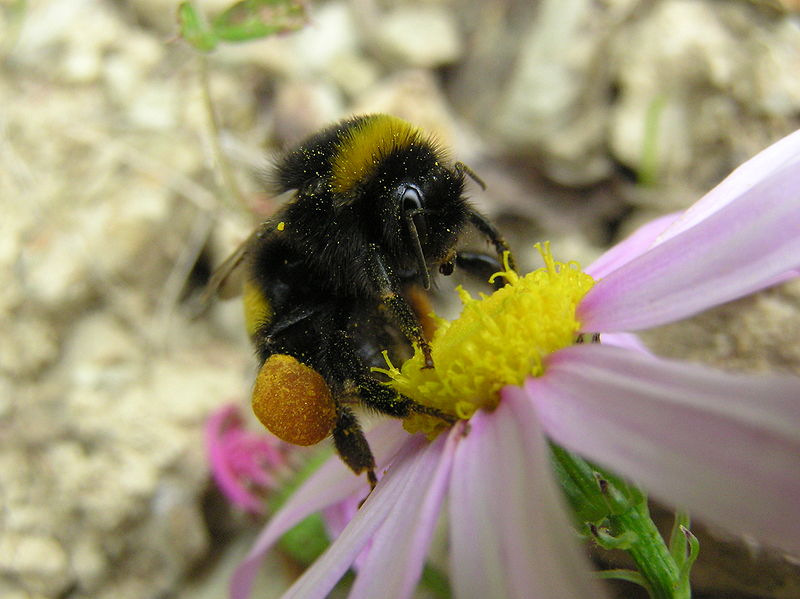
A study recently published in the Journal of Applied Ecology investigated how growing bioenergy crops impacts the bees and other pollinating insects that pollinate wild flowers, apples, berries, oilseed rape, clover and many other crops here in Ireland (in fact pollinators are required for approximately 1/3 of all the food we eat). It was found that although different types of insect responded differently, there were no decreases of pollinators in bioenergy crop fields in comparison to their conventional farming alternative. And for some pollinator groups such as the small solitary bees, the introduction of small amounts of different crops into agricultural areas may actually be beneficial.

However, bioenergy crops did not provide the stable nesting conditions needed for pollinators; almost all bumblebees chose to nest in the field margins and hedgerows surrounding the fields. Field margins and hedgerows also provided habitat for large numbers of other insects. The study concluded that small amounts of bioenergy production on existing farmland may provide a diversity of habitats for pollinating insects, but that changes in levels of production in the future may have different effects. Hedgerows and field margins should also be maintained during bioenergy production as they are important nesting and forage sites for pollinating insects.

Although bioenergy crops in their current form seem like good news for bees, the future may be less certain. Growing these crops over larger areas rather than in individual fields, or the replacement of forests or meadows rather than existing arable (tilled) land, may have very different effects. With EU targets of 20% energy from renewable sources by 2020, and bioenergy incentives for farmers, we can expect further changes in this developing sector over the next few years.

Author

stanleyd[at]@tcd.ie

Photo credit

Dara Stanley

Morphological convergence and disparity in Malagasy tenrecs

specimenlarge

I wish to register a complaint…” the first six months of my PhD have passed by far too quickly. As the date of departure for my first major data collection trip looms, I’m navigating the exciting but unnerving transition from the planning to action stages of my project. Fortunately the members of NERD club were on hand to very kindly listen to my ramblings and provide excellent ideas to add to and modify my research.

Here’s the plan so far…

Evolutionary studies have long-been concerned with understanding patterns of variation in morphological diversity. Two aspects of morphological variation which attract particular interest are convergence – the independent evolution of similar morphologies in phylogenetically distant species – and disparity –the range or significance of morphology in a given sample of organisms.

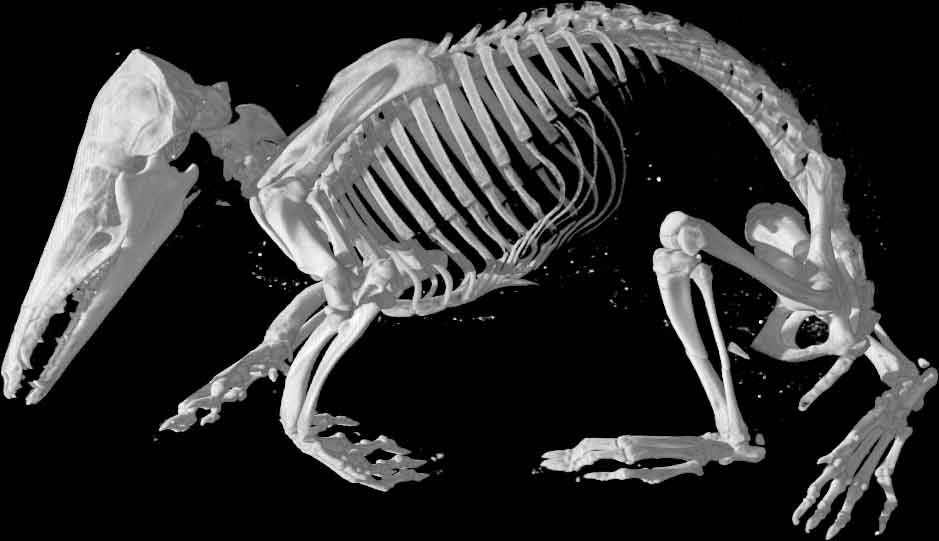
Morphological variation among tenrecs is particularly interesting – they appear to be both disparate from each other and convergent with other species such as hedgehogs, shrews, moles and otters. However, previous studies have neither quantified the degree of convergence or disparity among tenrecs nor attempted to identify reasons for the occurrence of these patterns. My aim is to fill these significant gaps in our understanding of the evolution of such a fascinating mammalian group.

I work with morphometric data compiled from museum collections of tenrecs and the mammals which they convergently resemble (my data collection involves traveling to museums in London, Washington DC, New York and Boston – oh the trials of PhD life!) I use calipers to take linear measurements and also photograph the species’ skulls and limbs. I use geometric morphometric techniques (this article is a great introduction to the murky world of morphometrics) to statistically analyse the degree of morphological (dis)similarity among tenrecs and other species.

I will plot the morphometric data from my species in a “morphospace”, something similar to Brusatte et al.’s 2008 paper on dinosaur morphology. This graphical interpretation will be useful for measuring both convergence among tenrecs and other species and disparity within tenrecs.

In morphospace plots, morphologically similar species sit closer together than dissimilar species. However, from a convergent evolution perspective these patterns are only interesting if morphologically close species are also phylogenetically distant. I will combine and modify existing approaches (e.g. Stayton 2008 and Muschick et al., 2012) to  quantify the amount of convergence among tenrecs and other species and also determine whether tenrecs have evolved a higher degree of convergence than expected by random chance. Similarly, if tenrecs are significantly disparate from each other I expect that the range and variance of their morphological variation will be both greater than random evolution models and also significantly different from their nearest sister taxa, the Golden Moles (e.g. Harmon et al., 2003).

Many texts claim that convergent phenotypes evolve in animals that fill similar ecological niches. However, morphological and ecological convergences don’t necessarily go hand in hand so, while this idea is certainly very plausible in tenrecs, it is important to test the assumption. Fortunately relevant data on physical habitat characteristics, species range maps, life history traits and overlaps with potential competitors and predators are readily available from a range of sources (e.g. PanTheria, LANDSAT and the IUCN) so I can model the ecological similarities among tenrecs and other species. It will be very interesting to determine whether morphological convergence and ecological similarities truly correlate.

So that’s my plan for at least the next six months or so. Interspersed with working in major museum collections while taking a break to tap dance in a parade down Constitution Avenue in Washington DC, I think there are interesting times ahead.

Author

Sive Finlay: sfinlay[at]tcd.ie

Photo credits

http://www.digimorph.org/specimens/Hemicentetes_semispinosus/body/

Undead as a dodo?

Edward's_Dodo

While most of the younger generations are familiar with the ideas behind Jurassic Park, they are probably also aware that, despite the best efforts of geneticists, there is no possibility of conjuring up a T. Rex from the fossilised remnants that are on display in museums.

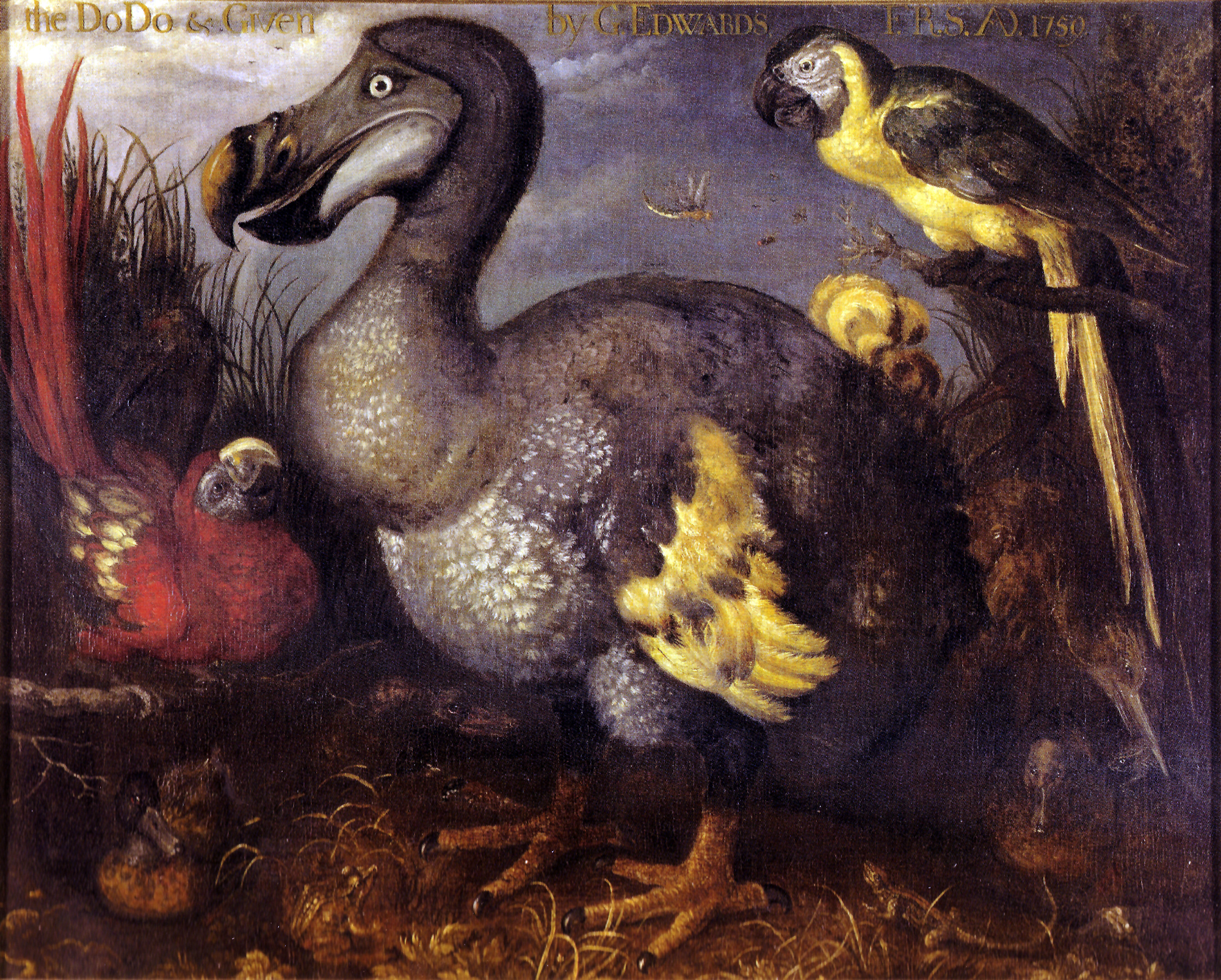
However, there are plans afoot to attempt a similarly ambitious project with species that have disappeared from the earth more recently. These reintroduction programmes, where there are currently no living relatives to repopulate the species, have been termed “de-extinction”. The Long Now Foundation (a private, not-for-profit organisation committed to very long-term thinking about the human population) has conceived a Revive and Restore Project that aims to return some of the planet’s missing biodiversity. Candidate species have already been identified and include; the Passenger Pigeon (US), the Great Auk (Europe), the Dodo (Mauritius),the Huia (New Zealand), the Tasmanian Tiger (Australia) and the Woolly Mammoth (Russia). Continue reading “Undead as a dodo?”

Chronicle of a death foreseen

Homo_sapiens_neanderthalensis

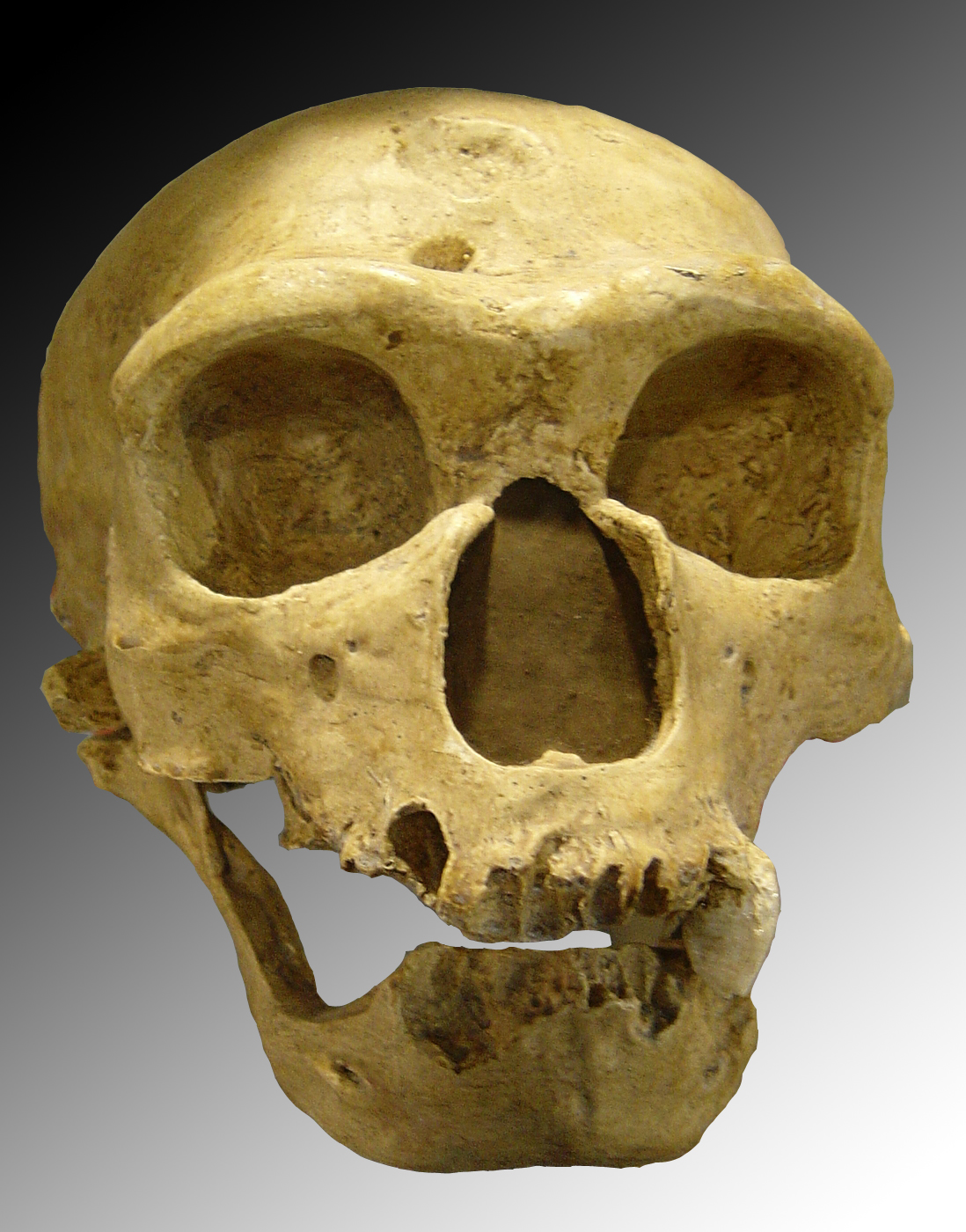
Why did Neanderthals go extinct while humans prospered? There are volumes full of speculations into the decline and fall of our burly cousin who last walked the Earth 30,000 years ago. Climate change may have reduced the large herbivores on which they depended for food. Humans may have inadvertently spread lethal diseases to them when we first came into contact. Perhaps the most sinister hypothesis is that we extirpated them in an ancient act of genocide (/speciescide?).

Researchers at Oxford now argue that Neanderthal orbit size gives us an insight into the reason for their downfall. They reason that, as Neanderthals had relatively larger eyes than humans, more of their brain was dedicated to visual systems. This was an adaptation to their habitats in the higher latitudes where light conditions were poorer. This came at a cost though because the evolved brain can’t be a master of all trades, there must be some tradeoff. In this case the authors propose that the Neanderthals suffered a reduction in their cognitive abilities.  This was significant because it meant that your average Neanderthal could deal with fewer social partners than a comparable human.

The impacts of this in the authors’ words, “First, assuming similar densities, the area covered by the Neanderthals’ extended communities would have been smaller than those of [humans]. Consequently, the Neanderthals’ ability to trade for exotic resources and artefacts would have been reduced, as would their capacity to gain access to foraging areas sufficiently distant to be unaffected by local scarcity. Furthermore, their ability to acquire and conserve innovations may have been limited as a result, and they may have been more vulnerable to demographic fluctuations, causing local population extinctions.”

But this proposal hasn’t gone unchallenged. Anthropologist Trenton Holliday says that by ignoring the relatively larger faces of Neanderthals the inferred larger visual brain region is mistaken. Another criticism comes from Virginia Hughes over at the Only Human blog. She points out that brains aren’t perfectly modular. So by comparing these idealised modules across species isn’t 100% informative. Perhaps Neanderthal brains were set up in a different way to process social information.

I think the visual system-cognition trade-off is something that could be easily explored in extant fauna. Think of related species that differ in latitude et voila a confirmatory or dissenting paper awaits.

Author

Adam Kane: kanead[at]tcd.ie

Photo credit

wikimedia commons

Your days are numbered

Euclid

Last weekend journalist Rod Liddle applauded the efforts of two scientists who wrote a primer for the lay public on physics. His applause stopped when it came to the content though. The problem for him was the quantity of maths the authors used to get their point across. Liddle wrote “By the time we got onto calculus and derivatives I had long since raided the wine rack and things stopped making sense altogether.” But calculus is an integral part of the Leaving Certificate maths curriculum in Ireland and A levels in the UK so why should an educated man find it so intractable? Well, for one, maths is often taught in the abstract.

Of course many of us struggle with the abstract world of maths so this isn’t restricted to Rod Liddle.  And I realise that not everyone can be a master of all trades. The trouble is, maths is damn useful, and in science it’s indispensable. Look at how Eugene Wigner spoke of the ‘Unreasonable Effectiveness of Mathematics in the Natural Sciences.

In secondary school and throughout university I thought biology was almost a maths free science. How wrong I was. If you ignore the quantitative part of biology you miss a wealth of literature and hamper your understanding of the subject. Without statistics much of biology would be stamp collecting. So it’s worrying that a maths-phobia has infected biologists. Look at this study showing that as the number of equations in a biology paper increases the number of cites it gets goes down. There even seems to be a split in the biological community, the theoreticians on one side and the empiricists on the other.

Back in 1959 the chemist C.P. Snow gave a Rede Lecture in which he decried the split between the sciences and the humanities. He called this ‘The Two Cultures‘. I don’t think we’ve bridged that gap. But I’d hope that biologists can improve the way they communicate with one another. Every effort should be made to make a scientific paper as clear as possible.

This will have to come from both sides. Those quantitative minds will have to make it clearer what they’re talking about. I suggest using in-text drop down boxes to make every step explicit as the number of equations ratchets up. This shouldn’t be a problem as we move away from paper publications and use all of the tools the digital age affords us.

But there is an onus on the rest of us to up-skill. Fortunately this has never been easier. A large proportion of MOOCs are mathematically themed and sites like the Khan Academy are a fantastic resource. A real boon of these courses is they afford anonymity, so you can safely check out logarithm identities without embarrassment.

Author

Adam Kane: kanead[at]tcd.ie

Photo credit

wikimedia commons

Geese vs. Cyclists

800px-Brent_Goose_-_defensive_position

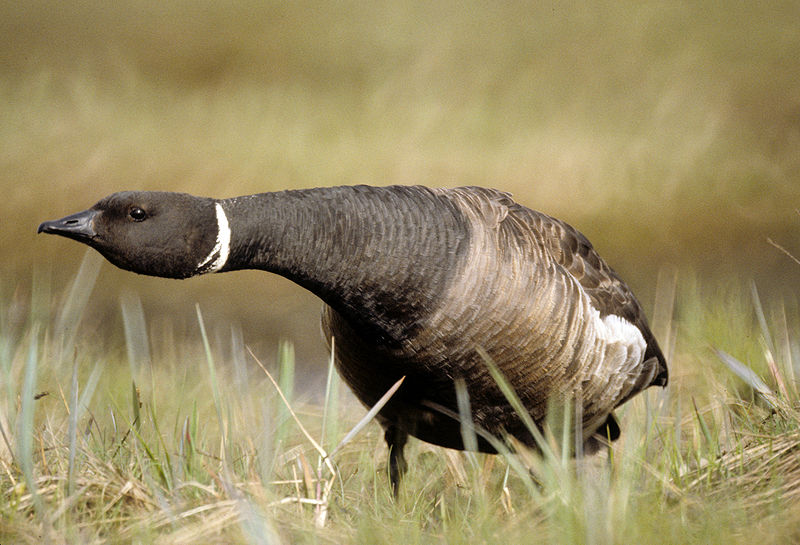
From October onwards, when most of our resident wildlife is battening down the hatches to endure the impending bleak winter months, flocks of Brent Geese are very welcome visitors to Ireland. Their arduous journey to our shores is impressive for both its distance (approximately 3,000km from Arctic Canada) and the route taken: long-distance sea voyages punctuated by stop-overs in Greenland and Iceland before they reach Ireland. The necessity to escape harsh Arctic winters is very understandable. What’s not clear is why Brent geese undertake Atlantic crossings instead of following other geese species that journey south across the American continent. Whatever twist of evolutionary fate is responsible, there’s no doubt that we are lucky to receive annual visits from such intrepid voyagers.

I’m sure many Dublin residents would agree that sharing seaside walks with companiable small family groups of geese or witnessing one of the chattering fly-overs of a large flock undoubtedly brighten up an otherwise bleak winter’s day. However, a recent Irish Times article identified Brent Geese as the enemies of an unlikely foe; urban cyclists.

For more than 10 years, the S2S group has campaigned to create a continuous cycleway for 22km around Dublin Bay, running from Sandycove on the south side to Sutton on the north side which, if completed, would be Europe’s longest seafront promenade and urban cycle-path. The plan would be a great amenity for both recreational and commuter cyclists – you only have to travel along the coast road from Fairview to Howth to witness the popularity of the existing cycle path along the black banks. Just 8 km of the route remain to be completed, mostly on the south side and a single 4km stretch from Sandymount to Blackrock is particularly controversial.

The proposed route would cut through EU protected bird habitats and, in particular, affect an area of eel grass consumed by Brent Geese. The National Parks and Wildlife Service (NPWS) is also concerned about the impact of the cycle way on other bird species which reside in protected areas in Booterstown.

While I’m often wary of articles alluding to stereotypical views of “conservation hippies” thwarting sensible developments, in this case I have to agree with councillor Barry Ward that there must be a solution which “inconveniences rather than displaces” the geese. No development affecting protected habitats should be undertaken lightly. In particular, since the majority of Brent geese overwinter at just 10 sites, Birdwatch Ireland lists their conservation status as “medium concern”. However, with their current population seemingly in good health and the plethora of suitable habitat which Dublin Bay has to offer, it seems unlikely that an 8 metre wide seafront path would have a major impact on the goose population.

I’m well aware that if every development took the attitude of “there’s plenty of habitat elsewhere” then there would be no protected areas left.  In addition, I must admit my vested interest in seeing the cyclepath completed – I’m a recreational (i.e. fair weather!) cyclist and live in Sutton so the availability of 22km of off-road cycling on my doorstep is a very attractive prospect. However, if you observe the behaviour of geese along the existing cycleway they seem to be remarkably unperturbed by adjacent human activity and continue to forage just below the boundary wall. Surely the same coexistent relationship between cyclists and geese could be forged south of the Liffey?

Despite including the S2S cycleway as part of their development plan councillor Barry Ward argues that management of the Dún Laoghaire Rathdown county council seems to be reluctant to develop the cycleway. Beyond the legitimate concern that the proposed cycleway would pass through a protected area, there seems to be no specific predictions or estimations that the development would have an adverse effect on the geese.  Rather than an issue of cyclist vs. geese, perhaps this story is really a case of scape geese taking the blame for a council’s reluctance or inability to fund and implement a new development?

Author

Sive Finlay sfinlay[at]tcd.ie

Photo credit

wikimedia commons