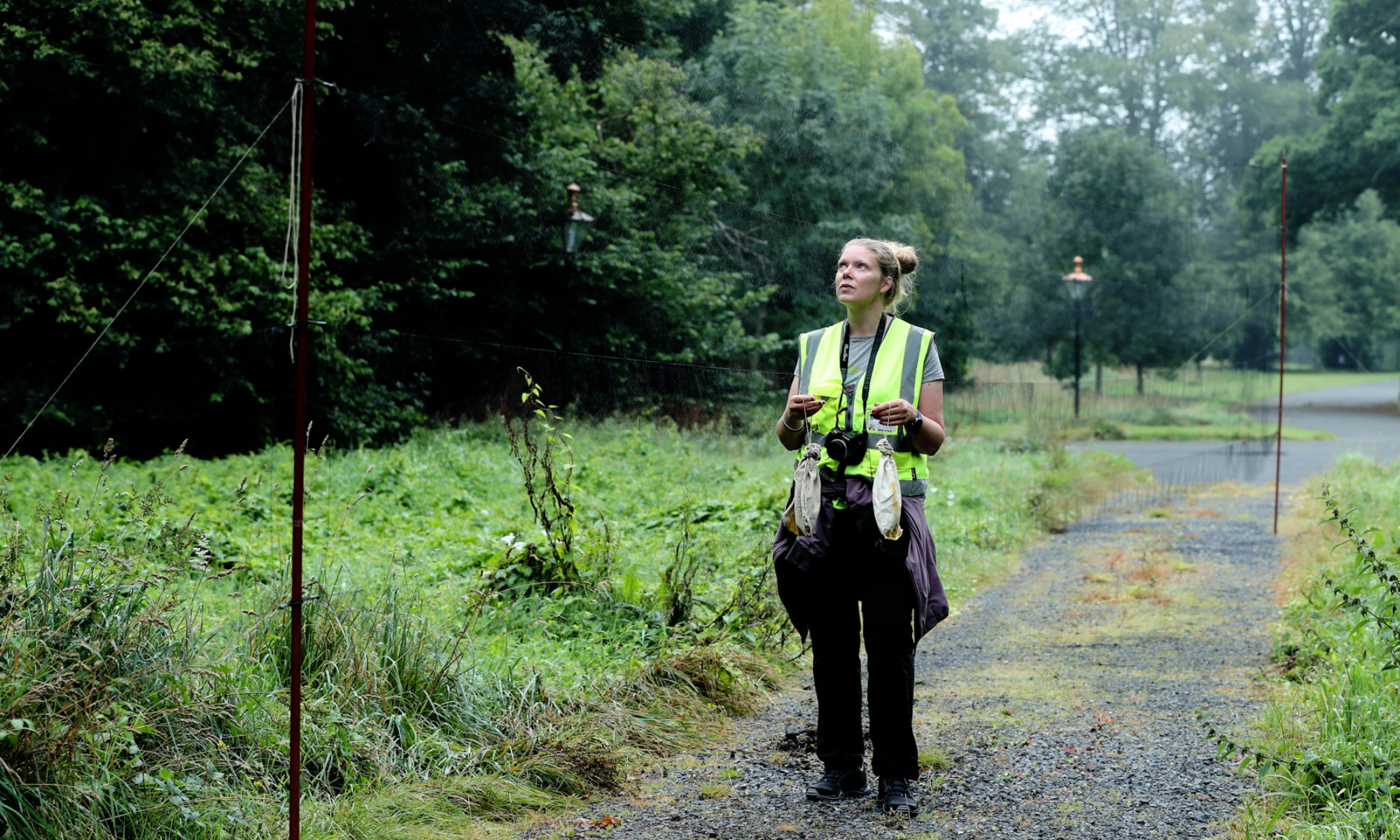
By Rebecca Schouten, Zoology PhD student
I’m Rebecca and I’m a new PhD student at Trinity, aiming to assess the impacts of Spartina anglica and opportunities for its management and control.
Before starting my PhD, I was the research assistant and intern coordinator for the 2026 season at Sea Watch Foundation (SWF) and coming to the end of my time there, I became the Irish regional co-ordinator. SWF is a national charity working to improve the conservation and protection of whales, dolphins and porpoises in British and Irish waters. The team monitors the numbers and locations of cetaceans in order to gain valuable knowledge of the health of our marine environment, and insight into the effects of chemical pollution, noise disturbance, over-fishing, accidental capture in fishing gear and climate change. The public are hugely involved in the scientific monitoring, across the UK and Irish coastline and provide data to support recording and reporting of all sightings of cetaceans.
The Cardigan Bay Monitoring Project, based in New Quay, Ceredigion, is SWFs flagship field project, monitoring the abundance of bottlenose dolphins in Cardigan Bay, study residency and assess home ranges, estimating birth rates and reporting on the health of individuals. Additionally, members of the public carry out systematic watches across the UK and Ireland to monitor numbers of cetaceans inhabiting the region. This is an effective method to obtain a more accurate national sightings database and to relay sightings to the public.
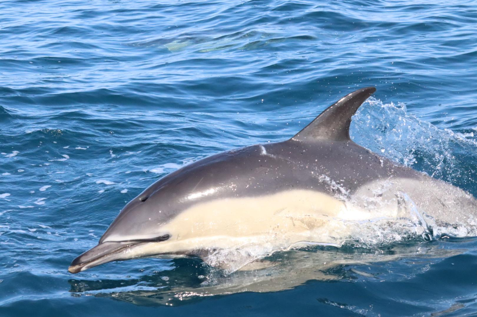
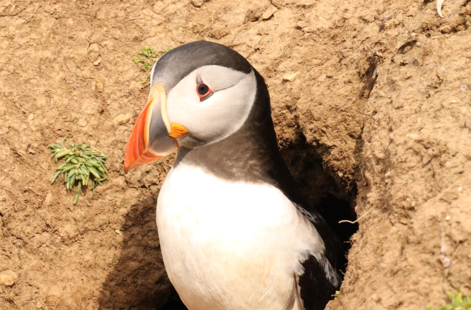
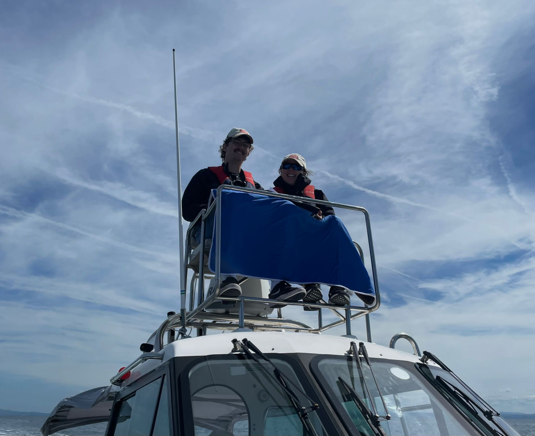
My time at SWF as research assistant embodied many tasks and responsibilities. My favourite part of the job was being able to go out on boat surveys. These surveys involve following a transect line across the Cardigan bay Special Area of Conservation (SAC) and observing for any marine mammal activity. If we encountered bottlenose dolphins, we would photograph their fins, record their behaviours, group dynamics and other vital information. We collate our fin images as a method of identification for individuals. Each dolphin has its own unique notches and rake marks, allowing us to determine who the individual is, whether they have returned to Cardigan bay for the season and if they have any new calves. Other, yet rarer sightings, include Common dolphins (not as common at Bottlenose!), Minke whales and even the odd Risso’s sighting! Alongside these, we also encounter some fantastic pelagic birds, including Puffins and Manx Shearwaters.
One exciting project, led by our acoustic intern Joseph Strutt, focusses on acoustic behaviour and using it as a method of identification. Using hydrophone and go-pro equipment, we were able to record whistles and clicks during our encounters. This data is complemented by the behavioural data we recorded, which can allow us to infer specialised vocalisations during different activities, such as feeding and socialising. Joe’s aim is to find signature whistles of individual dolphins using the open-source software PAMGuard. This method will prove useful, particularly to calf and juvenile dolphins which do not yet have notches or rake marks. Therefore, once a calf no longer associates with its mother, we can easily identify the individual through its signature whistle. Joe collected his data during the 2026 season and is now at the data analysis stage. This exciting project will hopefully revolutionise how we use acoustic data in cetacean research.
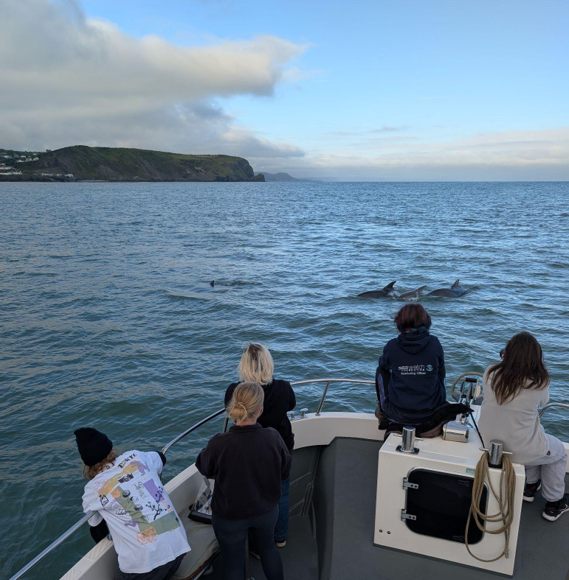
An interesting aspect of studying cetaceans is the inter-specific relationships. In April 2025, during my time as a research intern at SWF, a juvenile Common dolphin was killed by four Bottlenose dolphins. It was spotted on one of the boat operator trips, where passengers saw the juvenile being tossed out of the water and thrashed about. It is believed that as waters are warming, Common dolphin numbers are increasing further inshore and the occurrence of both species in the same area is happening more frequently. It is believed that resident Bottlenose dolphins will hunt them as a form of play. So Bottlenose dolphins are not necessarily the charismatic, friendly species we grow up to believe! Studying these species interactions is a very interesting area of research and many gaps are still to be filled.
If you want to contribute to SWF’s research in Ireland, make sure to download the “Sea Watcher” app, where you can report any marine mammal sightings around our coastlines. As regional co-ordinator, I will be organising monthly land based watches, primarily in Dublin, so keep your eyes peeled!