The expanding tropics 

Screen Shot 2016-02-03 at 16.30.27

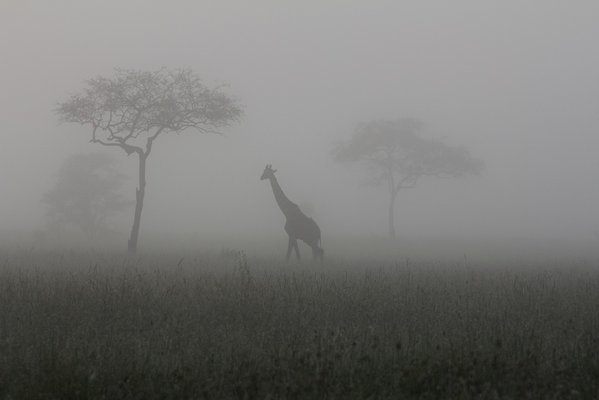
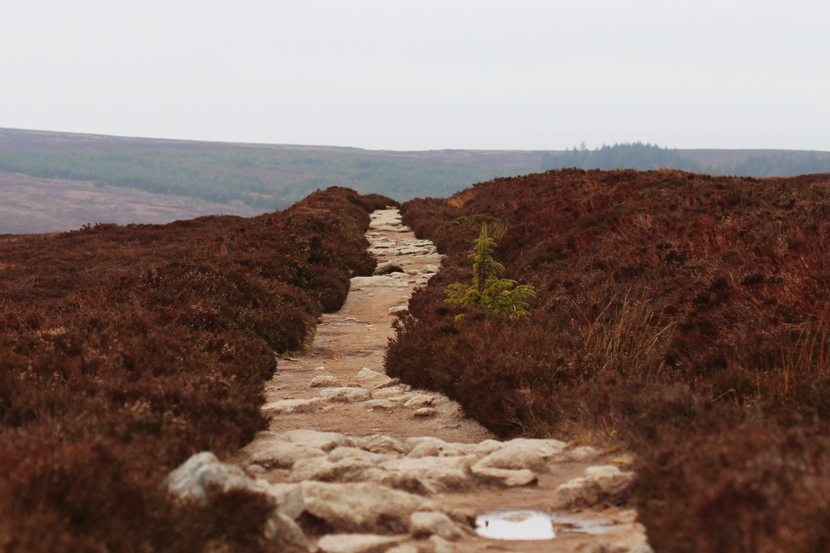
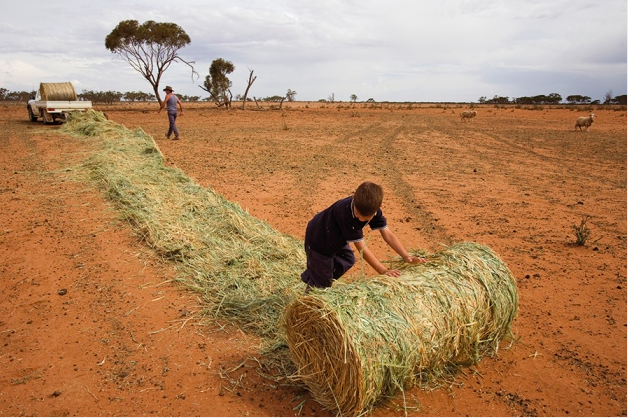
It was a spring day in April 2004 when Qiang Fu first noticed the anomoly in the data. On either side of the equator – in a belt strecthing from 15 to 45 degrees latitude – the lower atmosphere was warming more than anywhere else on the planet. Fu, a professor at the University of Washington in Seattle, was stumped.


It wasn’t until a year later that Fu realized what he had discovered: evidence of a rapid expansion of the tropics, the region that encircles Earth’s waist like a green belt. The heart of the tropics is lush, but the northern and southern edges are dry. And these parched borders are growing — expanding into the subtropics and pushing them toward the poles.

The expansion of the tropics is the subject of my latest feature, which appears in a recently published edition of Nature. You can read the full feature online at Nature.com: http://www.nature.com/news/the-mystery-of-the-expanding-tropics-1.19271 (behind a paywall).  But here, I’ll give you a taste of what it’s about.

In the past ten years – since Fu first published his discovery in the journal Science – scientists have been turned their attention to this subject in a big way – there have been lots of scientific papers, theories and measurements – yet it’s had surprisingly little coverage by the media.

I’d thought about writing on this topic for a while and the time seemed right when I noticed that a bunch of 50 or so scientists were meeting last summer in New Mexico to trash this topic out. The meeting itself wasn’t open to the media, which was unfortunate, but I‘ve since managed to talk to a lot of the people who gathered for five days in that hot conference room in Santa Fe last summer.

I wanted to know answers to the same questions as those scientists, and those conversations would form the basis of my article. I’ve been writing about climate change for more than ten years now, and so I’m used to a lot of uncertainty in science. It was good preparation for writing this piece! On tropical expansion, still so many questions remain unanswered, such as how fast is it happening, what’s causing it and where are the future boundaries of the tropics likely to be? And importantly, why should we care?

Well, you’ll have to read the feature to get an answer to all of those questions, but I’ll answer a couple of them for you here.

How fast is it happening? Estimates range from less than half a degree of latitude per decade to several degrees of latitude per decade over the last few decades. At the more extreme end, that’s like moving London to the latitude of Rome over the course of a century. Pretty big deal. But it’s worth pointing out that some of the more recent estimates have been more moderate; they’re still bad news for cities such as San Diego, though, that would experience a big impact even with a one degree latitude shift in the edge of the tropics.


As to why we should care, well there are lots of reasons: aside from the potential water crisis for major cities such as San Diego, Perth and Santiago. tropical expansion could wreak havoc for some of the world’s most fertile fishing grounds, global grain production could shrink and biodiversity, especially at the southern tips of the African and Australian continents, (and they are astoundingly diverse) will suffer.


Now, if you’re interested in geeking out on all the details (and, in my view, reading the real story, which is about what is happening way up in the atmosphere near the Equator), check out the full story on Nature: http://www.nature.com/news/the-mystery-of-the-expanding-tropics-1.19271


author: Olive Heffernan (@O_Heffernan)

image: Amy Toensing/National Geographic Creative

Evading Extinction

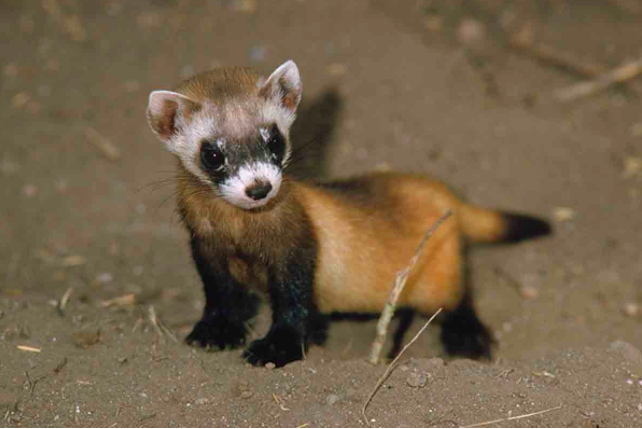
The black footed ferret

It’s a sombre statistic: year on year, we lose up to 100,000 species. That’s somewhere between 0.01 and 0.1 percent of all species on the planet (we don’t know the exact rate because we don’t know exactly how many species exist; it could be 2 million or 100 million). The rate is thought to be at least 1000 times what it would be in the absence of the deforestation, poaching and pollution we are responsible for.


But despite this gloomy outlook, prospects are improving for some species that have narrowly escaped extinction. That’s partly thanks to ongoing success in breeding species that are extinct in the wild, and reintroducing them.


I’m Olive Heffernan, a freelance science writer who covers the environment for outlets such as New Scientist, Nature, Nature Climate Change (of which I’m the former Chief Editor) and Scientific American. I’m also currently Science Writer in Residence in TCD’s School of Natural Sciences. While I’m here, I’ll be blogging from time to time about the topics I’m reporting and writing on.


My latest article, published in New Scientist, reports on the animals that are scrambling back from the brink of extinction. Some, such as the black-footed ferret, were once presumed extinct in the wild.


The ferret’s story is an interesting one. Once native to the North American Prairies, these cute nocturnal creatures were essentially wiped out by the arrival of European settlers in the 1860s. As they began to cultivate the plains and to breed cattle, the farmers started to poison prairie dogs – the ferrets’ favoured food – because they worried that their cattle would break their legs by stepping in the burrows. What’s more, ferrets were especially susceptible to plague brought to the US during the early 1900s on trading ships from the Far East. By the late 1950s, the ferret seemed a distant memory and by the late 1970s it was considered extinct.


But in 1981, a working dog on a farm in Wyoming brought home a surprising kill – a black-footed ferret! The US Fish and Wildlife Service subsequently recovered 18 live ferrets and eventually – after a few failed attempts – they bred some in captivity and reintroduced ferrets into the native habitat. By 2008, the wild population had reached around 1000 individuals again, but from 2008 to 2015, the number of breeding adults declined by 40%, due to plague.


Thanks to sustained efforts by US Fish and Wildlife, together with the World Wildlife Fund and Defenders of Wildlife, 300 individuals exist successfully at 6 sites on public and private lands from Mexico to Canada. The goal is to establish 3,000 breeding adults throughout their former range, at 30 different sites.


The main challenge will be keeping the ferret populations plague-free. The ferret’s story is a good example of how conservation efforts are often a long, hard slog over many decades. As Mike Hoffmann of the International Union for Conservation of Nature (IUCN) Species Survival Commission, says in my New Scientist story “Success takes many, many years to achieve. And all the major conservation success stories, whether it is the black-footed ferret or Arabian oryx, have taken decades of hard conservation work on the ground and continued effort.”


You can read about the recovery of the Scimatar-horned oryx, the blue-eyed black lemur, and a range of other species in my article, which is online here (behind a paywall) and also in the current issue of the print magazine. There’s a very nice photo gallery of species bouncing back from the brink in the online version.


Author: Olive Heffernan,

Twitter: O_Heffernan.

www.oliveheffernan.com


Image Credit: Andrew Harrington – naturepl.com

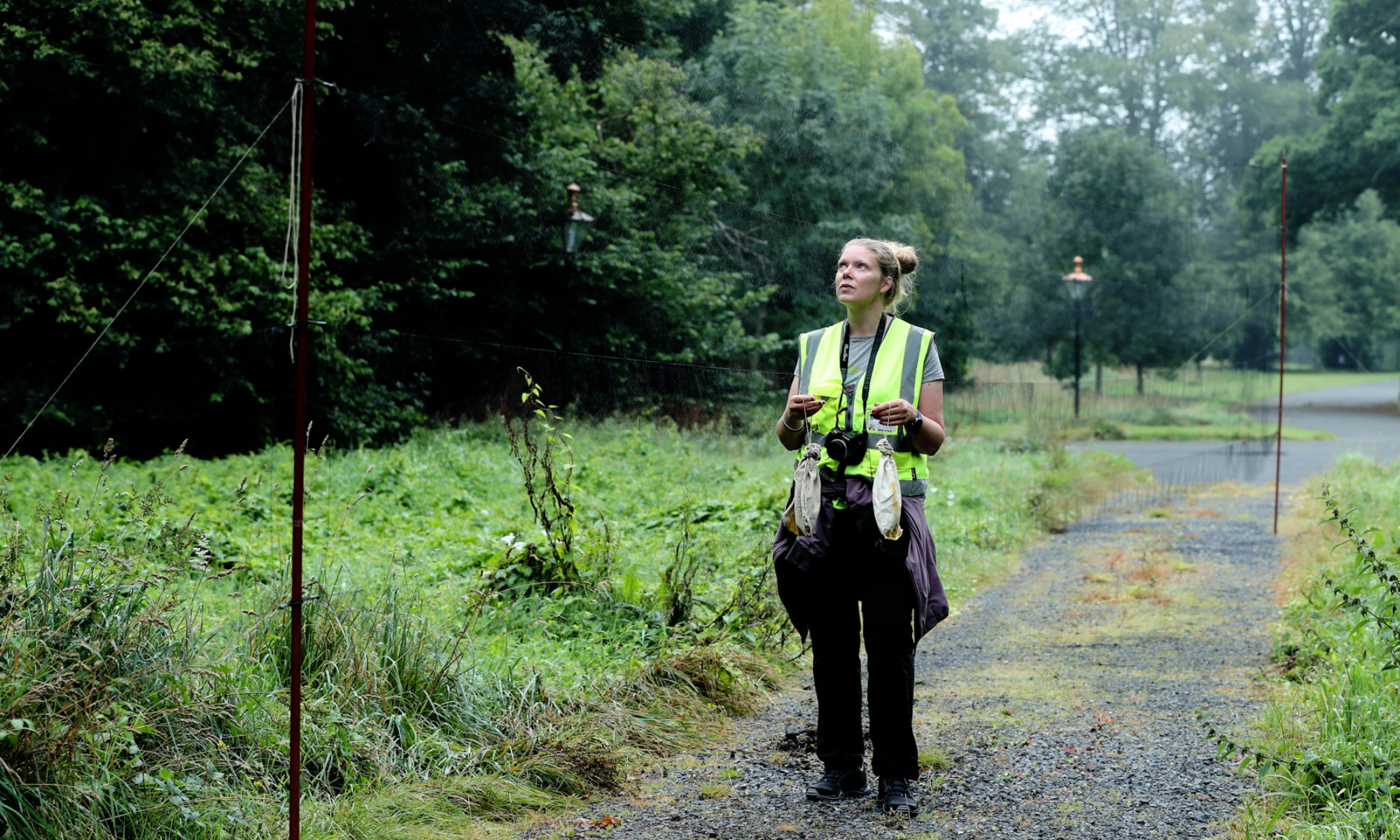
3 years as a PhD student

2015-04-04-14.10.45
I arrived in Ireland October 2012 with the purpose of undertaking a PhD supervised by Natalie Cooper on Primates evolution. Looking back, the start of the whole endeavour seemed really stressful to me (new country, new customs, new language) and the project just as frightening (what do I do?, where do I start?, will I be able to do it?)… What happened after was way below my expectations: these three years were anything but stressful and frightening!
OK, even though not everything went smoothly and it had to take the best of the personalities (that are thankfully common sights in Trinity College’s Zoology Department) for dealing with some ups and downs, here is my top 5 list of personal thoughts that always improved the two aspects of my PhD: the working aspect (the research) and the “social” aspect (feeling relaxed and enjoying it).

Be ready to change your PhD

As I mentioned in the first line, my PhD was supposed to be on Primates evolution. In the end, the world “Primates” is mentioned only once (and that is, buried in a sentence about several other mammalian orders). Of course, sometimes the PhD is a Long Quiet River if everything goes well and you keep your highest interest in the original topic. However, sometimes it changes completely! And this should never be a problem! The PhD should be allowed to evolve just as much as yourself (or more pragmatically: your field) evolves into these three or four years.

Failure happens to everyone

Another major part about the PhD (and about the scientific endeavour itself!) is that it will fail. More or less often and more or less dramatically in each case but failure should just be part of the process. As a early career researcher, you can learn a lot from the mistakes and the success of others. However, I found that there is nothing much more personally instructing than the trial and error. I already mentioned how my biggest PhD disaster led to my most positive development.

Stay open-minded and curious

Writing the thesis or even just doing the lab/computer work for the PhD can narrow your mind and highly decrease your sanity. I found that the best way to avoid that was to try as much as possible to make the PhD only priority number two and put all the other things (seminars, meeting speakers, chatting/helping colleagues, etc…) before it. It has two advantages for the PhD: (1) you don’t work on it 24/7 and (2) everything you learn outside of it will actually be super useful for the PhD. In the Zoology Derpartment, we were only a couple of people doing macroevolution surrounded by ecologists. Yet, I think my work benefited heavily from the influence from these people.

Don’t rush

One thing I found nice with the PhD is that before you even start – before day one! – you already know the final deadline. OK, at day one, the handing in date seems far away (3 or 4 years away actually!) but that leaves you plenty of time for doing awesome research, writing it down as papers/chapters (and even trying to publish them before the deadline) and going to the pub or to other non-PhD recreational events…

Chat with your colleagues

Finally, I found that I gained so much just by chatting with my colleagues. And by colleagues I mean my fellow PhD students of course but also with the post-docs and the staff. I always found a long term benefit to both PhD aspects, whether it was talking about the latests video games during working time (I’m not only looking at you @yodacomplex) or having heated debates about species selection during coffee time.
I know much of these tips worked for me but might not apply to other people. In the end their is only one ultimate tip: make your PhD a hell of a good time!

Photo Credit: Thomas Guillerme

The world economy in a cube


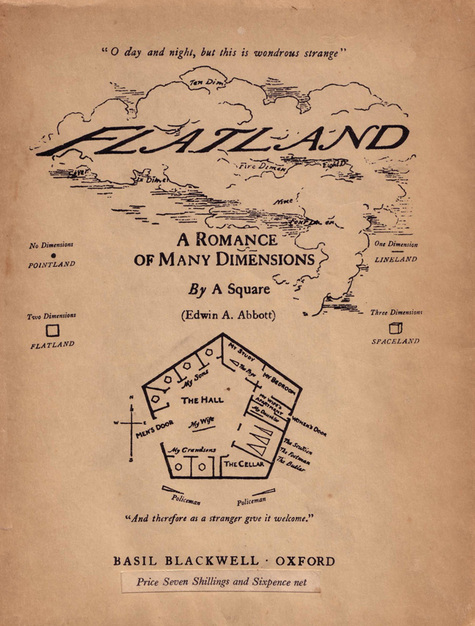
In 1884, the English theologian and pedagogue Edwin A. Abbott wrote a romance called “Flatland”, in which he described a two dimensional world. The rigid and hierarchically organized society of Flatland develops in the large plane in which it lives, and flat authorities control that no flat citizen (the inhabitants are all flat geometric figures) escapes from the two-dimension reality. The book is a social satire as well as an exploration of the concept of multiple dimensions. Furthermore, it can also be viewed as a critic of narrow worldviews stubbornly based on old paradigms.  

flatland_abbott_edwin_3

The novel’s example can be used to argue that despite the proliferation of metrics, our decision making process tends to be guided by the quasi-imposed limited set of information tools – mainly economic – that we use every day. In other words, concepts like Earth System, Planetary boundaries or biophysical limits, environmental sustainability, social welfare and other important elements of our life on this planet are not satisfactorily incorporated in our knowledge horizon.

The current economic worldview is based on the idea that a free market works for the 100% of the population. Thus, economic growth (as measured by growth in GDP) is the political mantra: “the rising tide that lifts all boats”. A recent study published on Global Environmental Change (available here) gives a different point of view by including the environment and the society in the economic picture.

National economies are investigated in a 3-axis diagram (a cube), where each dimension is a different compartment. In this way, the relationships between environment, society and economy are represented in a single framework without losing the specific information. This framework recognizes a physical (and also thermodynamic, and logical) order, highlighting the dependence of the economy on societal organization and, primarily, on the environment.

From this three-dimensional perspective emerges that the economic activity is always strictly correlated with the use of natural resources, and that social well-being is often neglected. Over a total number of 99 national economies investigated within the cube, none of them is at the same time environmentally sustainable, economically rich (high GDP), and equal in the distribution of income.   

This means that growing GDP is beneficial for a limited fraction of the overall population, while the vast majority has to deal with increasing environmental problems and worsening ecological status. Moreover, decoupling economic growth and natural resources consumption, seeking the so-called dematerialization, is found very complicated. Continuous growth in GDP implies consequences especially for the poorest individuals and communities: “the rising tide is lifting the yachts and swamping the rowboats” (Dietz and O’Neill, 2013).

Politicians are looking at the world around as a mono-dimensional economic universe. This is due to the fact that economists play a relevant role within governments. We need ecologists and social scientists playing an equally relevant role, in order to finally show politics we live in a three-dimensional world.

Author: Luca Coscieme, @lucacoscieme

REFERENCES

F.M. Pulselli, L. Coscieme, L. Neri, A. Regoli, P.C. Sutton, A. Lemmi, S. Bastianoni, “The world economy in a cube: A more rational structural representation of sustainability”; Global Environmental Change 35, 41-51, 2015 (doi:10.1016/j.gloenvcha.2015.08.002) 

Dietz and D. O’Neill, “Enough is Enough”; London: Earthscan, 2013.


Link: http://www.sciencedirect.com/science/article/pii/S0959378015300236

Image Credits: www.downbox.org, catalog.lambertvillelibrary.org

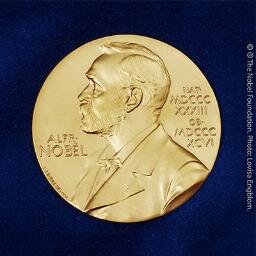
A Nobel Pursuit

Splitting the atom, unlocking the secrets of radiation, or even leading a peaceful civil rights movement.

80ea0fb0832c7d4c0eabeefe1f7f1b44

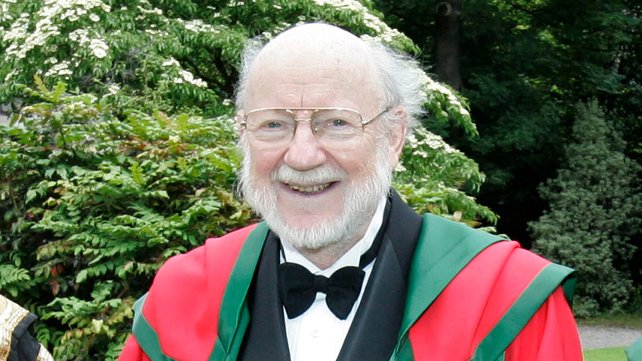
I grew up knowing that these were the sorts of achievements that earn you a gold medal and an invitation to Sweden in mid-December. I have since learned that the annual ceremony held in honour of Alfred Nobel hasn’t always been awarded to the most deserving candidate, and that sometimes the winners simply stumbled upon a discovery that changed the world. This was not the case with the 2015 Nobel prize for Physiology and Medicine. Continue reading “A Nobel Pursuit”