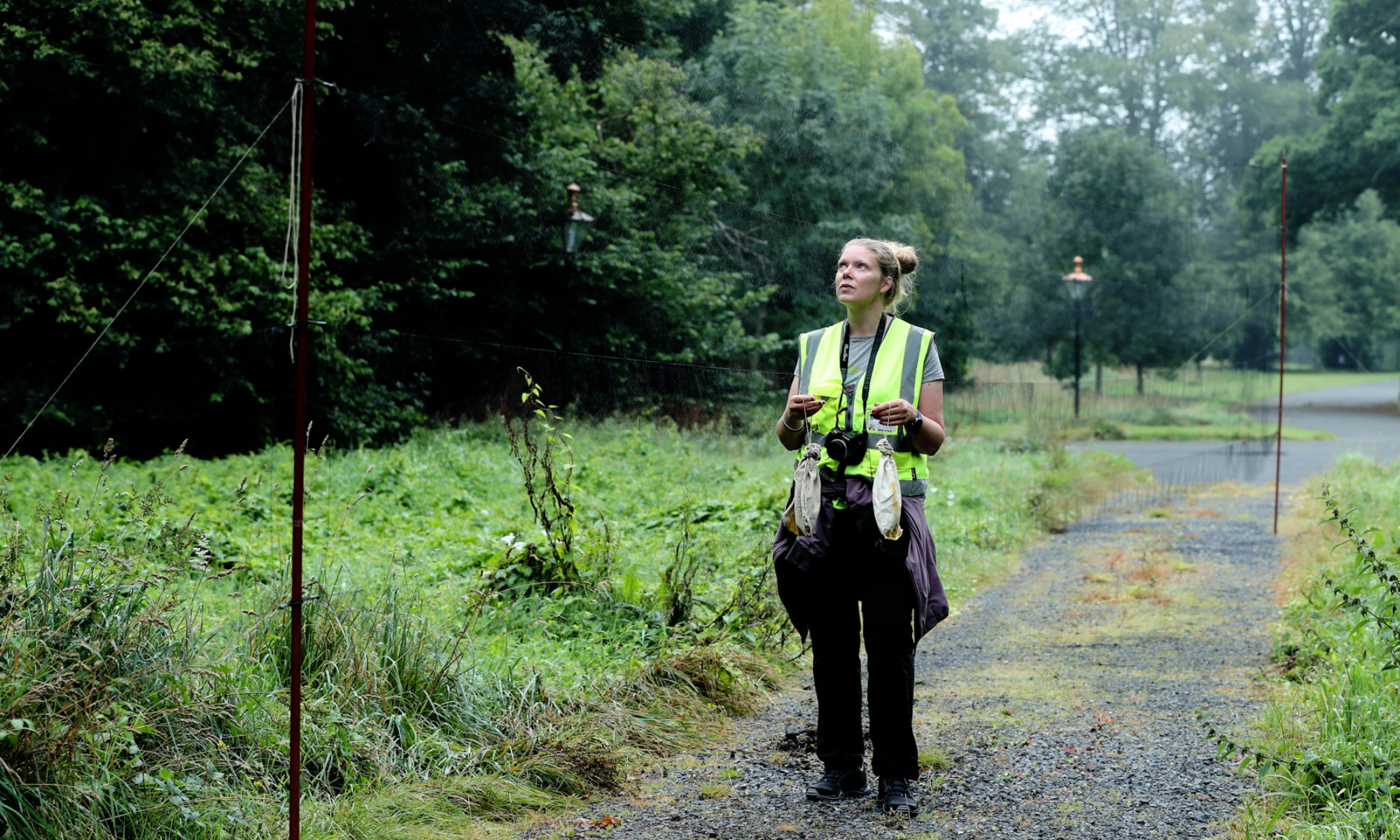
By Ryan Brennan (Research Assistant in Botany and lichen enthusiast)
rybrenna@tcd.ie.
My first ever encounter with the Lilliputian world of lichens was when I was around
fourteen years old. Our biology class was covering the binomial system of naming
organisms. The lesson began with differentiating kingdoms and working our way
down to species. I remember raising my hand to ask my teacher a question that my
immature self treated as a “gotcha”, while also making myself look smart. I asked
something along the lines of: “What about lichen? Aren’t they one thing made up of
two species? How can they fit into this system?”.
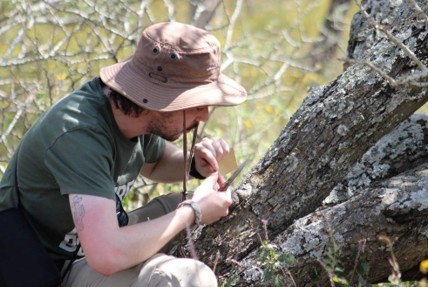
The question was not an original thought. The night before, I had watched Sheldon
Cooper make some strange joke about lichens on The Big Bang Theory (note: the
author does not think The Big Bang Theory is a good show, and prides himself on his
now immaculate taste in media). My teacher hastily googled the answer, told me that
lichen was a fungus, and I promptly forgot about lichens for another seven years.
For most people, this is roughly the amount of headspace lichens will ever occupy. A
fleeting thought about whether the apple tree in the garden is dying because of the
weird stuff on its bark. A moment of concern over whether that stain on the wall is
bird poo they would rather not sit on.
But occasionally, unfortunately in moments few and far between, people investigate
further and realise what they are looking at, is a lichen. Then they notice a smidge of
Xanthoria on the rubber seal of their car door. They realise the white and grey spots
on the concrete path are in fact not chewing gum ironed into the ground by countless
shoes. Soon, they can’t stop. They see lichens everywhere, and, importantly, begin
to notice their absence.
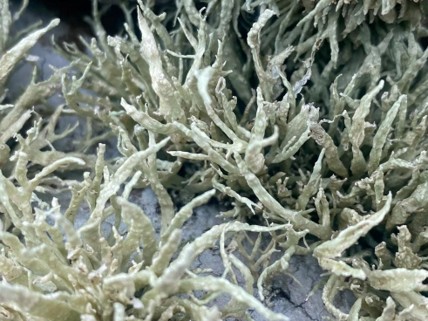
This absence is not accidental. Lichens are remarkably tolerant of cold, desiccation,
and starvation, even being able to survive attached to a space shuttle bound for the
International Space Station. They lack roots, cuticles, and any meaningful control
over what they absorb from the atmosphere. Everything they need, and everything
that harms them, arrives dissolved in rainwater or drifting invisibly through the air,
making them a barometer for environmental change.
This sensitivity has earned them a reputation as biological indicators, although this
label often undersells their role. Lichens do not simply signal change, they record it.
Shifts in species composition, growth form, and abundance accumulate over years
and decades, quietly tracking alterations in air quality, nutrient inputs, and climate.
When nitrogen-tolerant species spread across bark and stone, they reflect not only
pollution, but a reorganisation of ecological opportunity. When communities
disappear entirely, the absence itself becomes the message.
Despite this, lichens remain taxonomic outsiders. They are often introduced as
curiosities, mentioned briefly in lectures on fungi or algae before being set aside.
This marginalisation is not because they are unimportant, but frequently because
they are inconvenient. Lichens complicate neat biological categories and challenge the idea of organisms as discrete, self-contained units. To take them seriously
requires an acceptance of complexity and interdependence that is easy to
acknowledge in theory, but harder to accommodate in practice.
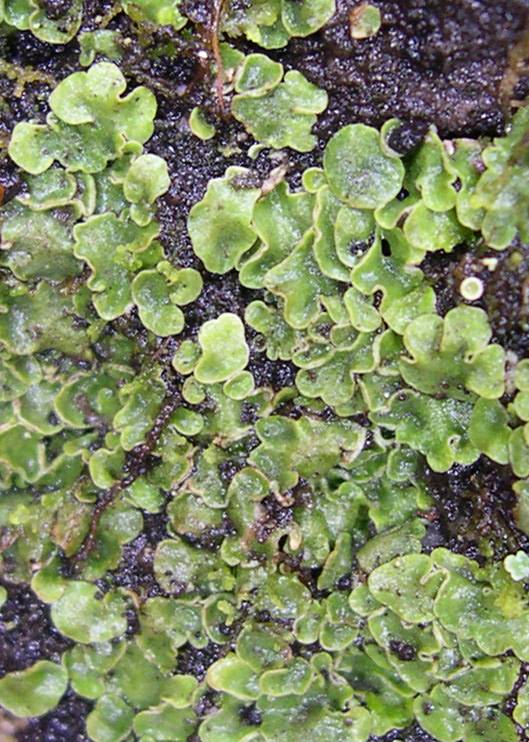
Picture from British Lichens
Yet still, lichens are among the most persistent witnesses on the planet. Many grow
slowly enough that a single thallus may span decades or centuries. They endure on
rock faces, tree trunks, and walls long after other organisms have come and gone. In
doing so, they integrate environmental conditions over time, bearing silent testimony
to both stability and disturbance. Where rapid change favours short-lived species,
lichens remain: absorbing, responding, and recording.
Perhaps this is why noticing lichens alters how landscapes are read. Pavements and
walls become chronologies rather than backdrops. Trees become living records of
atmospheric history. Clean air becomes visible, and polluted air leaves a biological
trace. Lichens do not demand attention, but once seen, they are difficult to ignore.
In a world defined by accelerating change, lichens offer a different perspective. They
do not react loudly or dramatically. They persist, adjust, or vanish, and in doing so
they tell a quiet, cumulative story about the planet we are shaping. All that is required
of us is to learn how to listen.
Ireland was once home to a strong and internationally respected community of
lichenologists. This is not immediately obvious today, given how rarely lichens
appear in contemporary botanical discourse, but for much of the late nineteenth and
early twentieth centuries the island was an important centre for lichen study. Its mild,
humid climate and relative lack of industrialisation produced landscapes rich in
epiphytic and saxicolous species, drawing the attention of specialists from Ireland
and beyond.
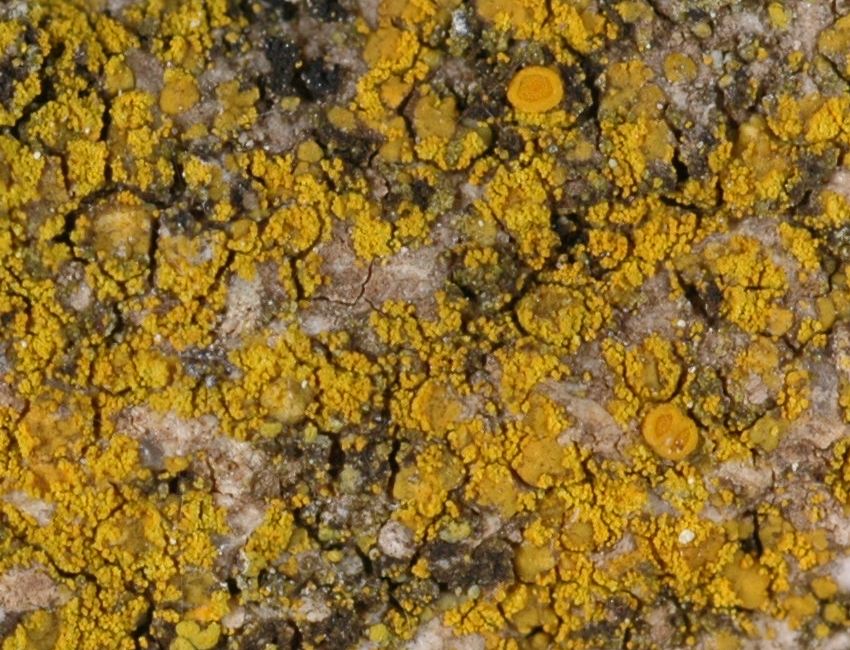
Picture from British Lichens
Among the most significant figures in this tradition was Matilda Knowles, whose work
laid much of the foundation for modern Irish lichenology. Knowles was meticulous,
wide-ranging in her surveys, and deeply committed to recording the lichen flora of
Ireland at a time when such work was neither fashionable nor well supported. Her
collections and publications documented species distributions that, in many cases,
no longer exist in the same form today. Knowles was not working in isolation. She was part of a broader network of naturalists who treated lichens as worthy of serious attention, contributing to floras, herbaria, and field clubs. This community understood that lichens were not marginal organisms, but integral components of Ireland’s landscapes. That tradition, however, has steadily eroded.
In the decades that followed, lichenology in Ireland began to dwindle. The reasons
are not unique to lichens. Increasing specialisation, shrinking taxonomic training, and
the prioritisation of more economically visible organisms have all played a role.
Lichens are slow to study, difficult to identify, and resistant to quick results. They do not fit neatly into grant cycles or undergraduate syllabi. As expertise retired or
passed on, it was rarely replaced. The consequence of this decline is not merely academic.
Without people trained to recognise and record lichens, changes in their communities often go unnoticed. In a country where air quality, land use, and climate are all shifting, this represents a blind spot in our understanding of environmental change.
Yet the tools to reverse this are modest. Lichenology does not require expensive
equipment or remote field sites. It begins with attention. With looking closely at tree
bark, stone walls, roofs, and pavements. With learning a handful of common genera,
then a few species, and allowing curiosity to do the rest. This was how earlier
lichenologists began, and it remains how most expertise is built. There is also something quietly radical about noticing lichens. It is an act that resists speed and spectacle. It asks for patience, for familiarity with place, and for an acceptance that meaningful change is often gradual.
If lichens are the heralds of an ever-changing planet, then we must decide if they are
held up high enough to be heard, their story continuing to be recorded either way.
Ireland’s landscapes still carry their stories, written in grey crusts, leafy rosettes, and
orange stains on stone. The challenge now is not to rediscover lichens, but to
remember that they were always here, waiting to be seen.
If you are curious to learn more about lichen, please let me know! Just beware that I
may not stop talking about them once I start. Feel free to stop me to chat whenever
you see me or send me an email at rybrenna@tcd.ie.
Thanks for reading!