Back to School.

Welcome back everyone.

One_Made_it

As the dusts settles on a hectic first couple of weeks, we finally have a chance to welcome everyone back from the much needed summer break (for those who got one).

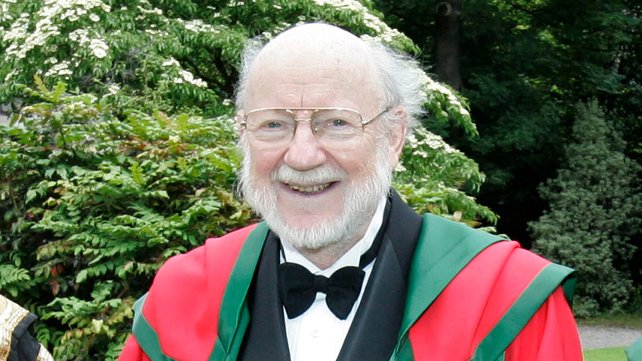
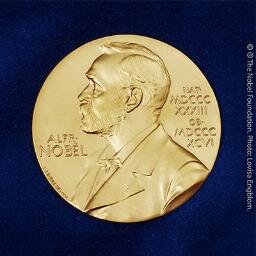
We started this week with the exciting news that an alumnus of TCD Zoology, Dr William (Bill) Campbell has been awarded the Nobel prize for physiology and medicine with Satoshi Omura “for their discoveries concerning a novel therapy against infections caused by roundworm parasites”. Dr Campbell joins Dr Ernest Walton and Samuel Beckett as graduates of Trinity College Dublin to win the award. Obviously, exciting news such as this deserves its own blog post, so watch this space.

Tuesday brought with it the first Nerd Club of the year, as our research and teaching staff got together to plan the year of workshops, talks and presentations to keep us ticking over until May. As each week will cover different topics of interest to our readers, we’ll endeavour to write short openness to summarise the results of our discussions.

The Michelmas term brings with it the commencement of undergraduate teaching, and we are delighted to welcome back our returning Senior Sophistors, as well as our new crop of Junior Sophs, fresh from their marine field ecology trip to Portaferry.

ZooSoc has hit the ground running for the 42nd session, with dozens of events planned for the coming months under the guidance of Fionn Ó Marcaigh and his dedicated committee. Keep an eye on their Facebook, and twitter for details.

For regular news updates form the department of Zoology, be sure to check out Zoobytes on Facebook.

If you would like to contribute to the EcoEvo Blog,  please send us an email at ecoevoblog[at]gmail.com


author: Dermott McMorrough, twitter: @derm_mcm, email: mcmorrd[at]tcd.ie

The Skeleton in the Closet

IMG_1618

After a few ups and downs, everything you always wanted to know about the effect of missing data on recovering topology using a Total Evidence approach is now available online (Open Access)!

This paper also treats many different questions that people might be interested in (Bayesian vs. ML; how to compare tree topologies; comparing entire distributions, not only their means and variance; and many more!) but I’ll leave it to you to discover it…

Back on track, more than one an a half CPU centuries of calculation ago, Natalie and myself wanted to build a Total Evidence tip-dated primates tree. The Total Evidence method is the method that allows you to combine both living and fossil species (or actually, read “both molecular and morphological data”) into the same phylogenies. The tip-dating method, is an additional method that uses the age of the tips rather than the age of the nodes for dating such a tree. But I’m not going to talk about that in this post.

At the start of the project, we were both confident about the idea behind it and that primates would be the ideal group for such work since they are so well studied. A study that I described in a former post also came out around the same time, encouraging us and comforting us in this project.

However, as you might guess, something went wrong, horribly wrong! For the Total Evidence method, we need molecular data for living species (check) morphological data for fossils species (check) and also for living species (che… No, wait)! After looking at the available data, we quickly found out that there was a crucial lack of living taxa with available morphological data (check our preprint to be submitted to Biology Letters putting the actual numbers on the problem). From that problem, rose the idea of actually testing how that would influence our analysis. And funnily enough, this problem become one of the two major parts of my PhD!

Running thorough (and loooooong) simulations, we assessed the impact of missing data on topology when using a Total Evidence method. We looked at three parameters where data would be missing:

  1. The first one, was obviously the one I introduced above: the number of living taxa with no available morphological data (at all!).
  2. The second one, was the amount of available data in the fossil record (because yes, fossils can be a bit patchy).
  3. And the third one, the overall amount of morphological characters.


We then compared the effect of different levels of available data for each parameter individually and and their combination on recovering the correct topology, using both Maximum Likelihood and Bayesian Inference. For the correct topology, we used the tree that had no missing data in our simulations. For each parameter combination, we measured the clades in common between the correct topology and the trees with missing data as well as the placement of wild-card taxa (typically fossils jumping everywhere).

Unsurprisingly, we found that the number of living taxa with no available morphological data was the most important parameter for recovering a good topology. In fact, once you go past 50% living taxa with no morphological data, the two other parameters have no effect at all, even if you have a perfect or a really bad fossil record or many or really few characters. This is kind of intuitive when you think about it because the only way to branch the fossils to living taxa is to use the morphological data. Therefore, if there are no morphological data for the living taxa, the fossils cannot branch with them regardless of the quality of the data. Therefore, in this paper, we argue that to improve our topologies in Total Evidence, we should visit more Natural History museums. And not only the exciting fossil collections but the well curated collections of living species as well!

All the code for this paper is available on GitHub.

Check out the latest presentation about both papers.

Paper 1: Guillerme & Cooper 2015 – Effects of missing data on topological inference using a Total Evidence approach – Molecular Phylogenetic and Evolution (doi:10.1016/j.ympev.2015.08.023).

Paper 2 (preprint):  Guillerme & Cooper 2015 – Assessment of cladistic data availability for living mammals – bioRxiv ().


Author: Thomas Guillerme, guillert[at]tcd.ie, @TGuillerme

Photo credit: Thomas Guillerme (AMNH collections)

Vote for us in the blog awards!

Vote_Riso

Our blog has been shortlisted for Best Education & Science Blog at the Irish blog awards. Public votes will represent 30% of overall score for this round of judging. So please, vote here if you enjoyed reading our posts over the past year.

Author

EcoEvo@TCD

Photo credit

http://noma-cdn.s3.amazonaws.com/content/Vote_Riso.jpg

Microplastics: a macro-problem for remote islands in the South Atlantic?

20140122024105-Bottle_in_the_sea_new_final_copy

Dr Dannielle Green from the Biogeochemistry Research Group in Geography is about to return from an adventure in the South Atlantic where she was hunting for microplastics in some of the world’s most remote islands.

Plastic debris can be found in every country around the world and larger items like plastic bags and bottles can have obvious impacts, such as entanglement, ingestion and suffocation of seabirds, turtles and mammals. But even when plastic breaks down, it persists as small pieces called “microplastics” and in this form can still cause harm to a wide range of marine organisms who unwittingly eat it. Microplastics have been found in marine waters all over the globe but sampling has mostly focused on areas adjacent to large human populations, very little is known about concentrations in remote islands like Ascension Island and the Falkland islands. In collaboration with Dr David Blockley from the South Atlantic Environmental Research Institute (SAERI), Dr Dannielle Green from Trinity College Dublin, Ireland flew out to the South Atlantic to assess the situation.

Eerily desolate but beautiful Ascension island

Water samples were taken from a range of sites around Ascension Island and the Falklands and every site was found to contain microplastics. In fact, the concentrations found were surprisingly high.

Taking water samples in the only glass bottles available... Pimm's bottles!
Taking water samples in the only glass bottles available… Pimm’s bottles!

Dr Green presented her work to the Falkland islanders by giving a public lecture at the Chamber of Commerce which was well attended with a mixed audience including government officials, fishermen, the general public and the local television crew. She explained the potential issues of microplastic pollution and a thoughtful discussion about solutions later ensued with input from the audience.

Dannielle presenting her results at the Chamber of Commerce in Stanley.

Microplastics can absorb toxic substances from the water column. In this way, they can become like “pills” of concentrated toxic chemicals that could be consumed by creatures like worms, shellfish, fish and mammals and can be transferred through the food web.

Pollution of natural habitats by microplastics is a global problem that we are only just beginning to understand, but it is one that is expected to get worse as plastic production continues to rise. Dr Green’s research explores the wider effects of microplastics on marine ecosystems. Through this work, she hopes to provide scientifically sound recommendations that will feed into policy and help protect our ecosystems.

Author

Dannielle Green

Photo credits

https://www.indiegogo.com/projects/save-our-seas-from-the-microplastic-threat#/story and Dannielle Green

Summer in the city

summer-cityThe blog is going to take a well earned summer holiday and will start back again in September when hopefully we’ll have a slew of papers and conferences to report on! See you all soon.

Author

Adam Kane, kanead[at]tcd.ie

Photo credit

https://musiccourt.files.wordpress.com/2012/06/summer-city.jpg

We have no need for that hypothesis

Science-vs-Religion-e1364999088759Scientists as a demographic group tend to be atheists. One survey of members of the National Academy of Sciences found “…near universal rejection of the transcendent…” As scientists are concerned with the study of the natural world they are liable to eschew any supernaturalistic explanations, although there are notable exceptions. Historically science and religion have frequently crossed swords but recently there has been a marked increase in the criticism of religion by various scientists.

An increasing number of scientists have become popularisers of their research area and frequently engage with the public; this inevitably leadsto the person’s own philosophy and opinions being put forward in addition to the science. In particular, the past decade has bore witness to a surge in the amount of popular literature promoting atheism and criticizing religion. Scientists have also entered the public sphere to debate intellectuals in theology, philosophy etc. on matters of religion and atheism.

Scientists have had both a proactive and a reactive response to religion. For some, science can now fill the gap that religion once occupied. Richard Dawkins wrote that Darwin has made it possible to become an intellectually fulfilled atheist. This success has led to the development of a modern scientism. Michael Shermer, the founder of The Skeptics Society and a noted atheist, describes it as “…a scientific worldview that encompasses natural explanations for all phenomena”. This is a complimentary definition of a typically pejorative phrase that has dogmatic connotations.

One criticism from an Irish perspective comes from Gabriel Daly who, while celebrating the achievements of science, says that scientism “…can be rightly repudiated as a monster of arrogance and philistinism.”

Shermer’s contention is that certain developments in science have allowed humans to ask questions and indeed get answers from areas once exclusive to religion. For instance, cosmology and evolution can probe the origins of the universe and of our selves. On Stephen Hawking, Shermer wrote, “…this being the Age of Science, it is scientism’s shamans who command our veneration.” He maintains that scientism can bridge the gap between the two cultures of science and the humanities that CP Snow described. Daly also invokes the idea of Snow’s two cultures but he has a different interpretation to Shermer. He argues that the two cultures offer different perspectives, that neither one has the final say on any issue so there is no reason for conflict.

It does appear that scientists have shed the need for religion as a way to look at the world. If you have that mindset you’re happy with an unwoven rainbow.

Author

Adam Kane, kanead[at]tcd.ie

Photo credit

Science vs Religion

Photo competition Result

Mot motThanks to everyone who entered the competition. This time around our panel of judges deemed Deirdre McClean’s entry to be the worthy winner. Her picture of a Rufous motmot adorns this very blog so congratulations to her.

Author

EcoEvoblog

Photo credit

Deirdre McClean

There is no magic formula…(sorry!)

miracle

I recently attended a mentoring event that left me faintly frustrated and I was finding it hard to put into words exactly why. Eventually it came to me – at these events people always want the answer to the same question: what is the magic formula for succeeding* in academia? The problem is that there isn’t one, and I always feel really bad having to say that.

Sadly being smart is not enough. You need to work hard (not 24/7 or anything insane but you can’t slack off all the time and expect to succeed) and you need to be lucky. That luck can involve being in the right place at the right time, having the right skills, or knowing the right person. Of course people make their own luck, and being in the right place is not going to help you if you don’t also have the CV to be able to grab the opportunity. But still I would say that luck plays a fairly large part in most people’s careers. Of course you need publications, preferably in well-respected journals (Science and Nature papers would be a bonus!). But how many publications depends on your field, the post and, importantly, who you are competing with. The same applies to grants, presentations, teaching, outreach etc. This makes giving generic advice really difficult.

Another problem is that things are changing rapidly in the academic job market. Often we get advice from PIs who got their jobs in a completely different economic and academic climate. For example, I got a PhD with no papers, no research experience, and when I was half way through my MSc degree. These days this wouldn’t be enough for me to get PhD funding from the Irish Research Council. My point here is that you should take generic advice with a grain of salt, and also try to avoid getting annoyed with PIs for not giving you the “magic formula”. All we can do is tell you about our personal experiences.

What kinds of advice might be more useful (beyond the obvious advice to “write more good papers”)? First, before you’re looking for jobs take a senior academic in your field (preferably several) out for a coffee to show them your CV and ask them if there are any obvious gaps. This gives you the opportunity to fill those gaps before it becomes an issue. Second, when you start applying for jobs, try and get as much information about the job as possible from the advert but also ask people in the department if you can. This might save you time, for example if it turns out there is an internal candidate or if your CV is really not competitive, or give you an idea what the department is really looking for. Third, if you apply for jobs and get rejected, try and get feedback. This won’t always happen due to the volume of applications, and it won’t always be useful, but it’s worth a try. And don’t let rejections discourage you, keep on trying!

Good luck, and if you do find the magic formula please let us know!

*this assumes that getting a permanent job is equivalent to success!

Author

Natalie Cooper @nhcooper123

Photo credit

http://cnx.org/

Shall we kill all our bees?

1024px-Bee_covered_in_pollenKill all the bees!!”, the modest proposal of Prof. Paul Sutton from University of South Australia is a provocative attempt to convince economic rationalists to finally start counting what really counts.

If all the bees were to go extinct we will have to replace them by, for example, hand-pollinating our crops. That means employment, economic growth in terms of GDP and tax revenues: very good for the Economy. Continue reading “Shall we kill all our bees?”