When attempting to conserve a rare animal population sometimes every individual counts. Conservationists regularly go the extra mile to protect their study species. The conservation efforts implemented for the Little Tern (Sternula albifrons) in Britain and Ireland demonstrate the success these efforts can have. This species nests on shingle beaches and had experienced catastrophic population declines due to increasing development and use of beaches by people. Little Tern adults are very vulnerable to disturbance and their eggs are particularly vulnerable to walker’s boots! Thankfully a network of wardened colonies, run by a mixture of conservation organisations and enthusiastic volunteer groups, succeeded in stabilising this species’ population.
First in a series of posts on life after an undergraduate degree, Alison Boyce gives an account of the life of a scientific technician.
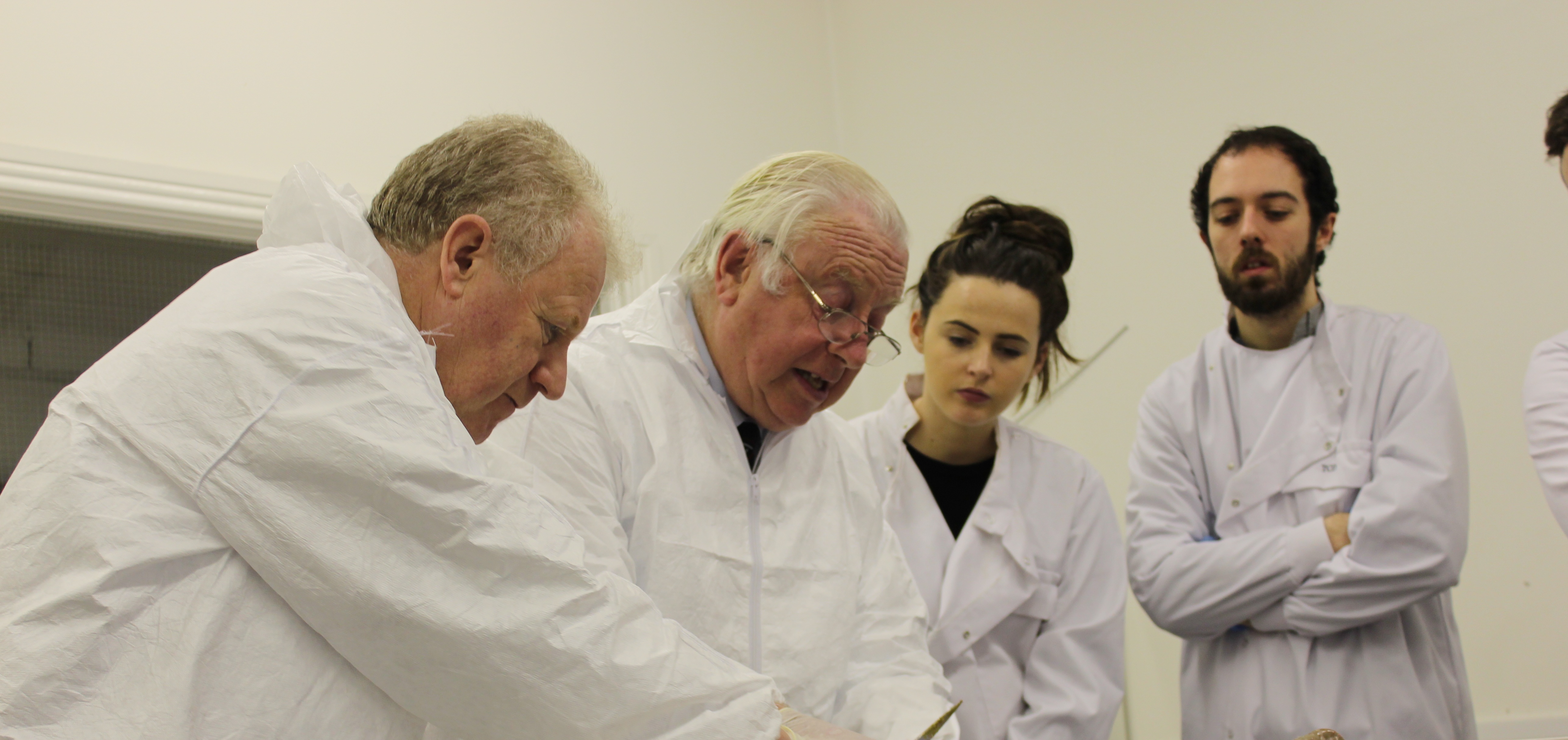
Science, engineering, and computing departments in universities employ technicians. Anyone working or studying in these areas will have dealt with a technician at some point but most will be unaware of a technician’s route into the position and their full role in education and research.
Technical posts are varied e.g. laboratory, workshop, computer. Funding for technical support is afforded by the Higher Education Authority (HEA) to provide assistance in undergraduate teaching. This is the primary role of technical officers (TOs) after which the Head of Discipline or Chief Technical Officer (CTO) decide further duties.
History
Until the early 1990s individuals joined the university as trainee technicians. Many came through the ranks starting as laboratory attendants, a position which still exists. Trainee technicians would spend one day a week over four years working towards a City and Guilds’ qualification. At this time the occupation was mostly hands on with little theoretical work. Many started young by today’s standards (starting at 14 years old was not uncommon), and they continued to study well past diploma level. Changing the nature of the role so much that nowadays almost all technical officers have primary degrees and come with a more academic view of the position.
In 2008, it was agreed that incoming technical officers must hold at least a primary degree in order to work at Trinity College Dublin. Those looking for promotion to Senior TO would require a Master’s and to CTO, a PhD. Those already in the system would not be penalised, local knowledge and experience are recognised equivalents and rightly so. This agreement gave rise to the job title changing from technician to technical officer reflecting the removal of the apprenticeship system. Many still use the old name but it doesn’t cause offence. These qualifications represent minimum requirements. TOs constantly train, learning new technologies and procedures. It is difficult to resist the temptation of further study when you work in an educational environment.
From graduate to TO
Gaining experience in medical, industrial, or other educational laboratories is most important. Further study in areas general to laboratory work are also advantageous e.g. first aid, web design, or statistics. Sometimes researchers move into a technical role temporarily and find they enjoy it so stay on. Applying to a discipline with some relationship to your qualifications makes sense; a physicist may not enjoy working in a biological lab. Having come though the university system many graduates would be familiar with teaching laboratories and their departments. Seeing a place for yourself in the future of a discipline is vital for career progression as it is seldom you will see a TO moving from one department to another. It should be possible to adapt the role to your skills or study to meet those required for promotion.
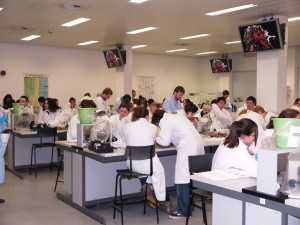
BioLab Teaching Facilities
Day to day
All labs/disciplines differ but certain core responsibilities fall to the technical staff at some point. Running practicals is the biggest responsibility during term time with design and development out of term. Some departments in science and engineering have lab and field based classes. Various modules require field sampling in preparation for the practical. Getting out on the road can be very satisfying even if you are at the mercy of nature!
If you consider what it takes to run a home you’ll have an idea of what a TO does to maintain a lab/department. Ordering supplies and equipment. When something breaks, repair it or have it mended in a cost effective way. Logging, maintaining and installing equipment, health and safety information and implementation, chemical stock control, running outreach programmes, planning and managing building refurbishment, organising social events, updating the discipline’s web pages, assisting undergraduate student projects and much more.
These are just the basic duties and do not describe the essence of technical work at university level. Firstly it is to guide, instruct, and assist in scientific matters. An analytical and practical mind is necessary. You must have a willingness to facilitate the design and execution of projects in teaching and research. If you are eager to help and learn, it’s the perfect job for you. The information base for many materials and methods is the technical staff. Local knowledge and an ability work in consultation with other departments is often key to completing a project. Ideally, when a researcher leaves the university, their skills should pass to a TO keeping those abilities in-house. Imparting them to the next generation.
If you’re very lucky, you’ll be in a discipline that encourages you to take part in research and further study. It’s wise to check where a discipline or school stands before considering work in that area. Career opportunities open up in such disciplines. CTO Specialist is a promotion given to someone with expertise of a specialist nature e.g. IT, histology. Experimental Officer is a post created to further research in a discipline and often requires some teaching.
Overall, the position is what you make of it. If you strive to improve and adapt, you’ll find it immensely rewarding. Many practical classes repeat annually but on a daily basis you could be doing anything, anywhere. Being a technical officer is stimulating and constantly changing, keeping your brain and body active. You won’t be sitting for too long when you’re surrounded by young adults in need of advice and equipment. The relationship is symbiotic, your knowledge and their enthusiasm eventually gets any problem sorted.
Author: Alison Boyce, a.boyce[at]tcd[dot]ie
Alison Boyce has worked as a technical officer at Trinity College Dublin for over 20 years. In that time, she has acted as a master-puppeteer in seeing countless undergraduate projects through to completion. Her in-depth knowledge of technical, theoretical, and practical aspects of natural sciences has made her one of the most influential figures in the history of this department.
The editorial team thanks her for taking the time to write this piece.
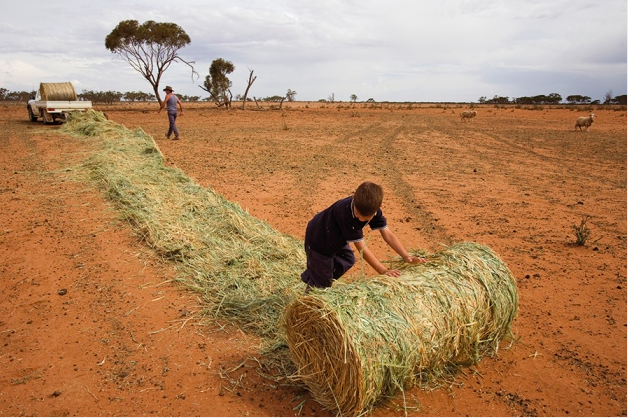
It was a spring day in April 2004 when Qiang Fu first noticed the anomoly in the data. On either side of the equator – in a belt strecthing from 15 to 45 degrees latitude – the lower atmosphere was warming more than anywhere else on the planet. Fu, a professor at the University of Washington in Seattle, was stumped.
It wasn’t until a year later that Fu realized what he had discovered: evidence of a rapid expansion of the tropics, the region that encircles Earth’s waist like a green belt. The heart of the tropics is lush, but the northern and southern edges are dry. And these parched borders are growing — expanding into the subtropics and pushing them toward the poles.
The expansion of the tropics is the subject of my latest feature, which appears in a recently published edition of Nature. You can read the full feature online at Nature.com: http://www.nature.com/news/the-mystery-of-the-expanding-tropics-1.19271 (behind a paywall). But here, I’ll give you a taste of what it’s about.
In the past ten years – since Fu first published his discovery in the journal Science – scientists have been turned their attention to this subject in a big way – there have been lots of scientific papers, theories and measurements – yet it’s had surprisingly little coverage by the media.
I’d thought about writing on this topic for a while and the time seemed right when I noticed that a bunch of 50 or so scientists were meeting last summer in New Mexico to trash this topic out. The meeting itself wasn’t open to the media, which was unfortunate, but I‘ve since managed to talk to a lot of the people who gathered for five days in that hot conference room in Santa Fe last summer.
I wanted to know answers to the same questions as those scientists, and those conversations would form the basis of my article. I’ve been writing about climate change for more than ten years now, and so I’m used to a lot of uncertainty in science. It was good preparation for writing this piece! On tropical expansion, still so many questions remain unanswered, such as how fast is it happening, what’s causing it and where are the future boundaries of the tropics likely to be? And importantly, why should we care?
Well, you’ll have to read the feature to get an answer to all of those questions, but I’ll answer a couple of them for you here.
How fast is it happening? Estimates range from less than half a degree of latitude per decade to several degrees of latitude per decade over the last few decades. At the more extreme end, that’s like moving London to the latitude of Rome over the course of a century. Pretty big deal. But it’s worth pointing out that some of the more recent estimates have been more moderate; they’re still bad news for cities such as San Diego, though, that would experience a big impact even with a one degree latitude shift in the edge of the tropics.
As to why we should care, well there are lots of reasons: aside from the potential water crisis for major cities such as San Diego, Perth and Santiago. tropical expansion could wreak havoc for some of the world’s most fertile fishing grounds, global grain production could shrink and biodiversity, especially at the southern tips of the African and Australian continents, (and they are astoundingly diverse) will suffer.
Now, if you’re interested in geeking out on all the details (and, in my view, reading the real story, which is about what is happening way up in the atmosphere near the Equator), check out the full story on Nature: http://www.nature.com/news/the-mystery-of-the-expanding-tropics-1.19271
At today’s NERD club, we tried our hand at explain our research using the up-goer five, which limited our available vocabulary to the “ten-hundred” most common words (thousand isn’t one of them).
After some brief hesitation, the 9 of us present found out that despite being quite challenging, this can be an incredibly fun and useful activity when it comes to explaining our often jargon-filled research to the public. While this system is rigid, and a tad extreme with words such as “plant” and “science” unavailable, it forced us to find alternative ways of explaining what we do.
Decision makers and land managers are increasingly required to manage landscapes for multiple purposes and benefits. However, despite progress in the development of frameworks linking natural capital to the provision of ecosystem services and human benefits there remains little guidance for how management interventions can improve ecosystem service provision. As ecosystem services cannot be directly influenced, interventions need to be directed towards natural capital stocks. We provide a framework that explicitly links natural capital stocks to ecosystem service provision and identify manageable attributes of natural capital stocks as the critical intervention point. A structured decision making process based on our framing of the ecosystem services concept can facilitate its application on the ground.
Simple version
How to manage the living things that help us to live and enjoy life
People need many different things like food and wood from the land and I am interested in helping them to manage their land to get lots of good things from it. People have come up with ways of finding out the relationship between living things and the good things like food but it is still hard to find out how to manage the land for what we want. This is because when we make living things different it is hard to tell what will happen to the good things we want. We think the best way of getting out of this problem is to understand how changing where living things are and how many of them there are changes the food and other good things that we want. We help by giving people a plan for how to manage living things that will give us more of the good things we want from the land. This plan will help people to talk about what they want from the land and how to get it.
The world is getting warmer, much warmer and quickly. It’s hot outside, in the air and in the water, even deep down in the water. Ice is becoming water, land is getting drier, so in some places its too wet and in others its too dry. People are having a bad time in lots of places. Animals are sad too. We know all of this because of the hard work of people’s brains.
What can be done?
We can drive less. We can eat fewer moving, living things. We can wear more clothes and not make our houses hot. Or we can do nothing. And wait until it is much hotter. Then we can try to change the world by putting things in space that will block the sun out. Or we can put stuff in the sky to make it cooler. If we do none of these things we might end up in the water, in hot, hot water.
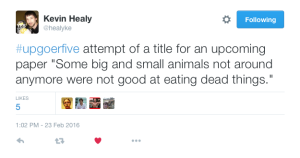
Two legged animal eating animals were around for 160,000,000 years but are not anymore. We do not really know what they ate. Some were as small as a dog while others were as big as a bus so they would have needed more food. One type of food that they might have eaten was already dead food. We know animals today eat food they found that was already dead so animals that are not around may have also eaten dead food. But did the big animals that are no longer around eat more or less dead food than the small animals? We made computers games to show that actually both big and small animals are very bad at eating dead things, while animals in the middle are much better at eating dead things. This was true even if we changed how far they could see, how much dead food was there, how many other animal eating animals were around and how much food they needed. We show that dead things might have been important to animals no longer around and that how big you are might still be important to how much dead stuff animals eat both today and in the past.
“If I have everything I need, to do whatever I need to, I am happy. Just to say, if I have food I eat and I am happy. If I don’t have enough I have to eat less, or take food from somewhere else. If I take it from somewhere else, maybe another person will not have it for his own.
To do food I need land. The problem is that after I use land to do food this land gets bad and is not beautiful anymore. But if I have a lot of money, I can buy land and food from somewhere else and keep my land beautiful and clean.
If people can buy the land and the food they need, there can be a person with more money than you that buys all the things you need, and you can’t eat and live. So, it is important to control what people do with their money. It is important to check that no one is taking food or using land that is needed for another person to live.
People with no food get angry and one day they will come where people with money live and take back their land and their food.
I am studying a way to control if people with money is taking food and land from other persons that really need it (more than these people with money).
We can stop that by checking if these people really need these things and if they can find these things where they live. If they can, they have to use them, instead of going somewhere else to make less beautiful the land of other people.
Mean animals that live in other animals and how they make the other animals do weird things when its hot
Mean animals that live in other animals and then hurt the other animals are in many places. The animals I study all live in water that does not run. The mean animals sometimes make the house animals do things they would not do most of the time. When the house animals do strange things, this can make everyone else in the whole water group do things different to how they usually do and power from food can go to different places. When the water gets hot, everyone in the water does things not how they do them in cold water. I study how the mean animals and the house animals do things when the water is hot and cold and how this makes everyone in the water different. I also study how all the animals doing different things can make the power from food go different places and can change who eats who and how often. I study these things in the water outside and in small water inside.
How large a group of animals is can change how they act. It is important to know how big or small a group of animals are so we can understand how they play with one another and live in their home. Small night time animals with black and white faces are important to study because they get a cold that they can pass on to bigger black and white animals that live in fields eating green stuff to make the white stuff we put in our coffee. We carried out a study of papers that looked at the grouping of small black and white faced animals, how many of them lived together, how big their homes were and how many there were in total. We showed that how many animals there are in an area, changes how they act, their relationships with one another and with other animals that may not be their family or friends. All of this means we can better understand how these animals pass their colds onto one another. We have come up with a group of names that you can use to quickly and easily tell other people many animals there are in an area and how it makes this group different to other groups. We hope that our study will help people who want to save the small black and white animals as well as those people who want to do away with the colds that the animals get in a much better way than they do now.
I want to know how the brain understands what it sees in the world. When we see the world through our eyes, they send this to the brain telling it what they saw. The way the brain understands this is important because when the brain talks to the eyes, the pictures can be slow or might not get to the eyes at all. When this happens in people, they think they have a friend when they do not. They are talking to themselves.
We try to understand how the eyes talk to the brain by making simple games on a computer that make animals play with each other with an angry animal chasing a smaller animal. We set up roads between the cells in the brain and then make the brain bigger to see is the angry animal better at chasing the smaller animal in the computer game.
We try to understand this by looking into the animal brain while it plays around in interesting worlds on the computer. By changing the number of roads in their brains before and after the games, animals change what they catch, we hope to learn more about the brains power to understand these games.
This study will make new games of animal moving by bringing good ideas from old people in white clothes to the field of moving studies. Doing so will allow us to answer simple questions about the relationship between bodies of angry animals and their food and to add for the first time why food matters in such relationships. These relationships explain how animals talk with the world around them, and are at the heart of our entire idea of world.
We study how and why trees and other green living things live and grow where they do. To do this we have to go to where the green living things live and look at them and what other things are living beside them. Green living things need to live in the ground, the ground is different all over the world and some things can live in some places and not others. We try to understand why this is by changing what’s in the ground and seeing what type and how many of each thing continues to live there.
Green things what live in the ground can also change themselves to fit the type of ground, rain or sun they get every day. They can change many things such as how big or small they grow or how thick their leaves are but quite often to make a good change to one part of their body they must also make a bad change to another. We try to understand what causes these changes by looking at one green thing that lives all over the world and seeing what changes are made and where the things with those changes are living.
Attempting to describe population ecology
If you’re interested, ESA’s new sci comm section has some useful tools for science communication: https://advancingecocomm.wordpress.com/
It’s rare to come across a sci-fi movie that isn’t loaded with technobabble or scientific terms that are used ever so incorrectly. In fact, a lot of the Hollywood blockbusters are guilty of mincing the scientific words and concepts for entertainment value: “The Day After Tomorrow”, “Armageddon”, “Lucy”, “The Core”, to name but a few.
In short, Science itself has been drastically misrepresented by the Hollywood industry.
Then along came Ridley Scott’s sci-fi epic “The Martian”.
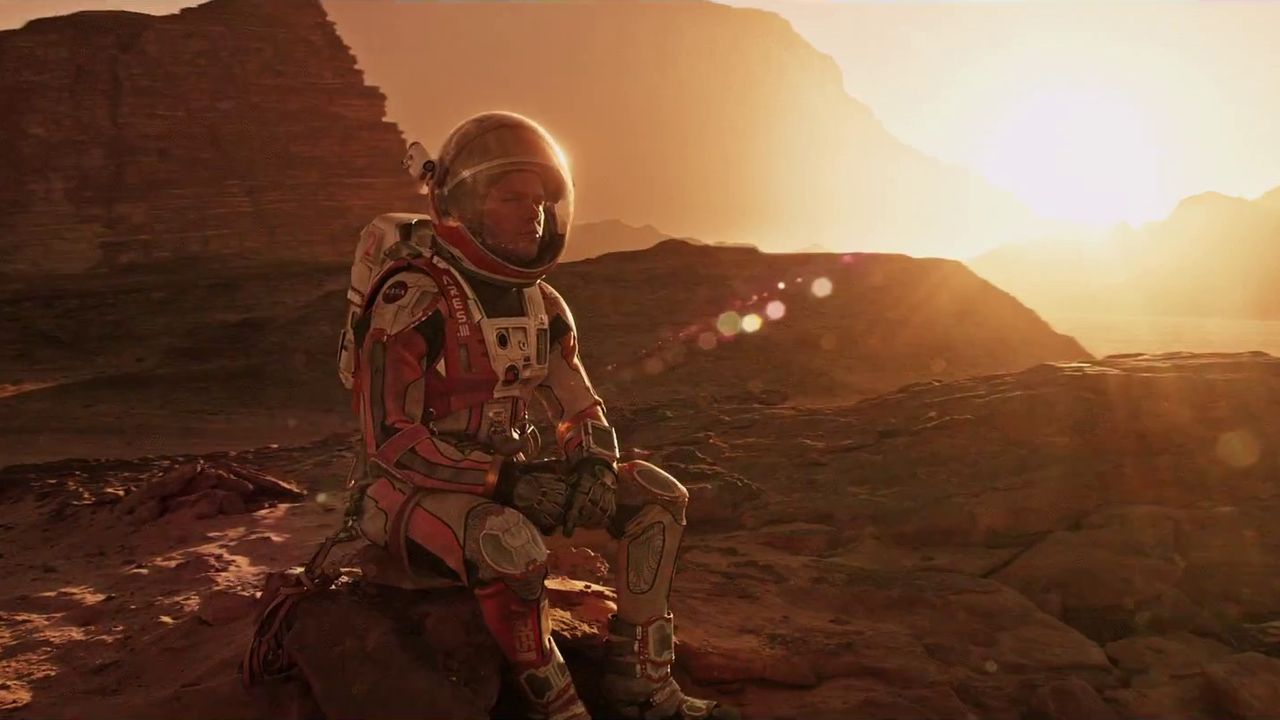
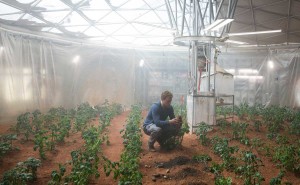
Based on the sci-fi novel by Andy Weir, it tells the story of astronaut Mark Watney (Matt Damon), who’s left stranded on a Mars space station after being presumed dead by his crew. Despite his circumstances, Mark manages to survive for over 500 days by employing his ingenuity as a botanist to grow and harvest potatoes on Martian soil.
After watching our astro-botany protagonsit build his very own Martian farm (synthesizing water and all) in a manner McGyver would be proud of, the question was working away in the back of my mind: Could this really happen? Or was Hollywood once again selling the science short?
Let’s put it to the test.
1) Solely spuds for survival?
Could one man live off Maris Pipers for nearly a year?
Yes.
Yes he could.
In 2010, Chris Voigt from the Washington State Potato Commission lived off nothing but potatoes for 2 months as a publicity stunt promoting their nutritional benefits. And lived to tell/blog the tale.
Potatoes are a source of high-level carbohydrates, providing around 163 calories each. They also contain essential nutrients such as magnesium, potassium folate, vitamins B6 &C, low levels of protein and dietary fibre in the skins.
However, supplemental vitamins A, E and K would be needed to stop our Martian protagonist from going blind.
Added to the fact that Mars has one-third the gravitational pull of Earth, the potatoes’ energy content can go the extra mile now that Mark is one-third his own weight, hence expending less energy than that on his home planet!
2) Life on Mars’ soil? One of the biggest challenges faced with Martian agriculture is the lack of anything living in the soil – particularly bacteria that can fix Nitrogen, which is an essential for plant growth.
Luckily enough, Mark found access to the space stations’ vacuum-packaged poo to use as manure – giving a new lease of life on the Red Planet’s potato plantation.
While the thought of using you own fecal matter to fertilize your food may make some sick to their stomach, this is practiced today under the guise of “Biosolids”. As a fertilizer, they fetch up to £27 per tonne in dry mass for their nutrient content.
Also, we’re assuming Mark harvested his own poo, hence is only exposing himself to his own batch of pathogens and bacteria from his own gut. Otherwise he may make himself very sick from fiddling with foreign fecal matter!
3) Safe soil to sow on?
Mars soils consist of finely broken up basaltic fragments derived from volcanic gas emissions, which are highly enriched in sulphur (which may explain why nothing is living in it).
But the soil also contains salts called perchlorates, which were detected by NASA’s Phoenix lander in May 2008 in the form of calcium perchlorate.
At high enough levels, perchlorates – a key component in solid rocket fuel – can lead to thyroid problems, which makes it quite toxic to humans.
If 0.6% of Mars’ soil was made up of perchlorates (hence 60 grams/kg) how toxic would this be for Mark Watney?
A report from the Agency for Toxic Substances & Disease Registry (ATSDR) highlights a longitudinal study of 2 healthy volunteer groups consuming perchlorate treatments for i) 35mg for 2 weeks or ii) 3mg for 6 months. At the end of both treatments, with both groups consuming up to 0.55g of this salt were found to experience no abnormal thyroid functionality.
But at such small doses, it doesn’t provide enough sound evidence that Mark wouldn’t have his thyroid tampered by the perchlorates percolating into the potatoes.
In summary, can one astro-botanist:
i) survive on just potatoes? [Yes]
ii) make fertile Martian soil? [Yes]
iii) work around the soil’s “toxic” properties? [Jury’s out for now]
With the discrepancy of knowledge for our last scenario letting us down, the remaining facts are air-tight: Mark Watney most likely could have sustained himself on Mars with just potatoes.
As I’ve said before, a lot of Hollywood’s movies have sold Science a bit short in the past. But the Oscar-nominated* sci-fi flick has stepped up to the mark to produce not only a stellar cast and production, but to produce an adapted screenplay that is doesn’t lose sight of its tale of humanity and the triumph of the human spirit by “sciencing the shit out of this.”
*Currently nominated for Best Picture, Best Actor and Best Production Design.
Simon O’ Carroll– Graduating with a B.A. (Mod.) in Zoology in 2015, Simon is currently doing an Master’s in Conservation and Biodiversity at the University of Exeter.
Last December I was asked to participate in the TEDxUCD 2015 event. The event included 9 national and international speakers with a wide range of ideas worth spreading. Despite being asked to participate only two days prior to the event luckily I could draw on the wide research area encompassed in my new Post Doc position using the COMPADRE and COMADRE databases to study patterns in demography and life-history evolution in plant and animals. As I couldn’t possible fit all the ideas worth sharing from the fields of demography and life-history evolution into an eleven-minute entertainment talk I focused on research related to the variation of maximum lifespan across vertebrates. In particular, I discussed research originating from my PhD on trying to understand why some species seem to live far longer than we would normally expect and how their ecology may be related to this (http://rspb.royalsocietypublishing.org/content/281/1784/20140298).
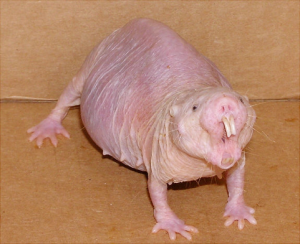
My approach is that it is the species that are found at the extremes of nature that can often be the most informative. Whales tell us about the limits of size, cheetahs the limits of speed and ants the power of cooperative behavior. However, it is not always the Guinness book of record style species that are the most interesting, for when it comes to understanding aging it is oddball creatures such as the bats and the naked mole rat that are the unsightly stars of many aging studies. The reason for this interest is because these animals seem to have the inside scoop on the elixir of youth with both bats (>40 years max) and naked mole rats (>30 years max) living an order of magnitude longer than expected for their size.
Despite this we still have little idea of not just how, but why these species have such life-history strategies. This is important not simple with regards to understanding life-history evolution, but because researchers are beginning to target species and genes with potential links to the abilities that keep aging at bay. For example, the extreme lifespan of naked mole rats has been touted as being the result of the reduced danger associated with its subterranean lifestyle. This has led researches to target species and genes associated with with living underground, such as genes related to their stretchy skin, as these are to thought to be themselves linked with reducing sources of age related mortality such as cancers. However, the role of subterranean living in increasing lifespan is still debated, leaving such a targeted approach in danger of missing the mark in other scenarios.
My idea worth sharing is that we should not just find these unusual species but also understand what evolutionary and ecological drivers shaped these species. With the help of more detailed datasets like COMADRE and COMPADRE we can begin to understand the evolutionary and ecological drivers that lead to species at the extremes of life history evolution. We should aim to not just know who the oddball stars of life-history studies should be, but why they really are stars.
It’s a sombre statistic: year on year, we lose up to 100,000 species. That’s somewhere between 0.01 and 0.1 percent of all species on the planet (we don’t know the exact rate because we don’t know exactly how many species exist; it could be 2 million or 100 million). The rate is thought to be at least 1000 times what it would be in the absence of the deforestation, poaching and pollution we are responsible for.
But despite this gloomy outlook, prospects are improving for some species that have narrowly escaped extinction. That’s partly thanks to ongoing success in breeding species that are extinct in the wild, and reintroducing them.
I’m Olive Heffernan, a freelance science writer who covers the environment for outlets such as New Scientist, Nature, Nature Climate Change (of which I’m the former Chief Editor) and Scientific American. I’m also currently Science Writer in Residence in TCD’s School of Natural Sciences. While I’m here, I’ll be blogging from time to time about the topics I’m reporting and writing on.
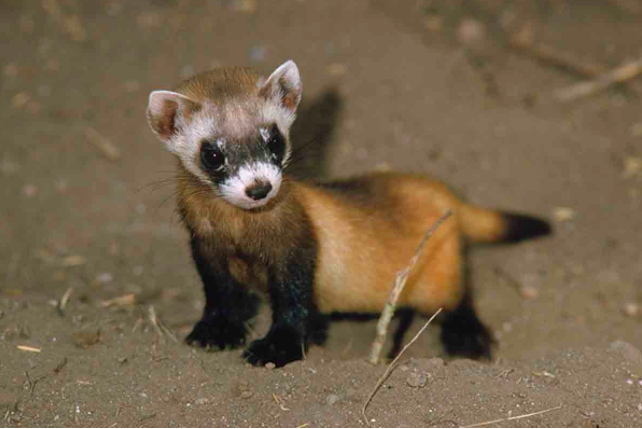
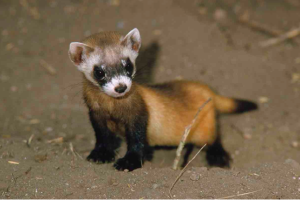
My latest article, published in New Scientist, reports on the animals that are scrambling back from the brink of extinction. Some, such as the black-footed ferret, were once presumed extinct in the wild.
The ferret’s story is an interesting one. Once native to the North American Prairies, these cute nocturnal creatures were essentially wiped out by the arrival of European settlers in the 1860s. As they began to cultivate the plains and to breed cattle, the farmers started to poison prairie dogs – the ferrets’ favoured food – because they worried that their cattle would break their legs by stepping in the burrows. What’s more, ferrets were especially susceptible to plague brought to the US during the early 1900s on trading ships from the Far East. By the late 1950s, the ferret seemed a distant memory and by the late 1970s it was considered extinct.
But in 1981, a working dog on a farm in Wyoming brought home a surprising kill – a black-footed ferret! The US Fish and Wildlife Service subsequently recovered 18 live ferrets and eventually – after a few failed attempts – they bred some in captivity and reintroduced ferrets into the native habitat. By 2008, the wild population had reached around 1000 individuals again, but from 2008 to 2015, the number of breeding adults declined by 40%, due to plague.
Thanks to sustained efforts by US Fish and Wildlife, together with the World Wildlife Fund and Defenders of Wildlife, 300 individuals exist successfully at 6 sites on public and private lands from Mexico to Canada. The goal is to establish 3,000 breeding adults throughout their former range, at 30 different sites.
The main challenge will be keeping the ferret populations plague-free. The ferret’s story is a good example of how conservation efforts are often a long, hard slog over many decades. As Mike Hoffmann of the International Union for Conservation of Nature (IUCN) Species Survival Commission, says in my New Scientist story “Success takes many, many years to achieve. And all the major conservation success stories, whether it is the black-footed ferret or Arabian oryx, have taken decades of hard conservation work on the ground and continued effort.”
You can read about the recovery of the Scimatar-horned oryx, the blue-eyed black lemur, and a range of other species in my article, which is online here (behind a paywall) and also in the current issue of the print magazine. There’s a very nice photo gallery of species bouncing back from the brink in the online version.
Interested in keeping up with developments in the world of Ecology and Evolution? Well then, you’ve come to the right place!
Welcome to BlogRoll, EcoEvo’s fortnightly news and views roundup. Every two weeks, we will present a collections of some of the stories and papers that have caught our eye.
In parasitology, a study which was published in Science has found that women infected with the roundworm Ascaris lumbricoides over their lifetime gave birth to two extra children on average, suggesting the worm altered the immune system in such a way as to make it easier to have children. The 9 year study of 986 indigenous women in Bolivia also found that presence of the hookworm has the opposite effect on the women. Full story via the BBC.
The hills are alive….
The role of ecosystems in popular culture is hard to dispute, with the natural providing the inspiration for countless artworks and songs. A paper released last week in Ecosystem Services by our own Luca Corsieme has quantified the role of ecological references in music. He assessed the inspirational value of ecosystems in popular music in economic terms. He found that 1.4 million songs are inspired by ecosystems, generating a total value of $600 million from 2003 to 2014. This story has received much media interest, with articles covering Luca’s work appearing in The Irish Times, The Irish Independent, Big News Network, and The Daily Express.
Can stress levels dictate rates of evolution?
In a great piece in the Atlantic, Ed Yong describes a study published in Proceedings B that describes how the levels Heat shock protein 90 (HSP90) changes during times of stress. By placing a group of Beetles among wounded peers, it was found that HSP90 was suppressed during times of stress, allowing for greater evolution rates. This finding is particularly interesting as benefits of such as mutation cannot be experienced by the individual, but by the offspring that are produced thereafter, increases their chances of dealing with the challenge at hand. This study raises interesting questions regarding the relationship between the robustness and plasticity of evolutionary adaptations.
Much needed advance against killer fungal disease:
A paper released last week in Biology Letters brought great news to the world of herpetology as Midwife toads on the Spanish island of Mallorca have been declared free of the chytrid fungus Batrachochytrium dendrobatidis. In a report in Nature News, Jaime Bosch, an evolutionary biologist at Spain’s National Museum of Natural History in Madrid, outlined how the result of a 6-year study was carried out using a combination of anti-fungal drugs and by cleansing the ponds in which tadpoles grow. The simplicity of the techniques used brings great promise to the fight against this lethal disease.
A paper released this week in Nature Genetics describes how “A ‘supergene’ turns these male birds into female impersonators or sneaky mate thieves — for life” story via the Washington Post.
After a Mass extinction, only the small survive. Following an extinction event, such as that during the late Devonian, it takes much longer for an ecosystem to become populated with larger animals. This story in the New York Times describes a paper published in Science on November 13th.
Our Golden Eagles are at risk of Starving and Extinction. This story in The Irish Times is calling upon Minister for Agriculture Simon Coveney to introduce measures to improve conditions in Donegal’s highlands to safeguard the future of Ireland’s Golden Eagle population.
Pigeons are surprisingly good at detecting tumours. This paper published this week in PLoS ONE reports how Richard Levenson of the University of California, Davis Medical Center and colleagues trained pigeons to recognize images of human breast cancers. In tests, the birds proved capable of sorting images of benign and malignant tumors.
In an eye-catching paper, a team of researchers from University of California at Santa Barbara and the Massachusetts Institute of Technology have found that chitons, a type of mollusc have eyes made of aragonite. The use of a mineral over organic material allows these chitons to use their eyes as a form of defense. Full story in The Atlantic
And finally…
Army ants have been shown to dynamically adjust the structure of their living bridges (i.e. bridges of ants) according to an algorithm designed to optimise their cost-benefit trade-off. A paper in PNAS details how the ants will collectively bridge gaps in their supply route to optimise the amount of food being brought to the colony. This alone is nothing new. The intriguing aspect of this behaviour is how the ants will; then move their bridge, with the help of additional drones to increase the span, hence creating super-highways for other members of the colony. This piece in the Smithsonian has the full story.
If we’ve missed anything, or you’d like to contribute to our next blogroll, drop us a line at ecoevoblog[at]gmail[dot]com
I arrived in Ireland October 2012 with the purpose of undertaking a PhD supervised by Natalie Cooper on Primates evolution. Looking back, the start of the whole endeavour seemed really stressful to me (new country, new customs, new language) and the project just as frightening (what do I do?, where do I start?, will I be able to do it?)… What happened after was way below my expectations: these three years were anything but stressful and frightening!
OK, even though not everything went smoothly and it had to take the best of the personalities (that are thankfully common sights in Trinity College’s Zoology Department) for dealing with some ups and downs, here is my top 5 list of personal thoughts that always improved the two aspects of my PhD: the working aspect (the research) and the “social” aspect (feeling relaxed and enjoying it).
Be ready to change your PhD
As I mentioned in the first line, my PhD was supposed to be on Primates evolution. In the end, the world “Primates” is mentioned only once (and that is, buried in a sentence about several other mammalian orders). Of course, sometimes the PhD is a Long Quiet River if everything goes well and you keep your highest interest in the original topic. However, sometimes it changes completely! And this should never be a problem! The PhD should be allowed to evolve just as much as yourself (or more pragmatically: your field) evolves into these three or four years.
Failure happens to everyone
Another major part about the PhD (and about the scientific endeavour itself!) is that it will fail. More or less often and more or less dramatically in each case but failure should just be part of the process. As a early career researcher, you can learn a lot from the mistakes and the success of others. However, I found that there is nothing much more personally instructing than the trial and error. I already mentioned how my biggest PhD disaster led to my most positive development.
Stay open-minded and curious
Writing the thesis or even just doing the lab/computer work for the PhD can narrow your mind and highly decrease your sanity. I found that the best way to avoid that was to try as much as possible to make the PhD only priority number two and put all the other things (seminars, meeting speakers, chatting/helping colleagues, etc…) before it. It has two advantages for the PhD: (1) you don’t work on it 24/7 and (2) everything you learn outside of it will actually be super useful for the PhD. In the Zoology Derpartment, we were only a couple of people doing macroevolution surrounded by ecologists. Yet, I think my work benefited heavily from the influence from these people.
Don’t rush
One thing I found nice with the PhD is that before you even start – before day one! – you already know the final deadline. OK, at day one, the handing in date seems far away (3 or 4 years away actually!) but that leaves you plenty of time for doing awesome research, writing it down as papers/chapters (and even trying to publish them before the deadline) and going to the pub or to other non-PhD recreational events…
Chat with your colleagues
Finally, I found that I gained so much just by chatting with my colleagues. And by colleagues I mean my fellow PhD students of course but also with the post-docs and the staff. I always found a long term benefit to both PhD aspects, whether it was talking about the latests video games during working time (I’m not only looking at you @yodacomplex) or having heated debates about species selection during coffee time.
I know much of these tips worked for me but might not apply to other people. In the end their is only one ultimate tip: make your PhD a hell of a good time!
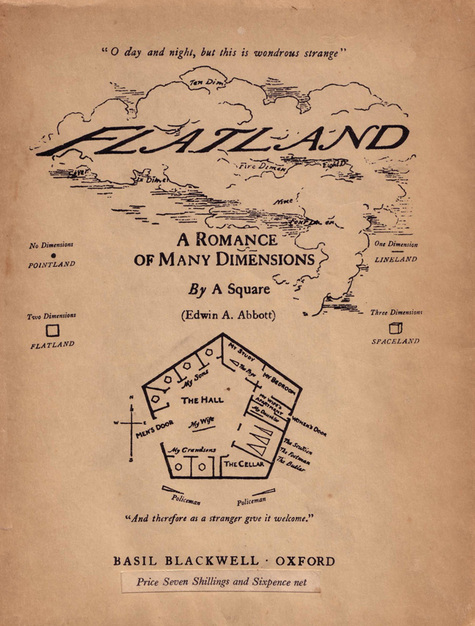
In 1884, the English theologian and pedagogue Edwin A. Abbott wrote a romance called “Flatland”, in which he described a two dimensional world. The rigid and hierarchically organized society of Flatland develops in the large plane in which it lives, and flat authorities control that no flat citizen (the inhabitants are all flat geometric figures) escapes from the two-dimension reality. The book is a social satire as well as an exploration of the concept of multiple dimensions. Furthermore, it can also be viewed as a critic of narrow worldviews stubbornly based on old paradigms.
The novel’s example can be used to argue that despite the proliferation of metrics, our decision making process tends to be guided by the quasi-imposed limited set of information tools – mainly economic – that we use every day. In other words, concepts like Earth System, Planetary boundaries or biophysical limits, environmental sustainability, social welfare and other important elements of our life on this planet are not satisfactorily incorporated in our knowledge horizon.
The current economic worldview is based on the idea that a free market works for the 100% of the population. Thus, economic growth (as measured by growth in GDP) is the political mantra: “the rising tide that lifts all boats”. A recent study published on Global Environmental Change (available here) gives a different point of view by including the environment and the society in the economic picture.
National economies are investigated in a 3-axis diagram (a cube), where each dimension is a different compartment. In this way, the relationships between environment, society and economy are represented in a single framework without losing the specific information. This framework recognizes a physical (and also thermodynamic, and logical) order, highlighting the dependence of the economy on societal organization and, primarily, on the environment.
From this three-dimensional perspective emerges that the economic activity is always strictly correlated with the use of natural resources, and that social well-being is often neglected. Over a total number of 99 national economies investigated within the cube, none of them is at the same time environmentally sustainable, economically rich (high GDP), and equal in the distribution of income.
This means that growing GDP is beneficial for a limited fraction of the overall population, while the vast majority has to deal with increasing environmental problems and worsening ecological status. Moreover, decoupling economic growth and natural resources consumption, seeking the so-called dematerialization, is found very complicated. Continuous growth in GDP implies consequences especially for the poorest individuals and communities: “the rising tide is lifting the yachts and swamping the rowboats” (Dietz and O’Neill, 2013).
Politicians are looking at the world around as a mono-dimensional economic universe. This is due to the fact that economists play a relevant role within governments. We need ecologists and social scientists playing an equally relevant role, in order to finally show politics we live in a three-dimensional world.
F.M. Pulselli, L. Coscieme, L. Neri, A. Regoli, P.C. Sutton, A. Lemmi, S. Bastianoni, “The world economy in a cube: A more rational structural representation of sustainability”; Global Environmental Change 35, 41-51, 2015 (doi:10.1016/j.gloenvcha.2015.08.002)
Dietz and D. O’Neill, “Enough is Enough”; London: Earthscan, 2013.