For anyone living in a city during a pandemic, the benefit of parks to your physical and mental health is obvious. There is space to properly social distance, space to meet up with friends, space to exercise or kick a ball around, benches to sit on, air to breathe, life to live. Then there is the life in the parks, the trees and shrubs and birds and insects, all the stuff that comes under the vague heading of greenspace or nature. So, to celebrate World Cities day and in the interest of public health, let us explore a very interesting area of research developing at the intersection of ecology and psychology: meaningful nature experiences.
It’s finally here. The day we’ve all been waiting for… It’s World Statistics Day! And I can’t think of a better way to celebrate than writing about a beer-brewing statistician who changed the world through his ingenious statistical inventions and the sublime stout he helped to perfect. Let’s call him “Student” for now.
If you’re trying to compare two groups based on some variable and you use a t-test, then you have “Student” to thank. Maybe you want to compare two species of finches based on their beak sizes. Maybe you want to check if film critics preferred Karl Urban or Sylvester Stallone as Judge Dredd. Or maybe you’ve brewed two beers with slightly different amounts of hops, and you want to know which one tastes best. These questions (and countless more) can be answered with more confidence thanks to “Student”, our brewer-statistician extraordinaire, and his t-test, which for many (if not most) young scientists is the first test learnt to analyse data.
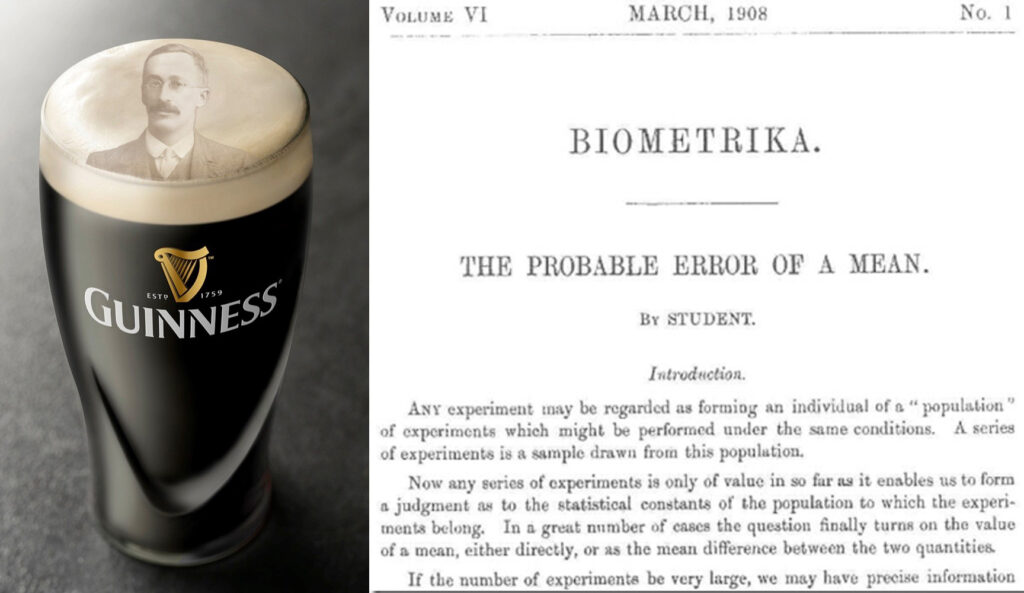
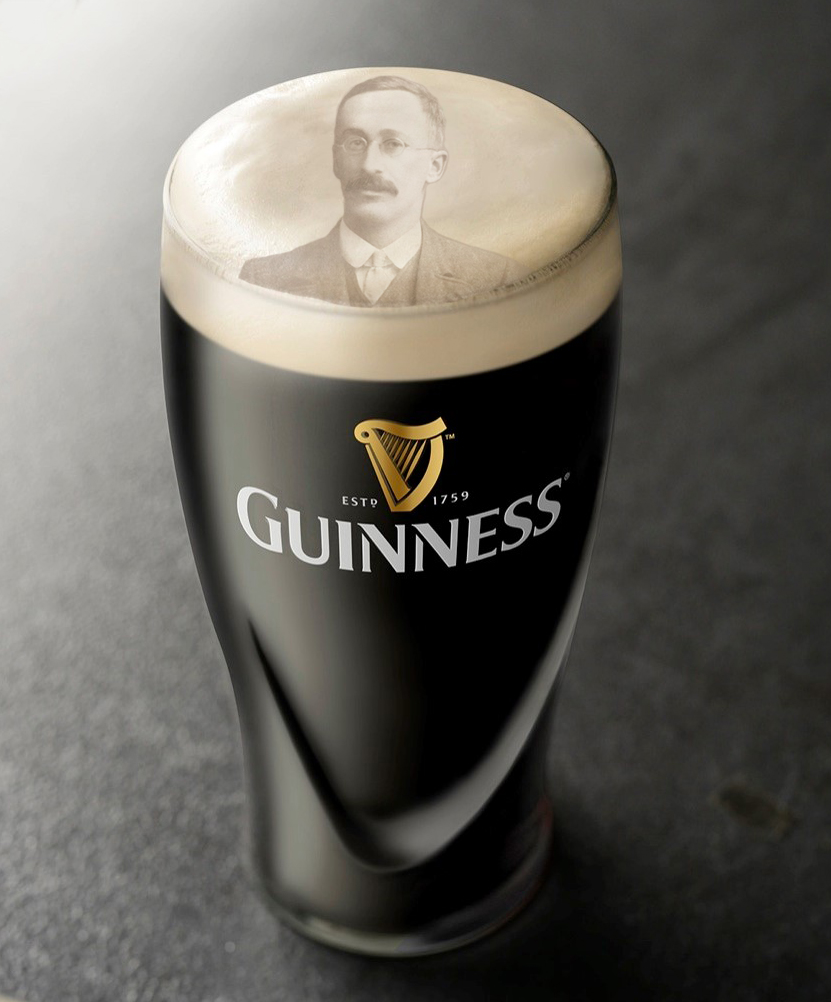
As well as creating a topic that students around the world cover in Stats 101 courses, “Student” also helped to perfect arguably the most perfect beer on the planet. Guinness is sold in over 150 countries around the world and through its classic adverts and futuristic foam faces, it really is a global phenomenon.*
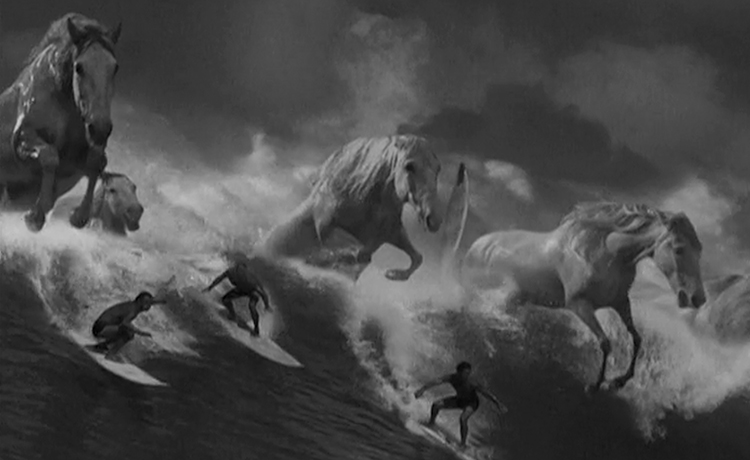
A classic Guinness advert (not to scale).
During the early 1900s “Student” was in charge of Guinness’ experimental brewery in Dublin and founded their statistics department. He had to deal with small sample sizes in his experiments due to production costs and wasn’t confident with the statistical approaches at the time. So, instead of using a standard normal distribution to estimate errors, he invented the Student’s t-distribution, which accounts for sample size. This idea led to a “logical revolution” in how we understand data.
How come the vast majority of people who use t-tests don’t even know the creator’s name? Probably because Guinness didn’t let “Student” use his real name when publishing his findings! One story is that Guinness didn’t want their competitors knowing that they had their own statistics department, so Gosset published under a pseudonym, “Student”; now scientists around the world agonise over the p = 0.06 results of their Student’s t-test.
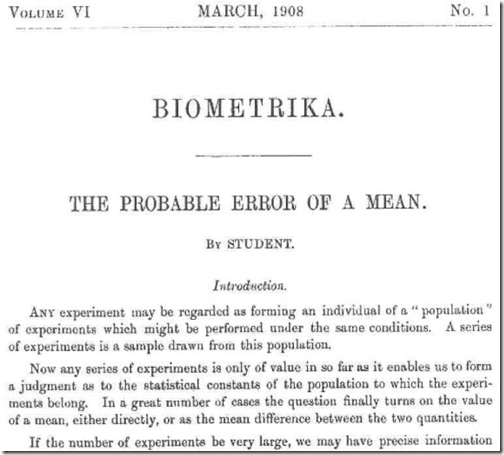
Student’s original publication
Well today, World Statistics Day, let’s celebrate the brewer-statistician extraordinaire: William Sealy Gosset. In a parallel universe we would compare two groups using the “Gosset t-test”. So let’s all raise a hypothetical pint of a Guinness to this brilliant “Irish”** brewer, who apparently had “more energy and focus than a St. Bernard in a snowstorm”. To Gosset!
The perfect pint
* This blog was not sponsored by Guinness.
** He was actually English but I think improving Guinness grants immediate and retroactive Irish citizenship.
If there’s one thing 2020 has taught us, it’s that change is inevitable, and this blog is no exception.
With a great deal of pride and gratitude, we say goodbye to Jenny Bortoluzzi and Floriane O’Keeffe – our 2019/2020 editors. They did a fantastic job managing the blog last year, a year that saw the end of an era with the retirement of the Zoology department’s own John Rochford, and research highlights and experience from far-flung places around the world (including Portugal,Indonesia, the Galapagos Islands, and New Zealand). We wish Jenny and Floriane the best of luck with their continued research and hope they’ll keep us updated with exciting new blog posts in the months to come.
But this post isn’t just about fond farewells. We are also delighted to introduce to you… ourselves! – Erika Soldi and Sam Preston – as the new editorial team for 2020/2021! We’re very excited to bring you the latest research, ideas, opinions, and advice from Trinity’s EcoEvo contributors and to keep making this blog a centre of science and innovation.
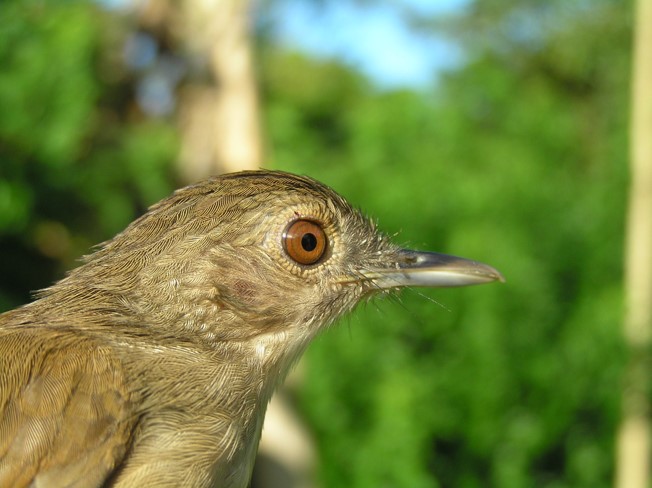
The most iconic examples of sexual dimorphism are found in birds. Birds are probably many people’s introduction to this concept in the natural world, when brought to the park as a child and shown the difference between male and female mallards. But sexual dimorphism can be much more subtle than that kind of difference in colour (called dichromatism, and seen also in peacocks, pheasants, sparrows, and many more). Our new paper, just published by the Association for Tropical Biology and Conservation in their journal Biotropica, shows that sexual dimorphism can be missed in some birds even when it is important to their ecology and evolution.
Many of
Earth’s plant and animal species are at imminent risk of extinction. But with
the resources necessary to conserve them so sorely limited, where should
efforts be focused? The term “ecological triage” has been coined for
such decision-making, after the system invented by French army medics to sort patients by
the urgency of their need. This borrowing of metaphor from the Napoleonic and
World Wars is not accidental: in envisaging the damage done to nature by
humanity, you are to think of cannonballs and scorched earth and mustard gas.
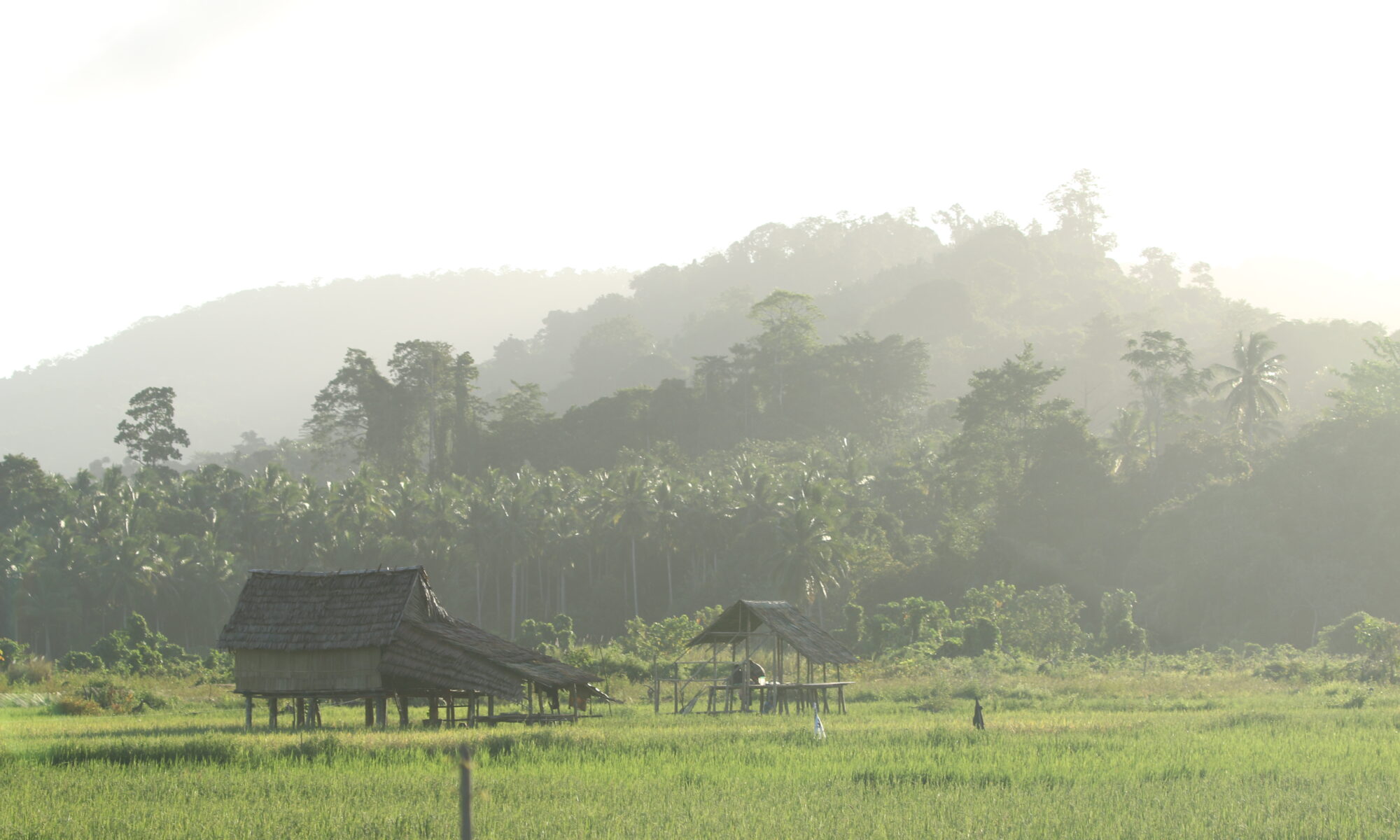
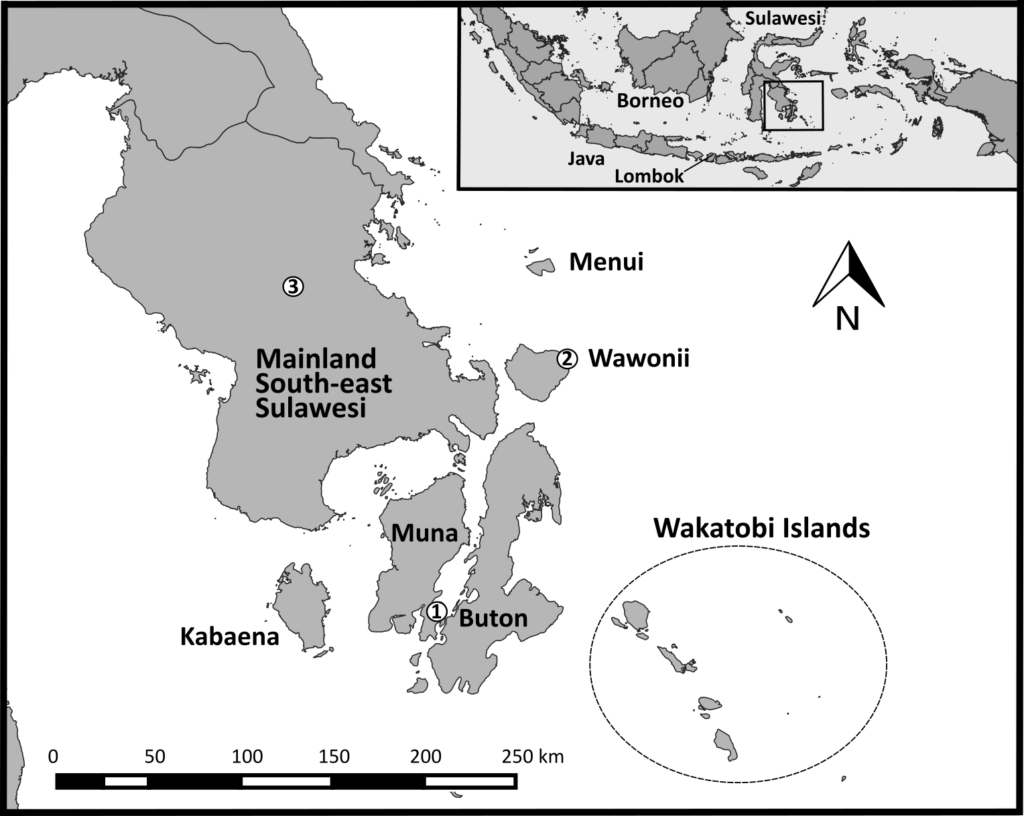
Working on the avifauna of the Wakatobi Islands was an opportunity to follow in the footsteps of some great ornithologists and biogeographers, out to a remote string of islands off South-east Sulawesi, Indonesia. The Wakatobis have always sat in glorious isolation, they’re a coral uplift which formed upon a platform of Australasian origin and have never been connected to mainland Sulawesi. This isolation has meant these islands are home to a unique mix of species, and have been largely understudied.
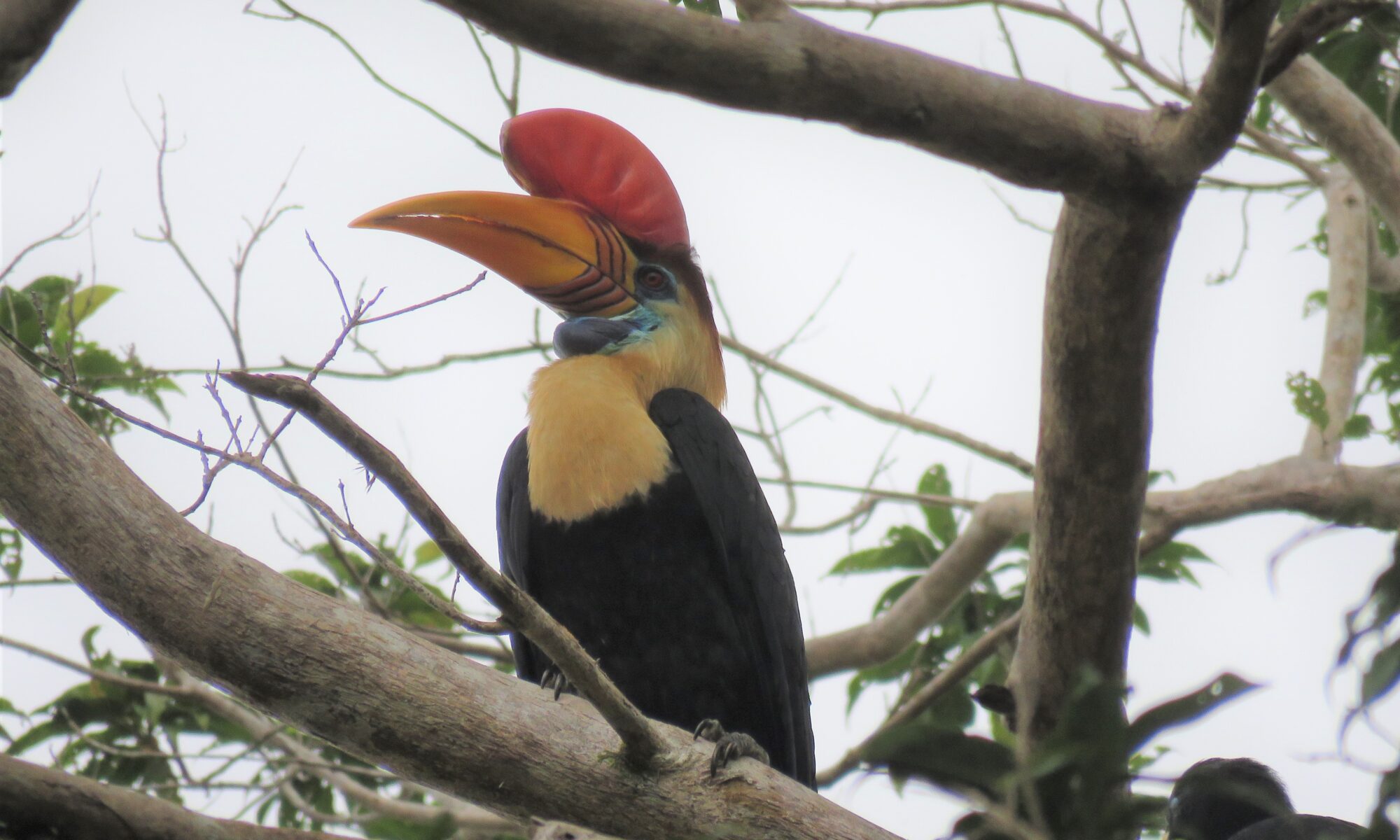
Until recently, knowledge of the islands’ biodiversity came solely from a brief visit at the beginning of the 20th century by specimen collector Heinrich Kühn. This trip provided some important museum specimens and hinted at a potential hotspot of new species on theses islands, but no subsequent visits were made, and the Wakatobi Islands largely remained a mystery to science. Then in 1999, teams of researchers from Trinity College Dublin, Halu Oleo University and Operation Wallacea, led by my PhD supervisors Prof Nicola Marples and Dr David Kelly, began a series of eight research expeditions which aimed to investigate this potential trove of unique biodiversity. In our recent paper in the Raffles Bulletin of Zoology we summarise 20 years of remarkable work by Prof Marples, Dr Kelly and others, recording 100 bird species for the islands, highlight recently described species, and discuss the threats facing the resident Critically Endangered species.
Indonesia is a constellation of islands, big and small and many-shaped, born out of volcanism or coral build-up or sheared from the ground of continents, each its own world. The complex geography of this region begat an equally complex biogeography, with evolution working enthusiastically to populate it, and the staggering biodiversity that resulted will surely occupy biologists for centuries to come (as long as it lasts that long). Every nook and cranny is filled with fascinating plants and animals, and our research group recently published a paper on the avian contents of a couple of those nooks and crannies. This post follows one by Darren on the fieldwork stories behind that paper, and the expeditions to remote Muna and Wawonii islands.
Muna and Wawonii in their corner of Indonesia. The numbers mark sites surveyed for the recent paper.
With Indonesia I’ve always felt like I’m just scraping the surface. Even after five field seasons in that incredible country I feel I’m always just finding further questions. One of my favourite bits was just driving around to new sites and travelling to different islands. There are always feats of incredible daring to observe (just piloting a car on a rural road takes nerves of steel), and engineering marvels and follies cut out of rainforest or carved from the hills. Any local leader could seemingly achieve anything with sufficient ambition, the consequences of which could really go either way! Easy explanations are usually not forthcoming. It is a culture where much is left unsaid, where one must ask the correct question the correct way to receive an answer. Perhaps it is this sense of mystery that keeps me coming back year after year, with each new island a world in itself.
Another sunrise brings another day of working from my hotel room. But today there’s a difference; the rain has eased and a smattering of sunshine dances on my balcony. I open my door and am struck by the fresh ocean breeze. It’s that fleeting time of year when Okinawa’s oppressive humidity is kept at bay by rain showers, producing occasional perfect days. I can practically taste the salt of the ocean as I watch the gentle lull of a distant fishing boat. But perhaps most noticeably, my ears prick up at the melodic and almost metallic cha-ko-lee of a pair of light-vented bulbuls (Pycnonotus sinensis) passing by. I watch the birds for a second before my eyes trail slowly back to the sea. Just as they do, I catch a flash of red. It must have been a ruddy kingfisher (Halcyon coromanda) darting from the tree it was perched in. A few minutes later my identification is confirmed as I hear the sweeping, descending call of the individual in question.
There are >20,000 different species of bee worldwide. They are a diverse group, encompassing the tiny 2mm long Perdita minimaand the massive 38mm long Megachile pluto. They all* have one thing in common: their larvae feed on pollen from flowers. The protein in the pollen is necessary for larval growth and development, and thus for producing healthy adult bees. When visiting flowers to collect pollen and nectar to fuel flight, adult bees transfer that pollen from flower to flower, thus making them brilliant pollinators.
And bees are ever-increasing in popularity across many sectors including conservation, gardening, fashion, marketing, and public/corporate strategies. Their popularity means that there has been an increase into bee research, and lots of excellent conservation strategies (including our own All-Ireland Pollinator Plan), but it also means there has been a lot of mis-use of bees in corporate and even well-meaning conservation strategies (see Charlotte de Keyzer’s excellent “bee-washing” website). And as their popularity spreads, so does the amount of incorrect information about them, which makes an Melittologist (someone who studies bees), buzz with frustration…
So here’s a blog I’ve been meaning to write for some time** – six statements about bees that are often used, but aren’t true…