
November 2013
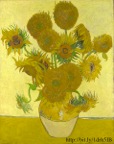
Still Life and Science
Can you draw? Can you draw well? Chances are if you're a biologist the answer to at least one of these questions is 'no'. You may have studied art at school, in the same way you took French or Literature, but you figured that as a budding biologist the days of declining verbs, finding meaning […]

Blog-tastic!
Andrew Jackson and I started a new module this year called “Research Comprehension”. The aim of the module is simple: to help students to develop the ability to understand and interpret research from a broad range of scientific areas, and then to develop opinions about this research and how it fits into the “big picture”. […]
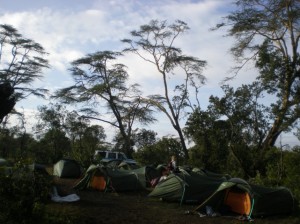
Kenya- A Summary through the vegetation
During the first week of November I travelled to Kenya to help out on the Tropical Field Ecology course, run by Ian Donahue in the Zoology Department. Final year students from Zoology, Environmental Sciences, and Plant Sciences attended, and I was the postgraduate representative from the Botany Department. While I should under no circumstances be […]
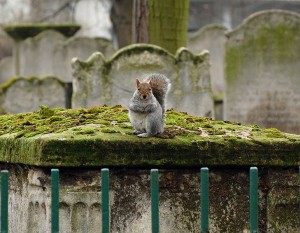
SQUIRREL PLAGUE! Or “Don’t hug a dead squirrel”
During my PhD I worked on the morphological evolution of New World monkeys, phyllostomid bats, Australasian possums, and ground squirrels. For some reason the only part anyone outside academia (and some people in academia) remembers is that I like squirrels. This means that whenever there is a squirrel-related news story, around half a dozen people […]
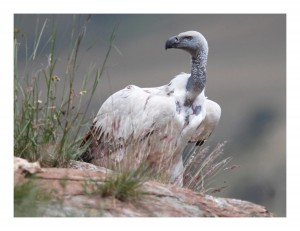
Cape Vulture Conservation
Conservationists try their best to stop endangered species sliding to extinction and keep the habitats of these life forms intact. Captive breeding programs, national parks, management of invasives etc. are all common measures in conservancy. But how do we know that these methods work? Perhaps an invasive species is actually serving as a food source […]
How Good is the Fossil Record?
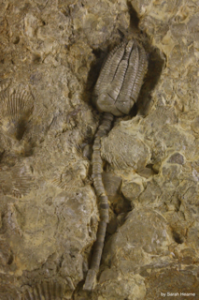
One of the projects I’ve been working on recently has concerned diversity in the fossil record. In broad terms I’m looking at how diversity has changed over the last 540 million years, a period known as the Phanerozoic which starts at the Cambrian explosion and continues to this day. I want to try and understand […]
Conference season madness!
Over the last month or so you’ll probably have noticed that a lot of posts on EcoEvo@TCD are essentially “what I did on my summer holidays” essays. Luckily, I think most of us did quite a lot of interesting and scientifically relevant things! My summer this year seemed to be full of conferences, so I […]
Trophy Hunters
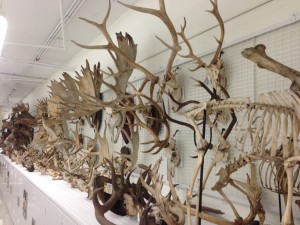
It may be an inconvenient truth in these conservation-focused times but we owe a debt of gratitude to the trophy hunters; the army officers and colonial-types who killed animals for sport and prestige. Without their considerable efforts, the vaults of natural history museums would be devoid of the skeletons and skins which form the bases […]
How do Lego cars evolve?
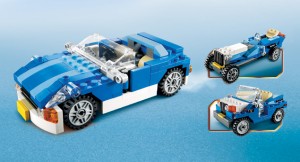
The ESEB conference this August in Lisbon was not only about Drosophila and #superbock. Among the useful discussions and the interesting talks, a definite highlight came from our very own Kilkenny scaling man all about time perception and comparative analysis… Argh no I missed that one – apparently there was even a realistic Tiger Beetle hunting […]
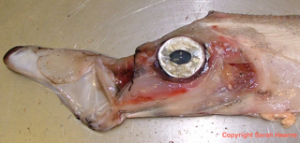
Sea Serpents off the Port Bow!
Below the thunders of the upper deep, Far far beneath in the abysmal sea . . . [Tennyson, The Kraken] Strange things are stirring from the deep. Creatures from myths and legends, the sea serpents of old, are descending upon our shores to warn us of impending doom. . . Well, maybe not. But the […]