
September 2019
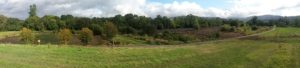
Worthless wetland?
For the past few months, I’d been hearing about this amazing urban wetland oasis. A wildlife haven right in the middle of Tallaght, on the south-west outskirts of Dublin. Every time I bumped into Collie Ennis on campus he was bouncing excitedly about how wonderful this place was and how I should go down there […]
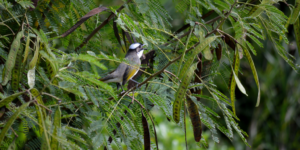
Birds in paradise: biogeography in the subtropics
The species-area relationship is considered one of the only ‘rules’ in ecology. We have observed more species on larger ‘islands’ (whether true islands or simply some habitat patch of interest) in studies of different plants and animals all around the world. When MacArthur and Wilson (1967) proposed this pattern and the pioneering biogeographical principles which […]
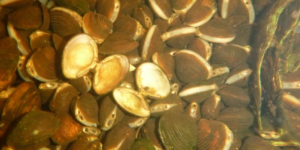
Invasive clams like it hot: heated water from power plants gives populations a boost
This post by Maureen and Marcin is based on their paper in the November 2019 issue of Science of The Total Environment, "Thermal effluents from power plants boost performance of the invasive clam Corbicula fluminea in Ireland's largest river". (Penk & Williams, 2019) The River Shannon is Ireland’s largest river, with a storied biological and […]
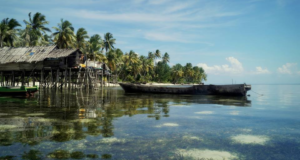
Surveying birds on an unexplored tropical island – the TCD/Opwall expedition to Menui, South-east Sulawesi, Indonesia.
A big draw for those who study the natural world is the search for adventure - the chance to make a novel discovery, and to explore regions unknown to science. Despite that, in today’s world, such an opportunity rarely presents itself, and it is exceedingly rare to truly break new ground. However, in the summer […]
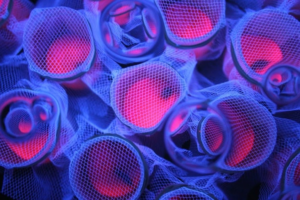
Can you dig it? Parasites influence the rates of bioturbation in lakes and rivers.
This post was first published on the Cambridge Core blog, based on the original paper by Williams et al. It was selected as Parasitology's paper of the month for September 2019, and so is freely available for the month. The impact of parasites can often reach beyond their individual hosts, shaping populations and communities in […]