
February 2016

The Evolution and Laboratory of the Technician.
First in a series of posts on life after an undergraduate degree, Alison Boyce gives an account of the life of a scientific technician. Science, engineering, and computing departments in universities employ technicians. Anyone working or studying in these areas will have dealt with a technician at some point but most will be unaware of […]

The expanding tropics
It was a spring day in April 2004 when Qiang Fu first noticed the anomoly in the data. On either side of the equator – in a belt strecthing from 15 to 45 degrees latitude – the lower atmosphere was warming more than anywhere else on the planet. Fu, a professor at the University of […]

The up-goer five: Explaining research using the "ten hundred" most used words.
At today's NERD club, we tried our hand at explain our research using the up-goer five, which limited our available vocabulary to the "ten-hundred" most common words (thousand isn't one of them). After some brief hesitation, the 9 of us present found out that despite being quite challenging, this can be an incredibly fun and useful activity […]

Spud Oddity: Did The Martian really “science the sh*t out of this”?
It’s rare to come across a sci-fi movie that isn’t loaded with technobabble or scientific terms that are used ever so incorrectly. In fact, a lot of the Hollywood blockbusters are guilty of mincing the scientific words and concepts for entertainment value: “The Day After Tomorrow”, “Armageddon”, “Lucy”, “The Core”, to name but a few. […]

Listening to Evolutionary Oddities @TEDxUCD
Last December I was asked to participate in the TEDxUCD 2015 event. The event included 9 national and international speakers with a wide range of ideas worth spreading. Despite being asked to participate only two days prior to the event luckily I could draw on the wide research area encompassed in my new Post Doc […]
Evading Extinction
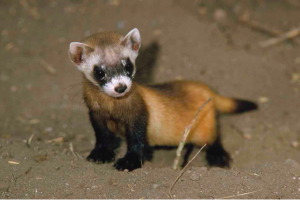
It’s a sombre statistic: year on year, we lose up to 100,000 species. That’s somewhere between 0.01 and 0.1 percent of all species on the planet (we don’t know the exact rate because we don’t know exactly how many species exist; it could be 2 million or 100 million). The rate is thought to be at […]