Research assistants (RA) are the backbone to many projects happening inside the departments of Botany and Zoology. Their roles can vary from fieldwork data collection for PhD and Master’s students. Assisting professors in long established or new projects. Working in the labs on varying tasks from robotics, to soil analysis to plant and animal identification. Becoming an RA is also a great stepping stone in between your undergraduate and postgraduate degrees, it give you time to figure out what research you would like to do while gaining valuable skills in academia.
Rebecca from the school of Botany tells gives us an insight into her role as an RA.
Rebecca
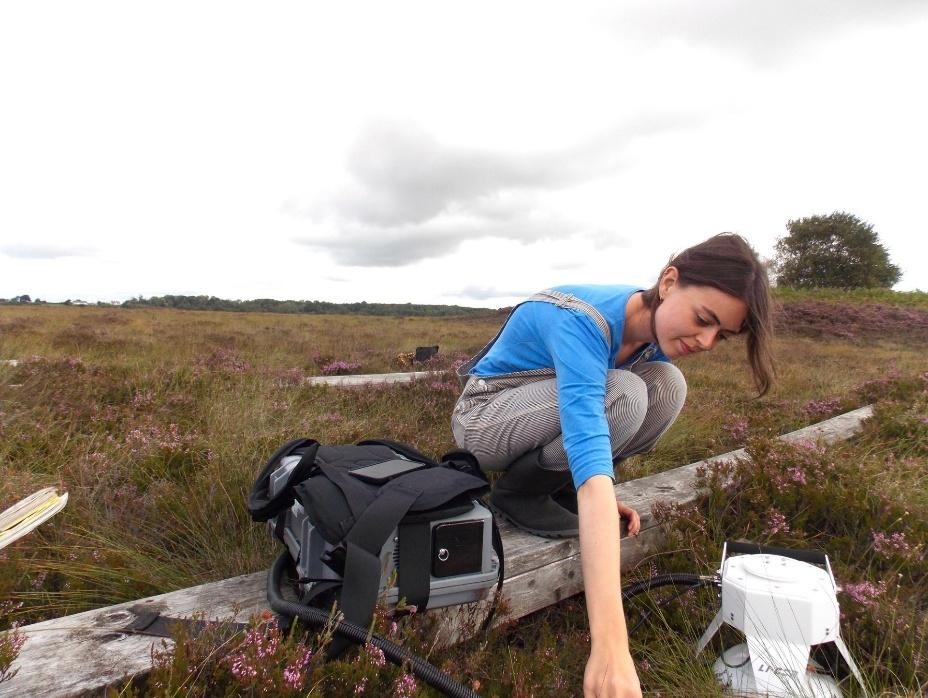
My name is Rebecca and I work as a research assistant under the AIMINGPEAT project in the Department of Botany at Trinity. My role is to collect field and laboratory data that helps us to understand how Irish peatlands store and release greenhouse gases and to provide this data for the project’s modelling work.
I regularly visit three different peatland sites which each represent different peatland conditions and land-use histories. In the field, I use a trace gas analyser and smart chamber to measure carbon dioxide and methane fluxes, and I also record factors such as water level, soil moisture, soil temperature and vegetation type. I also collect peat cores for laboratory analysis where I measure properties such as pH, bulk density and hydraulic conductivity. By bringing together greenhouse gas measurements with information about vegetation, hydrology, soil properties and peatland management, we are working to identify the factors that control emissions and removals. Ultimately, this research will help improve our understanding of Ireland’s peatlands and provide more accurate estimates of their contribution to climate change while also supporting better peatland management and restoration.